Procurement Market Intelligence Report
Employee Assistance Programs
Sourcing Guide & Market Intelligence
Smarter cost management starts with comprehensive market intelligence
 United States
 Europe
 Global
Quick Navigation
Employee Assistance Programs Global Overview
Definition
Summary
Employee assistance programs (EAPs) are also commonly called member assistance programs or employee and family assistance programs. EAPs help employees and their family members handle personal problems that may adversely impact their work performance, health, and well-being. Such programs focus on substance abuse, workplace issues, mental health, personal problems, and traumatic events. Typical buyers include healthcare providers and educational institutions.
This Report Includes:
- Short-Term Counseling
- Referral Services for Employees & Members of Their Household
Not in this Report:
- Healthcare Services
- Health Insurance
Global Employee Assistance Programs Market - Suppliers by Region
| Country/Region | Number of Suppliers |
|---|---|
| #1 China | 9,850 |
| #2 United States | 7,000 |
| #3 Europe | 6,310 |
Explore supplier concentration across the globe
We've uncovered the 11 top regions for global procurement, based on feedback from our most strategic clients. Access vendor counts for each unique region when you subscribe.
2
Geography Drilldown - US & Europe
Average Cost of Employee Assistance Programs
United States
2026 Market Pricing$0.40 to $X.XX
per employee per month
Average Price
Prices in the Employee Assistance Programs market range from $0.40 to $X.XX, depending on Breadth of Services, Number of Employees, Experience and Geographic Location. For example, lower prices are associated with Telephonic counseling ($0.60 to $2.00 per employee per month) and Base services ($0.40 to $1.75 per employee per month), whereas higher prices are associated with In-person counseling ($0.50 to $2.25 per employee per month) and Niche services ($0.75 to $2.25 per employee per month).
Need the scoop on international price trends?
Between our Europe and Canada collections, we provide price data for 350 markets so you can instantly compare prices across borders. Or, use our custom research services for intel on prices in any region across the globe.
Employee Assistance Programs Category Price Trends
Pricing trends are indicated by the compound annual growth rate (CAGR) during a set period of time. For the Employee Assistance Programs market, prices in the US have grown 1.6% from 2022 to 2025. Meanwhile, the recent three-year CAGR for Europe is +2.6%.
United States (2022-2025)

Europe (2022-2025)
Compound Annual Growth Rate
Wondering where prices are heading?
Price trend forecasts are available to subscribers, along with price driver projections and forward-looking cost structure data.
Cost Analysis - Total Cost of Ownership for Employee Assistance Programs
Total cost of ownership is Low in the Employee Assistance Programs market. The average cost of ownership differs depending on the contract but generally includes costs negotiated before the contract begins, costs billed during the contract period and unforeseen costs. For example, unforeseen costs in the form of Lost Orders may raise the total cost of ownership unexpectedly.
Negotiated Before
Pre-evaluation
Transportation
Implementation
Billed During
Maintenance
Unforeseen
Lost Orders
Buyer Power in Procurement Negotiations
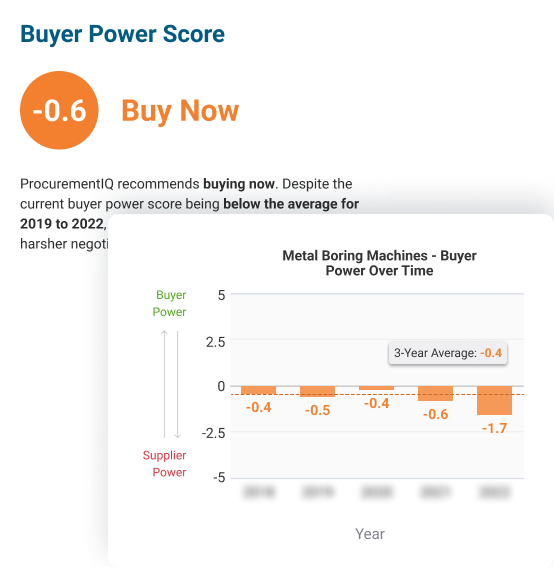
In 2026, buyer power amounts to 0.6 in the United States. Buyer power is most positively impacted by Recent Price Trend. It is most negatively impacted by Recent Price Volatility. Subscribers can access details on eight other factors that impact buyer power. Learn more
United States

Buyer power forecasts: your glimpse into the future
Develop strategies for the upcoming year and identify unforeseen opportunities for buying now
- Actionable "Buy Now" and "Buy Later" insights
- Near-real-time updates to current and forecast Buyer Power Scores
- Methodology and weightings for Buyer Power Score Components
Supply Chain Risk
The average level of supply chain risk is assessed as Medium, which has a negative impact on buyer power. The level of supply chain risk is affected by industry volatility, barriers to entry, competition, import penetration, regulation and industry financial risk. Buyers in this market can mitigate procurement and supply chain management risks by monitoring risk levels for individual first and second tier suppliers:
1st
Tier Suppliers
- Human Resources & Benefits Administration Providers
- Wired Telecommunications Carriers
- Commercial Lessors
2nd
Tier Suppliers
- Data Processing & Hosting Service Providers
- Office Supply Stores in the US
- Telecom Networking Equipment Manufacturers
- Construction Contractors
Biggest Employee Assistance Programs Suppliers in the US by Revenue
The largest Employee Assistance Programs vendors by revenue in the US are Ceridian HCM Holding Inc., Employee Resource Systems Inc. and ComPsych Corporation. Subscribers can sort and filter by market share concentration, profit level and other factors. Learn more
| Supplier | Operational Size | Headquarters | Number of Employees | Market Share (%) | Market Share Performance (3yr trend) | Total Revenue ($ million) | Profit Level (%) | Risk Level |
|---|---|---|---|---|---|---|---|---|
| Unitedhealth Group Incorporated | Global | MINNETONKA | >10,000 | < 5 | ||||
| Employee Resource Systems Inc. | National | Chicago, IL | <25 | < 5 | ||||
| Magellan Health, inc. | National | Phoenix | 1,001-10,000 | < 5 | ||||
| Ceridian HCM Holding Inc. | Global | MINNEAPOLIS, MN | 1,001-10,000 | < 5 | ||||
| Empathia Inc. | National | Waukesha, WI | 51-100 | < 5 | ||||
| Integrated Behavioral Health Inc. | National | Costa Mesa, CA | 101-250 | < 5 | ||||
| ComPsych Corporation | Global | Chicago, IL | 501-1,000 | < 5 | ||||
| FHC Health Systems Inc. | National | Boston, MA | 1,001-10,000 | < 5 | ||||
| Deer Oaks EAP Services LLC | National | San Antonio, TX | 251-500 | < 5 | ||||
Looking for a list of suppliers by country?
Subscribers can access vendor information on Canadian and European suppliers, too. We also offer custom research services to help with vendor sourcing anywhere in the world.
Profit Analysis
The average profit margin across vendors in the Employee Assistance Programs market is 5.6% and steady. Profit levels shift depending on suppliers' spend on wages, purchases and overhead. The highest cost component for vendors is Wages. The cost trend for this component is stagnating, when considering movement between 2025 and 2026. To understand cost forecasts for 2027 and uncover the implications on profit, start your subscription. Learn more
Vendor & Supply Chain Analysis
The low level of financial risk suggests that suppliers will not go bankrupt in the near future and are able to honor long-term contracts. This factor benefits buyers because it provides assurance that their EAP services will not be discontinued.
The low level of market share concentration ensures that no single vendor can unilaterally influence the market; therefore, rates for services remain competitive.
Supply chain risk for EAPs is moderate, which somewhat detracts from buyer power by increasing the likelihood of price swings or service discontinuity.
The United States is a net importer of computers, meaning it imports more computers than it exports. While lower manufacturing costs abroad drive down prices for imported computers, relying on imports can lead to potential shortages or price increases if there are supply chain disruptions due to geopolitical tensions, trade disputes, or global crises
Supplier Information
Ceridian HCM Holding Inc.
Ceridian HCM Holding Inc. is a public company operating globally in the information, professional, scientific and technical services and healthcare and social assistance sectors. The company's offerings include human resources software, bookkeeping services, payroll services, early paycheck services and employee... Subscribe to learn more
ComPsych Corporation
ComPsych Corporation is a private company operating globally in the professional, scientific & technical services and healthcare & social assistance sectors. The company's offerings include employee assistance programs and corporate wellness services. Founded in 1984, the company is currently headquartered... Subscribe to learn more
Deer Oaks EAP Services LLC
Deer Oaks EAP Services LLC is a private company operating nationally in the healthcare & social assistance sector. The company's offerings include employee assistance programs. Founded in 1992, the company is currently headquartered in San Antonio, Texas, United States of America with an estimated 400 employees.... Subscribe to learn more
Empathia Inc.
Empathia Inc. is a private company operating nationally in the healthcare & social assistance sector. The company's offerings include employee assistance programs. Founded in 1982, the company is currently headquartered in Waukesha, Wisconsin, United States of America with an estimated 79 employees. Subscribe to learn more
Employee Resource Systems Inc.
Employee Resource Systems Inc. is a private company operating nationally in the healthcare & social assistance sector. The company's offerings include employee assistance programs. Founded in 1993, the company is currently headquartered in Chicago, Illinois, United States of America with an estimated 13 employees.... Subscribe to learn more
FHC Health Systems Inc.
FHC Health Systems Inc. is a private company operating nationally in the professional, scientific & technical services and healthcare & social assistance sectors. The company's offerings include employee assistance programs and corporate wellness services. Founded in 1983, the company is currently headquartered... Subscribe to learn more
Integrated Behavioral Health Inc.
Integrated Behavioral Health Inc. is a private company operating nationally in the healthcare & social assistance sector. The company's offerings include employee assistance programs. Founded in 1988, the company is currently headquartered in Costa Mesa, California, United States of America with an estimated... Subscribe to learn more
Magellan Health, inc.
Magellan Health, Inc. is a managed care services provider. Its two operating segments include the Healthcare segment, which offers management services for behavioral health, employee assistance plans, and other areas of specialty healthcare to commercial, Medicaid, and Medicare providers, and the Pharmacy... Subscribe to learn more
New Directions Behavioral Health, LLC
New Directions Behavioral Health, LLC is a private company operating nationally in the healthcare & social assistance sector. The company's offerings include employee assistance programs. Founded in 1995, the company is currently headquartered in Overland Park, Kansas, United States of America with an estimated... Subscribe to learn more
Accelerate the vendor selection process
Get a clear picture of the competition in a market and discover which vendors are best-suited for your sourcing needs. Our supplier profiles include hard-to-find financial ranges for private companies, cover public company data and feature an interactive competitor matrix.
Procurement Management KPIs for the Employee Assistance Programs Market
Managing vendor performance throughout the contract period is easier when tracking specific key performance indicators (KPIs). For example, buyers should monitor Average Resolution Time and Customer Contribution. Buyers may experience better performance throughout their contracts if they establish service level agreements (SLAs) based on Qualifications and other factors.
| KPI | Level of Importance (1-5) | Measurements | Key Considerations |
|---|---|---|---|
| Average Resolution Time |
|
Total resolution time Number of resolved issues |
The average resolution time represents the average amount of time it takes to resolve an employee's issue. The average resolution time can be used to determine a company’s support responsiveness and how well the EAP is addressing employees' concerns and providing timely support. |
| Customer Contribution |
|
Revenue per customer (RPC) Total revenue |
The customer concentration represents the amount of revenue associated with a single customer. The customer concentration can be used to determine the need to diversify client portfolios. It is recommended that the customer concentration remains at or below 10.0%. |

Questions to Ask During Procurement Negotiations
How can I gain leverage during negotiations?
Experience and Expertise
Based on experience with other clients, would you recommend an internal, external or blended model for our company?
Do you and your employees have CEAP certification, COA accreditation or other state licenses and certifications? If so, what are they and how long ago did you earn them?
Product Lines
What programs do you specialize in?
Do you focus on individual, managerial, organizational or administrative services, or a mix of the four?
Quality Control
How often do you evaluate the effectiveness of your services?
How do you measure the effectiveness of your service offerings?
The ultimate prep for procurement negotations
View all 31 negotiation questions for this category when you subscribe.
Employee Assistance Programs RFP Guidelines
What should my RFP include?
Organizational Overview
Buyers should provide a brief overview of their organization, including their industry, number of employees, and locations.
Buyers should describe their current program provided to employees, stating whether it is from a third party or in-house team.
Statement Of Need
Buyers should explain the desired services and types of practitioners, which may include family counselors, psychotherapists, social workers, substance abuse counselors and 24-hour crisis hotlines.
Buyers should state the desired number of counseling sessions, including assessments and short-term counseling per family per year.
Project Budget
Buyers should state the range of the budget they have for these services.
Buyers should specify which type of pricing model they prefer.
The RFP process made easy
Find out how you can access RFP templates for 800+ procurement categories to start writing better, more consistent RFPs.
We display average pricing information, trends and market data.
Our Reports include:
- Opportunity assessment
- Market dynamics
- Recent developments
- Positive and warning trends
- Buyer power levers
- Price environment and market pricing
- Geographic wage rates
- Global market updates
- Total cost of ownership
- Cost structure benchmarks and analysis
- Supply chain and vendors
- Global supplier breakdown
- Market share concentration
- Regulation and business requirements
- Vendor management and KPIs
- Sourcing strategy guidance