Procurement Market Intelligence Report
Illuminated Signs
Sourcing Guide & Market Intelligence
Smarter cost management starts with comprehensive market intelligence
 United States
 Global
Quick Navigation
Illuminated Signs Global Overview
Definition
Summary
Illuminated signs emit light from an internal or external artificial source for the purpose of informing passersby about a business or organization's location. Common types of illuminated signs include light boxes, monuments, and those with neon and channel letters. The typical seller types include full-service and quick-service sign shops, while the key buyers include gas stations, retail stores, restaurants, and office buildings.
This Report Includes:
- Light Box Signs
- Monument Signs
- Neon & Channel Letter Signs
- Fluorescent Signs
- Light-Emitting Diode (LED) Sign
Not in this Report:
- Digital Billboards
- Electronic Message Centers
- Variable Message Signs
- Nonelectric Signs
Take the ProcurementIQ products and data tour
Explore live samples of price trend forecasts, price driver projections, forward-looking cost structure data and more.
Global Illuminated Signs Procurement Trends
Discover the top international trends affecting procurement in the global Illuminated Signs market.
Warning Trends
Tariffs to negatively impact the furniture and furnishings sector
- The Trump Administration’s reciprocal tariffs, which apply general tariff rate increases to most leading US trade partners, took effect on August 7, after the administration finalized the rates on August 1. These changes will significantly increase the tariff rate on leading furniture import sources, including Canada (35.0%), China (54.0%), Mexico (25.0%), and Vietnam (20.0%).
- Additionally, the United States nearly tripled the tariff rate on Canadian lumber from 7.66% to 20.56% in late July. While lumber is typically exempt from the general tariffs on Canada and Mexico because it is wholly produced in Canada or Mexico, making it eligible for the United States-Mexico-Canada Agreement (USMCA) tariff exemption, this lumber-specific tariff will significantly increase the cost for American furniture producers to source lumber.
- Common metals in furniture production, including aluminum, copper, and steel, face 50.0% tariffs at the start of August, further increasing the input costs of domestic furniture production. In October, the Trump Administration raised tariffs on softwood timber and lumber to 10.0%, upholstered wood furniture to 25.0%, and kitchen cabinets, vanities, and associated parts to 25.0%; and the tariff on upholstered furniture will be raised to 30.0%, and the rate for kitchen cabinets, vanities, and associated parts will be raised to 50.0% at the start of the new year.
- According to a FurnitureToday survey of 420 retailers, tariffs are expected to have a significant impact on 70.0% of furniture and furnishings businesses, and few believe they will avoid the impact of tariffs. Around 27.0% of furniture and furnishings retailers are expected to raise prices immediately in the face of new tariffs.
- Higher tariffs on US imports of furniture and furnishings are also likely to contribute to supply chain issues, reduced inventory selection, and longer lead times. The increase in the average tariff rate will also increase costs for raw materials used to manufacture furniture and furnishings, pressuring prices upward.
United States announces new tariffs on all imported aluminum
- In February 2025, the United States announced 25.0% tariffs on all imported aluminum with no exemptions or exceptions. The tariffs took effect on March 12, 2025. On June 4th, these tariffs were increased further to 50%. These tariffs were not impacted by a recent court decision that temporarily suspended duties on certain goods as they were implemented under Section 232 of the Trade Expansion Act.
- Previously, countries such as Canada and Mexico, two of the top exporters of aluminum to the United States, had exemptions from tariffs and the rate was only 10.0%. These have now been removed and all imported aluminum, regardless of origin, will be subject to the 50.0% tariff.
- When tariffs on imported aluminum were implemented in March 2018, aluminum prices rose modestly. According to the Bureau of Labor Statistics (BLS), prices rose 1.2% in the year after the tariffs were introduced. Because this market relies on aluminum as an input, it may be impacted by this policy.
Global Illuminated Signs Market - Suppliers by Region
| Country/Region | Number of Suppliers |
|---|---|
| #1 Europe | 1,957 |
| #2 China | 1,534 |
| #3 India | 1,113 |
Explore supplier concentration across the globe
We've uncovered the 11 top regions for global procurement, based on feedback from our most strategic clients. Access vendor counts for each unique region when you subscribe.
Geography Drilldown - US
Average Cost of Illuminated Signs
United States
2026 Market Pricing$30.00 to $X,XXX.XX
per square footAverage Price
Prices in the Illuminated Signs market range from $30.00 to $X,XXX.XX, depending on Sign Type, Complexity and Order Quantity. For example, lower prices are associated with Fluorescent sign ($30.00 to $60.00 per square foot), whereas higher prices are associated with LED sign ($570 to $1,200 per square foot), Neon sign ($200 to $1,250 per square foot), Channel letter sign ($190 to $400 per square foot), Light box sign ($140 to $415 per square foot) and Monument sign ($100 to $400 per square foot).
Need the scoop on international price trends?
Between our Europe and Canada collections, we provide price data for 350 markets so you can instantly compare prices across borders. Or, use our custom research services for intel on prices in any region across the globe.
Illuminated Signs Category Price Trends
Pricing trends are indicated by the compound annual growth rate (CAGR) during a set period of time. For the Illuminated Signs market, prices in the US have grown 2.8% from 2022 to 2025. Subscribers can access price trend forecasts, price driver projections and forward-looking cost structure data. Learn more
United States (2022-2025)


Wondering where prices are heading?
Price trend forecasts are available to subscribers, along with price driver projections and forward-looking cost structure data.
Cost Analysis - Total Cost of Ownership for Illuminated Signs
Total cost of ownership is High in the Illuminated Signs market. The average cost of ownership differs depending on the contract but generally includes costs negotiated before the contract begins, costs billed during the contract period and unforeseen costs. For example, unforeseen costs in the form of Obsolescence may raise the total cost of ownership unexpectedly.
Negotiated Before
Installation
Transportation
Set Up Fees
Billed During
Warranties
Utilities
Labor
Unforeseen
Obsolescence
Downtime
Delays
Buyer Power in Procurement Negotiations
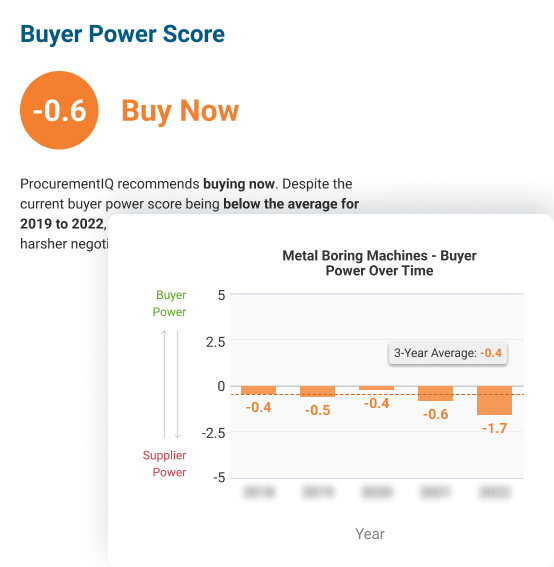
In 2026, buyer power amounts to -1.5 in the United States. Buyer power is most positively impacted by Recent Developments. It is most negatively impacted by Market Share Concentration. Subscribers can access details on eight other factors that impact buyer power. Learn more
United States
Buyer power forecasts: your glimpse into the future
Develop strategies for the upcoming year and identify unforeseen opportunities for buying now
- Actionable "Buy Now" and "Buy Later" insights
- Near-real-time updates to current and forecast Buyer Power Scores
- Methodology and weightings for Buyer Power Score Components
Supply Chain Risk
The average level of supply chain risk is assessed as Medium, which has a negative impact on buyer power. The level of supply chain risk is affected by industry volatility, barriers to entry, competition, import penetration, regulation and industry financial risk. Buyers in this market can mitigate procurement and supply chain management risks by monitoring risk levels for individual first and second tier suppliers:
1st
Tier Suppliers
- Lighting & Bulb Manufacturers
- LED Manufacturers
- Electrical Equipment Manufacturers
- Plastic & Resin Manufacturers
2nd
Tier Suppliers
- Glass Product Manufacturers
- Aluminum Manufacturers
- Iron & Steel Manufacturers
- Petroleum Refineries
Biggest Illuminated Signs Suppliers in the US by Revenue
The largest Illuminated Signs vendors by revenue in the US are Coast Sign Incorporated, Everbrite LLC and Federal Heath Sign Company LLC. Subscribers can sort and filter by market share concentration, profit level and other factors. Learn more
| Supplier | Operational Size | Headquarters | Number of Employees | Market Share (%) | Market Share Performance (3yr trend) | Total Revenue ($ million) | Profit Level (%) | Risk Level |
|---|---|---|---|---|---|---|---|---|
| Young Electric Sign Company | International | Salt Lake City, UT | 501-1,000 | 5-10 | ||||
| The Jim Pattison Group | International | Vancouver, CA | >10,000 | < 5 | ||||
| Fastsigns International Inc. | Global | Carrollton, TX | 1,001-10,000 | < 5 | ||||
| TAKKT AG | Global | Stuttgart, DE | 1,001-10,000 | < 5 | ||||
| Coast Sign Incorporated | National | Anaheim, CA | 251-500 | < 5 | ||||
| Everbrite LLC | International | Greenfield, WI | 501-1,000 | < 5 | ||||
| Federal Heath Sign Company LLC | National | Oceanside, CA | 501-1,000 | < 5 | ||||
| Redmont Sign Group, LLC | National | Sarasota, FL | < 5 | |||||
| Walton Signage Corporation | Global | San Antonio, TX | 251-500 | < 5 | ||||
Looking for a list of suppliers by country?
Subscribers can access vendor information on Canadian and European suppliers, too. We also offer custom research services to help with vendor sourcing anywhere in the world.
Profit Analysis
The average profit margin across vendors in the Illuminated Signs market is 3.6% and steady. Profit levels shift depending on suppliers' spend on wages, purchases and overhead. The highest cost component for vendors is Purchases. The cost trend for this component is falling, when considering movement between 2025 and 2026. To understand cost forecasts for 2027 and uncover the implications on profit, start your subscription. Learn more
Vendor & Supply Chain Analysis
Vendor bankruptcy risk is low as the market for illuminated signs is well-established, and vendors benefit from a diversity of key buying industries, which limits the risk of a sudden decline in demand that would threaten supplier financials. Low vendor risk promotes buyer power by limiting the likelihood that a supplier will go bankrupt and disrupt product availability or cause financial losses for buyers.
Risk in the illuminated signs supply chain is moderate, limiting buyer power due to the increased susceptibility to supply chain disruptions. Vendors' upstream suppliers, such as lighting and bulb manufacturers and aluminum and steel manufacturers, are subject to high volatility, which may impact the availability and prices of illuminated signs.
Market share concentration is low as the illuminated signs market is highly fragmented. As a result, suppliers have to compete on price and quality to convince customers to purchase their products over a competitor’s, increasing buyer power.
The United States is a net importer of illuminated signs, which means it imports more illuminated signs than it exports. While buyers benefit from increased supplier availability and price competition, importing illuminated signs typically results in higher shipping costs and longer lead times, thereby counteracting any benefits the buyer might reap by sourcing the sign from abroad, and tariff increases have the potential to eliminate benefits from importing.
Supplier Information
Young Electric Sign Company
Young Electric Sign Company is a private company operating internationally in the construction and manufacturing sectors. The company's offerings include illuminated signs, sign installation and billboard advertising. Founded in 1920, the company is currently headquartered in Salt Lake City, Utah, United Subscribe to learn more
Alliance Franchise Brands LLC
Alliance Franchise Brands LLC is a private company operating internationally in the construction, manufacturing, manufacturing, manufacturing, professional, scientific & technical services and administration, business support and waste management services sectors. The company's offerings include storefront... Subscribe to learn more
Anchor Sign Inc.
Anchor Sign Inc. is a private company operating nationally in the construction and manufacturing sectors. The company's offerings include illuminated signs and sign installation. Founded in 1991, the company is currently headquartered in Charleston, South Carolina, United States of America with an estimated... Subscribe to learn more
Coast Sign Incorporated
Coast Sign Incorporated is a private company operating nationally in the manufacturing sector. The company's offerings include storefront signage and illuminated signs. Founded in 1964, the company is currently headquartered in Anaheim, California, United States of America with an estimated 375 employees.... Subscribe to learn more
Everbrite LLC
Everbrite LLC is a private company operating internationally in the manufacturing sector. The company's offerings include illuminated signs. Founded in 1927, the company is currently headquartered in Greenfield, Wisconsin, United States of America with an estimated 750 employees. Subscribe to learn more
Fastsigns International Inc.
Fastsigns International Inc. is a private company operating globally in the construction and manufacturing sectors. The company's offerings include interactive kiosks, storefront signage, illuminated signs, industrial signage, sign installation. Founded in 1985, the company is currently headquartered in Carrollton,... Subscribe to learn more
Federal Heath Sign Company LLC
Federal Heath Sign Company LLC is a private company operating nationally in the manufacturing sector. The company's offerings include storefront signage and illuminated signs. Founded in 1901, the company is currently headquartered in Oceanside, California, United States of America with an estimated 750 employees.... Subscribe to learn more
Philadelphia Sign Company
Philadelphia Sign Company is a private company operating globally in the construction and manufacturing sectors. The company's offerings include storefront signage, illuminated signs and sign installation. Founded in 1905, the company is currently headquartered in Palmyra, New Jersey, United States of America... Subscribe to learn more
Redmont Sign Group, LLC
Redmont Sign Group, LLC is a private company operating nationally in the manufacturing sector. The company's offerings include illuminated signs. Founded in 1968, the company is currently headquartered in Sarasota, Florida, United States of America with an estimated 75 employees. Subscribe to learn more
Accelerate the vendor selection process
Get a clear picture of the competition in a market and discover which vendors are best-suited for your sourcing needs. Our supplier profiles include hard-to-find financial ranges for private companies, cover public company data and feature an interactive competitor matrix.
Procurement Management KPIs for the Illuminated Signs Market
Managing vendor performance throughout the contract period is easier when tracking specific key performance indicators (KPIs). For example, buyers should monitor Average Response Time and Customer Satisfaction (CSAT). Buyers may experience better performance throughout their contracts if they establish service level agreements (SLAs) based on Insurance and other factors.
| KPI | Level of Importance (1-5) | Measurements | Key Considerations |
|---|---|---|---|
| Average Response Time |
|
Total response time Number of customer queries |
The average response time represents the average amount of time it takes to respond to a customer's query regarding illuminated signs. Suppliers with fast response times will be able to quickly resolve issues related to illuminated signs and provide better overall service. |
| Customer Satisfaction (CSAT) |
|
Number of positive customer reviews Number of customer reviews |
Customer satisfaction represents customers’ overall satisfaction with a company. Due to the difficulty in assessing reputation of market vendors, customer reviews can be used as an indicator of both product and service quality. |
Questions to Ask During Procurement Negotiations
How can I gain leverage during negotiations?
Supply Chain Risk
Through what channels are your signs sold?
How do you handle the delivery process for your signs?
Vendor Financial Risk
What pricing model do you use to price your illuminated signs?
How does your company stay profitable during economic downturns?
Customer Base
What is the average retention rate among your clients?
Who are your top five clients and how long have they been your clients?
The ultimate prep for procurement negotations
View all 26 negotiation questions for this category when you subscribe.
Illuminated Signs RFP Guidelines
What should my RFP include?
Organizational Overview
Buyers should describe their organizations, including their size and location.
Buyers should indicate whether they are already purchasing illuminated signs through another vendor.
Statement Of Need
Buyers should provide a detailed list of the types and dimensions of illuminated signs they wish to purchase.
Buyers must explain all details related to the signs, such as color, number of layers, type of lighting, and printed text.
Project Budget
Buyers should indicate the total value of the contract for illuminated signage.
Buyers should reference the Market Pricing and Total Cost of Ownership sections of this report to verify that they are receiving competitive prices for their illuminated signage purchases.
The RFP process made easy
Find out how you can access RFP templates for 800+ procurement categories to start writing better, more consistent RFPs.
We display average pricing information, trends and market data.
Our Reports include:
- Opportunity assessment
- Market dynamics
- Recent developments
- Positive and warning trends
- Buyer power levers
- Price environment and market pricing
- Geographic wage rates
- Global market updates
- Total cost of ownership
- Cost structure benchmarks and analysis
- Supply chain and vendors
- Global supplier breakdown
- Market share concentration
- Regulation and business requirements
- Vendor management and KPIs
- Sourcing strategy guidance