

Key Takeaways
The new ruling on employee-contractor classification by the Department of Labor, set to take effect on March 11, 2024, aims to ensure workers are fairly compensated and protected.
The decision may particularly impact industries like trucking, construction, and janitorial services, leading to wage theft claims, a shortfall in skilled labor, and increased service costs.
Procurement professionals should prepare for these changes and assess their impact on their business.
Utilizing ProcurementIQ resources will empower procurement departments to navigate the new regulatory landscape, mitigate risks, and capitalize on opportunities for a more robust strategy.
The Department of Labor's final ruling on employee-contractor classification status was announced on January 10, 2024. According to Jesse Looman, an administrator at the Department of Labor, the new ruling “provides fact-based analysis that does need to be applied in each circumstance to determine whether a worker is an employee or independent contractor in business for themselves”, a distinction critical in determining wages, benefits, and worker protection.
With the ruling set to take effect on March 11, 2024, procurement professionals should take the next several weeks to prepare for these changes and their impact on their contracts, supply chains, and overall business operations.

What are the key changes to the existing independent contractor rules?
The existing independent contractor rules established in 2021 are widely viewed as employer-friendly. These rules take into account five factors when determining an individual’s status as an employee or contractor; however, two “core” factors are explicitly weighted more heavily that aid employers in classifying workers as independent contractors:
- Nature and degree of control over performance of the work: When employers grant workers greater control over how and when the work is performed, it supports the classification of these workers as independent contractors.
- Worker’s opportunity for profit or loss: If a worker has the potential to earn more or less based on the quality, efficiency, or volume of their work, it suggests they are operating as an independent contractor rather than a traditional employee.
The new rule adopts a "totality-of-the-circumstances" approach. Unlike the existing rules, where the three “guidepost” factors were only considered when the two core factors conflicted, the new policy ensures that all factors are considered equally. In addition, the Department of Labor is introducing a sixth factor into the assessment for a more comprehensive economic reality evaluation:
- Nature and degree of control over performance of the work
- Worker’s opportunity for profit or loss
- Degree of permanence of the work relationship
- Extent to which the work performed is an integral part of the employer’s business
- Investments made by the worker and the employer
- (NEW) Use of the worker’s skill and initiative
By expanding the scope of factors when determining employment status and removing the additional weighting given to control and profit potential, workers will have greater leverage to assert their rights as employees.
Why are the independent contract rules changing?
With the new rule, the Department of Labor aims to fairly compensate and protect employees under the Fair Labor Standards Act. When workers are designated as independent contractors, they are not entitled to federal minimum wage or overtime pay for working over 40 hours per week. Additionally, unlike regular employees, they do not receive specific benefits under the law, such as health insurance, retirement plans, paid leave (including vacation, sick, and parental leave), unemployment insurance, and workers' compensation in case of work-related injuries or illness.
How does the new independent contractor rules impact employers?
When workers are reclassified from independent contractors to employees, extra costs stemming from higher wages, benefits, and increased administrative duties could drive up prices for market services. The rule change also complicates employer compliance efforts, potentially requiring additional legal or HR resources. In the short term, the transition could disrupt operational efficiency and productivity as businesses adjust to changes in personnel structure and management.

Which industries will be most affected by the final rule?
Trucking
Approximately 10-15% of all truckers on the road are owner-operators, meaning they own and operate their own trucks, often working as independent contractors rather than traditional employees. High maintenance and fuel costs reduce profitability for these workers, which will push many of them to pursue full-time employee status for greater economic security. While some truckers may prefer the flexibility and potential increased earnings as independent contractors, others are likely to file claims for wage theft and reclassification due to the economic challenges they face. President and CEO of the Intermodal Association of North America (IANA) Joni Casey suggests that the final ruling may prompt the “reclassification of over 80% of intermodal drayage drivers.”
Construction
The construction industry relies heavily on independent contractors. Associated Builders and Contractors’ Vice President of Regulatory, Labor and State Affairs Ben Brubeck laments that the new ruling’s multifactor approach “will result in more confusion and expensive, time-consuming, unnecessary and often frivolous litigation, as both employers and workers will not understand who qualifies as an independent contractor.” Should these construction firms become wary of hiring independent contractors for fear of potential lawsuits, they could face a shortfall in skilled labor, leading to project delays, longer timelines, and increased costs.
Janitorial Services
A recent report by the Economic Policy Institute indicates that misclassification costs janitors between 17.4% to 24.7% of their income. Transitioning independent contractors to employees under the new DOL rule could lead to higher costs for suppliers in the janitorial industry as they cover higher wages, benefits, equipment, and supplies for their employees. While this change may provide better wages and benefits, it could diminish the flexibility for these janitors who make the transition. Navigating the potential trade-offs of the new classification ruling will present a key challenge to both employers and employees in the janitorial industry.

How can I use ProcurementIQ to prepare for the rule change?
In response to these changes brought about by the new economic policy, procurement professionals should harness resources like ProcurementIQ to fully understand the implications and develop an effective strategy.
- CustomIQ
- With custom market research, you'll gain access to a comprehensive market intelligence report on a subject of your interest. This could encompass evaluating the final rule's impact on an industry, analyzing select suppliers, or identifying particular challenges posed by reclassification within a specific market. If none of our predefined project options align with your needs, a quick consultation with a CRM can result in a personalized project scope designed to address your unique business circumstances and objectives. Equipped with more granular knowledge, you can enter negotiations on new contracts and renewals with confidence.
- SupplierIQ
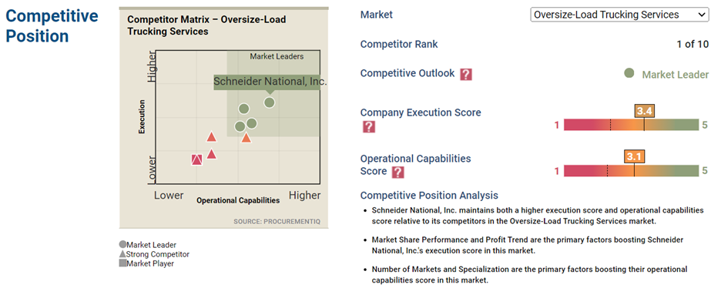
- SupplierIQ provides users with an in-depth look at over 5,000 suppliers featured in our reports. The SWOT section reveals each supplier's strengths, weaknesses, opportunities, and threats – including what specific financial risks they may be exposed to. The Competitive Position section ranks each supplier on a matrix according to several metrics, including but not limited to market share, market share trend, profitability, financial health, and regulatory risk. As the new rule impacts suppliers' profitability, knowing where suppliers stand financially and competitively can help your business anticipate risks.
- Core Collection
- The Business Requirements chapter of ProcurementIQ’s collection of reports, which covers over 1,000 categories across the globe, provides buyers with relevant negotiation questions and SLAs to ensure suppliers meet their obligations and control costs. Recent developments, such as the final rule, are incorporated throughout relevant reports. This includes sections discussing input cost drivers, supply chain risk, and the regulatory landscape, which contribute to a comprehensive understanding of how evolving labor laws influence your procurement process and reshape your supplier relationships.
Follow ProcurementIQ on LinkedIn to get notified of the latest procurement news and market developments from our experts to yours.


