
Key Takeaways
The Panama Canal and the Red Sea/Suez Canal are critical to global shipping, accounting for significant portions of worldwide trade. The severe drought in Panama and raging geopolitical conflicts in the Red Sea have disrupted these vital shipping lanes, leading to substantial delays and financial consequences on global trade.
Escalating shipping costs and considerable delays are affecting various sectors like retail and automotive, with current production slowdowns and looming shortages of key components affecting consumers and manufacturers alike.
In response to these issues, procurement professionals can take actional steps like diversifying supply chains, prioritizing inventory management, and considering marine cargo insurance to mitigate risk and navigate the volatile shipping environment.
The Panama Canal and the Red Sea are vital checkpoints in global shipping operations and significantly influence worldwide trade and the global economy. In the west, the Panama Canal acts as a shortcut between the Pacific and Atlantic Oceans, eliminating the need for ships to sail around South America via Cape Horn. In the east, the Red Sea offers a more direct shipping route between Europe and Asia through the Suez Canal, also removing the need for boats to travel around the Cape of Good Hope in South Africa. Currently, both are facing separate but major issues severely hindering the flow of goods across the two shipping lanes.
How important is the Panama Canal to World Trade?
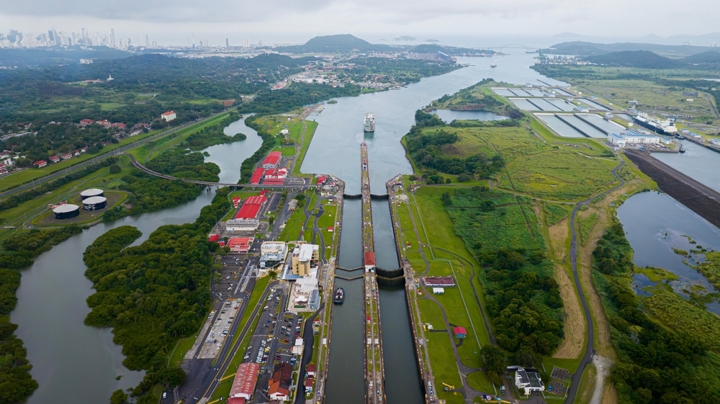
According to data published by the Center for Strategic and International Studies, the Panama Canal accounts for 6% of global trade. This seemingly small figure grows significantly when discussing US trade volume, as over 66% of cargo traffic traversing the canal originated or ended at a US port. Furthermore, cargo from or destined for China accounts for about 13% of traffic through the canal. Any disruption to cargo through the Panama Canal has widespread implications for global trade, specifically US-destined and Chinese manufactured goods.
Due to droughts in 2023 caused by El Niño, the Panama Canal has been facing a lengthy period of minimal to no rain. As a result, water levels in the canal have fallen drastically, which has severely limited the volume of ships capable of traveling through the waterway. Historically, the canal has allowed passage for 38 large, freight-carrying ships daily. This number has fallen to 24 vessels per day, amounting to a 36% decrease in daily shipping traffic. According to the canal’s deputy administrator, the drought and subsequent limitation of cargo traffic are expected to persist until at least May 2024. We have just entered Panama’s dry season where experts expect no rainfall for the next four months.
Experts in the shipping industry predict that the Panama Canal drought will affect goods used in all sectors. Specifically, the US East Coast trade will be severely affected. The only realistic alternative shipping route from Shenzhen, China to the US east coast is through the Suez Canal, which is currently experiencing severe problems of its own. Without these shipping lanes, product delays will increase as ships sit idle waiting for their turn in the queue. The events in Panama and Egypt are exacerbating the already weak freight sector, which has experienced tens of thousands of layoffs in the last year.
What about the Red Sea and Suez Canal?
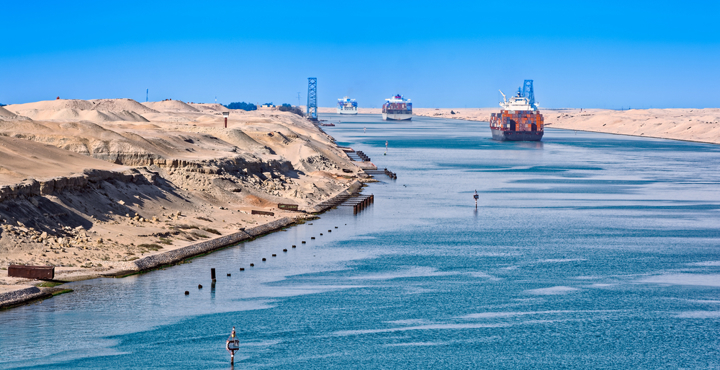
Like the Panama Canal, the Red Sea/Suez Canal shipping lane is extremely important to global shipping. It is estimated to account for 12% of worldwide trade and comprises 30% of all international container traffic. If traveling from the Indian Ocean through the Red Sea and Suez Canal, ships can reach Italy from India in just nine days. Conversely, traveling around Africa via the Cape of Good Hope takes about three weeks for the same trip, representing a 133% increase in shipping times.
Rather than weather events affecting the Red Sea like in Panama, geopolitical conflicts have been the main driver. Beginning in early December 2023, Iranian-backed Houthi Rebels residing in Yemen have been responsible for multiple attacks on US naval vessels and commercial ships entering the shipping lane. While utilizing an advanced armory of drones, missiles, and speed boats, Houthis have carried out successful attacks on over two dozen commercial ships since the beginning of the Red Sea Crisis.
Amid these major safety concerns, shipping giants like Maersk have since decided to avoid the Red Sea altogether. Experts estimate that over 90% of shipping activity that regularly uses the Red Sea has now rerouted, instead sailing around Africa via the Cape of Good Hope. The rerouting of Asia-Europe travel has significantly impacted shipping prices – contributing to a nearly 170% increase in the cost of shipping a 40-foot container ($1,500 to $4,000). The major contributor to higher shipping costs is the added fuel needed to sail on the alternative route around Africa.
European consumers and manufacturers alike have already begun feeling the adverse effects of the Red Sea Crisis. For industries like automobile manufacturers heavily reliant on the flow of parts from Asia to Europe through the Red Sea, output has already begun to slow. Both Tesla and Volvo have begun suspending some production activity due to a widespread shortage of components due to the events currently occurring in the Red Sea. This trend may lead to delays for automotive buyers, especially for electric vehicles that rely heavily on advanced chips and battery materials from Asia. For consumers, major retailers like Target and Ikea have already warned customers that shipping delays are near the horizon. Target, for example, relies heavily on manufactured apparel from India and Pakistan that has historically traveled through the Red Sea and Suez Canal. Although consumers have been largely insulated from any price shocks from the shipping crisis, they should continue to expect delays and reduced inventory for goods like attire and furniture. To keep up with shipping delays, retailers are limiting the total stock of goods available for purchase.
Actionable Insights
1. Assessing and Diversifying Supply Chains
Amid the two concurrent crises affecting the Panama Canal and Red Sea shipping lanes, it is paramount that procurement professionals reassess and diversify their supply chains to mitigate risk. For example, firms on the East Coast are highly likely to face increased shipping costs for goods originating from China, along with significant shipping delay risks. Even businesses relying on ports in the West Coast may experience interruptions, as many shipping containers are being rerouted to ports in Los Angeles and Seattle to finalize their trips on land. Additionally, buyers relying on European manufacturers should continue to monitor the Red Sea/Suez Canal Crisis, as many producers are already facing inventory shortages and manufacturing delays.
2. Prioritizing Inventory Management
In the face of heightened delay risks for critical input goods, procurement departments should accurately assess safety stock levels for both components and finished goods. The cost of holding additional inventory can be weighed against the cost of potential manufacturing and selling disruptions that can occur due to the events happening in Panama and the Red Sea.
3. Considering Shipping Insurance
As the frequency of geopolitical and climate change events increase, shipping insurance can be a valuable way of insulating your business from these external factors. Shipping insurance provides coverage against loss, damage, or delay that occurs when goods are in transit. Key benefits include financial protection and coverage for situations like climate change and geopolitical events while providing global coverage. Marine cargo insurance is offered by the leading insurance companies by market share like AIG, RLI Corporation, and Travelers Insurance.
Conclusion
The existing crises affecting the two channels are expected to continue having widespread repercussions on global trade. Companies and their procurement departments should continue to act decisively and strategically to best insulate their firms from the looming financial implications resulting from the events in Panama and the Red Sea.
Follow ProcurementIQ on LinkedIn to get notified of the latest procurement news and market developments from our experts to yours.


