
Key Takeaways
With new tariffs on the horizon, businesses should prepare for potential shifts in trade dynamics.
Companies should diversify supply chains to reduce tariff-related risks, with procurement professionals assessing exposure to high-risk destinations to ensure stability.
Maintaining higher inventory levels can safeguard against shortages and price spikes, but any decision to expedite orders should be balanced with potential freight cost increases due to demand.
Procurement teams should consider incorporating price adjustment clauses and caps in contracts to protect against tariff-induced price hikes, especially for commodities and other vulnerable markets.
In the weeks since the election, procurement professionals and supply chain managers are considering how the new Trump administration’s economic and trade policies will impact their businesses, both positively and negatively. Perhaps no policy will be more impactful to sourcing teams than tariffs, as they directly influence the cost of imports and fundamentally reshape global supply chain dynamics.
While the exact tariff percentages have varied, Trump has made known his ambitions to impose a tax on imported goods early in his second term. In this article, we’ll dive into what these proposed tariffs are, how they’ll impact businesses, and what procurement teams can do to best position themselves under increasingly protectionist trade policies.
How will tariffs affect the United States’ top trading partners?
On the campaign trail, President-Elect Trump has claimed he would impose several tariffs, the most notable of which include:
- A 10% tariff on imports from all countries
- Tariffs on Chinese goods ranging from 60% to 100%
- Tariffs on Mexican goods ranging from 25% to 200%
More recently, on November 25, 2024, Trump indicated in a Truth Social post that on his first day in office, he would sign an executive order that would impose an additional 10% tariff on all existing tariffs of Chinese products, as well as a 25% tariff on all goods coming from both Mexico and Canada. From Trump’s perspective, imposing these tariffs will protect American businesses from unfair competitive practices, create more jobs, boost government tax revenue, and vitalize the US economy. On the other side of the political aisle, President Biden has similarly seen the value of tariffs as a tool to protect industries critical to national security, such as semiconductor manufacturing and telecommunications.

The theory of comparative advantage suggests that tariffs can introduce barriers to trade and create inefficiencies, which could contribute to higher inflation. When tariffed goods arrive in the United States from abroad, American importers must pay the additional cost, which is based on the percentage of the good’s value, to the United States Customs and Border Protection (CBP). While American importers may absorb some of these costs, they often pass these costs on to other businesses and consumers by increasing prices.
The United States is the largest goods importer in the world, importing over $3,100 billion worth of goods in 2023. A 10% or 20% tariff on all imported goods and a 60% tariff on products imported from China would significantly increase businesses' costs and lower their profit margins.
While studies, including one from the United States International Trade Commission, find that the cost of tariffs is largely passed to the consumer, not every market or supplier can do so without significant changes in demand or consumer behavior.
How are businesses preparing for shifting tariff policies?
Reducing Reliance on Targeted Countries
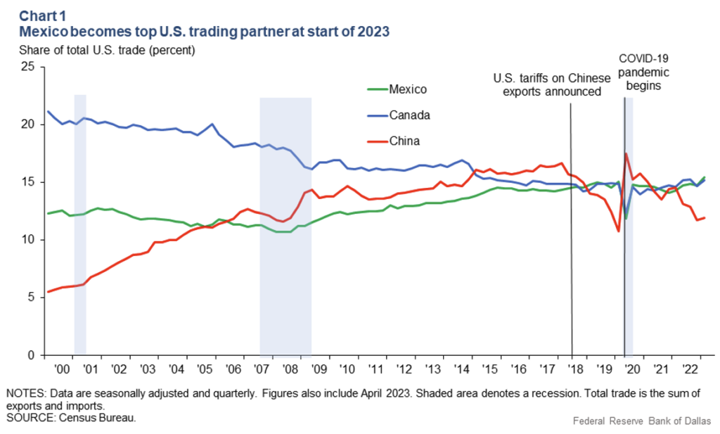
When faced with tariffs, companies most often pivot away from the targeted country. During its first term, the Trump administration imposed additional taxes targeting Chinese products, particularly machinery and electronics, ranging from 7.5% to 25%. The Biden administration maintained these policies and placed duties on an additional $18 billion worth of Chinese goods. Over the past seven years, cosmetics brand e.l.f. Beauty, Inc. decreased the percentage of its products manufactured in China from just under 100% to 80%. The wider data illustrates that the percentage of total US imports that were covered by Chinese tariffs declined from 21.6% in 2017 to 13.5% in 2024.
Of course, there are several additional reasons companies have moved operations out of China, with the outbreak of the coronavirus pandemic having an impact alongside the rise of other low-cost manufacturing locations. Companies with diversified supply chains that can shift to other markets in the wake of new tariffs will prove more competitive and pose a reduced price risk to buyers. At the minimum, both buyers and suppliers should understand their exposure to sourcing destinations that are at high risk of tariffs, outlining the steps they have taken to ensure their operations face minimal disruptions.
Boosting Inventory Levels
Several suppliers are increasing their inventories amid the expectation of further tariffs. Just in Time (JIT) strategies have undergone intense scrutiny in recent years as supply chain disruptions sparked global inflation due to a widespread shortage of goods. As a result, suppliers have resorted to boosting inventory levels, anticipating future shocks to the system, in a practice that has been dubbed “just in case” (JIC). Tariffs are reinforcing the JIC approach, as companies have begun expediting purchase orders from targeted countries before such tariffs come into effect.
The rush of suppliers purchasing goods is reflected in freight rates. A ProcurementIQ ad-hoc custom research report demonstrated that freight rates from Asia to the US West Coast doubled from July to November as importers raced to frontload their products before tariffs went into effect. This year, the announcement of the $18 billion increase in tariffs on goods from China led to a tripling of container rates in the three months from May to July. All these factors contribute to longer lead times and higher transportation costs for suppliers introducing greater volatility into markets across the economy. While expediting purchase orders may prove to be a viable strategy, this should be balanced with the risk of increased freight rates due to heightened demand, particularly on routes from targeted countries.
Adding Contract Provisions
Whether entering renewals with incumbent suppliers or issuing RFPs, procurement teams should raise the issue of tariffs and consider building protections to protect against any sharp rise in prices. Adding price adjustment clauses that stipulate when and by what mechanism prices can increase and caps that prevent prices from exceeding a designated threshold will shield buyers from the impacts of tariffs. These clauses are most important when purchasing products most likely to be impacted by tariffs, such as apparel, electronics, metals, and natural resources.
While buyers may consider locking in prices, particularly for commodities, they should establish whether quoted prices already include tariff considerations. There should be total transparency with your suppliers on how the impact of tariffs factors into the final price, particularly in industries where the link to tariffs may be less tangible.
Establishing Relationships Sooner
While domestic manufacturing may take years to ramp up, buyers should establish local relationships sooner rather than later, as domestic supply chains ensure the highest level of security.
Additional research provided by ProcurementIQ analyst Andrew Phan
Follow ProcurementIQ on LinkedIn to get notified of the latest procurement news and market developments from our experts to yours.


