
Key Takeaways
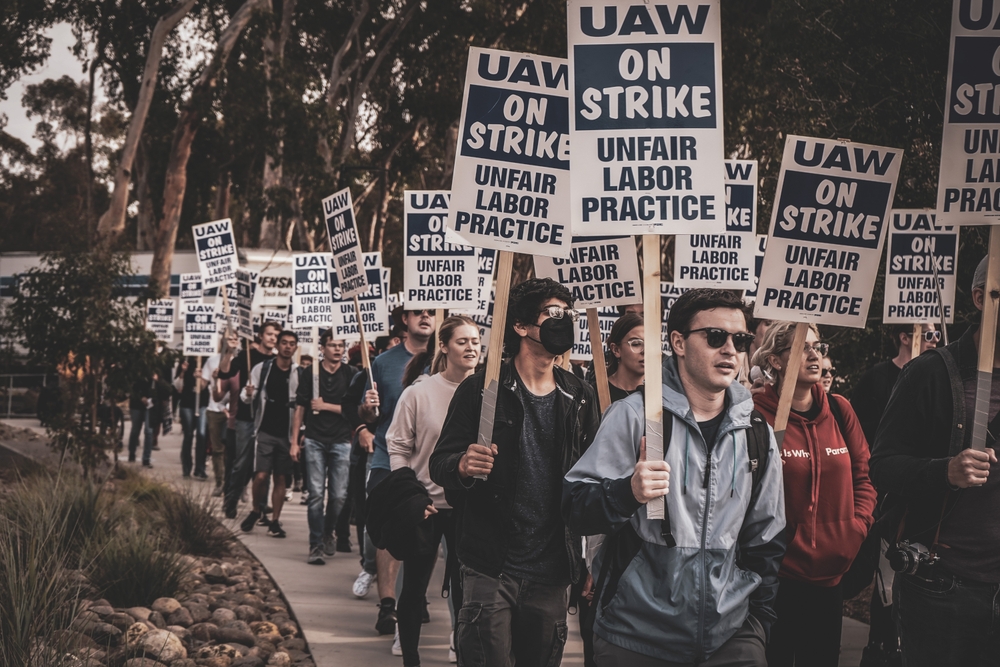
The United Auto Workers (UAW) strike is a rapidly evolving labor movement that will significantly affect the supply chain.
Buyers contracted with trucking, logistics, and metal and steel suppliers face a higher risk of supply chain disruptions.
Procurement professionals need to bolster their supply chains against the effects of the UAW strike through supplier diversification, regular supplier assessments, and contract management.
As we wrote back in August with the UPS-Teamsters union event, 2023 has been riddled with labor movements across different sectors of the American economy. Some, like the UPS strike, successfully negotiated better employee pay, benefits, and working hours. Unfortunately, other walkouts were not as successful. The SAG-AFTRA strike affecting the movie and television industry was hopeful of reaching an equitable result after months-long debates over the use of AI and uneven streaming revenue distribution. However, negotiations broke down again just last week, resulting in further uncertainty for the thousands of Americans working in the sector.
The latest labor strike movement by the United Auto Workers (UAW) bears many similarities to the UPS Teamsters strike. The ultimate goal of the strike is to guarantee higher wage growth over the next four years than what Ford, GM, and Stellantis have offered. The UAW is asking for a 36% pay rise over the next four years, while the American Big 3 automakers have only promised about 20%. In addition, the union is asking for better pay for new employees, reinstitution of overtime pay provisions, and better protections against projected manufacturing plant closures. The inflationary environment has eroded real wages for workers in the last three years and has been the primary driver of strike activity, while the rise of electric vehicles (EVs) has also threatened the long-term job outlook for workers currently employed at American ICE plants.
As the UAW strike enters month two, ripple effects are already being felt across the automotive sector. On October 11th, the 8,700 workers employed at Ford’s Kentucky truck plant (over $25 billion in annual revenue) joined the strike. The rapid deterioration of the firm’s manufacturing capabilities has reduced the supply of vehicles entering the market, with models like the Ford Ranger already experiencing dealership shortages. Additionally, vehicle parts have faced supply constraints, with dealerships and individuals reporting vehicle repair and maintenance delays. Individual buyers have also changed their purchasing behavior, with some opting to buy UAW vehicles to support the strike, while others are shifting away from US automakers entirely.
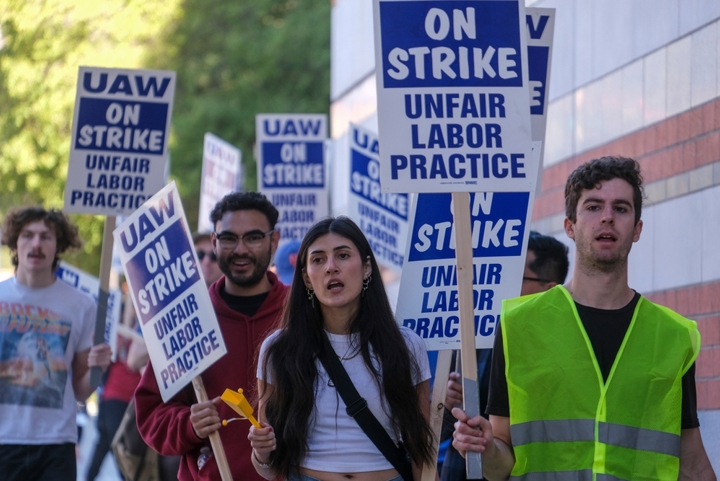
This labor strike movement will not only affect the automotive sector but the US and the global supply chain as a whole. Let’s investigate the sectors that will be hit hardest if the UAW strike persists in the coming months.
How will the UAW strike affect supply chains?
In a recent press conference by General Motors, CEO Mary Barra stated, “For every GM job, there’s six others in the economy that depend on us running.” A prolonged strike by the UAW will have widespread effects across the supply chain, so we should investigate those industries most at risk.
Trucking & Logistics
The trucking, logistics, and freight industry is forecasted to be the hardest hit by a prolonged strike by the UAW. According to the American Trucking Association president, the trucking industry transports over $950 billion of vehicles annually across the United States. The trucking industry, particularly smaller tier 2 and 3 companies, heavily relies on the continuous supply and demand loop of vehicles being manufactured, transported, and sold to consumers. A slowdown or halt in this loop due to a reduction in the supply of cars, likely resulting from a prolonged UAW strike, presents a significant financial risk for these firms. High interest rates and diminishing PPP funds allocated to smaller trucking firms add further risk of insolvency and job loss in the trucking and logistics industry.
Car Dealerships
Consumers will feel the brunt of the UAW strike when visiting car dealerships. With the Louisville Ford plant strike, car inventory shortages are expected to hit dealerships nationwide soon. Popular models, like the Ford Bronco and Ford Ranger, have already experienced rapid price growth amidst low supply. New car sales are forecast to continue rising in the next few months despite high interest rates, which will add further upward pressure to vehicle prices. Strikes affecting parts manufacturers have also caused long wait times for maintenance and repair services. Amidst the parts shortage, dealerships have even started trading parts among themselves to navigate the complex environment. This pressure applied on dealerships by the UAW strike may also lead to insolvency and job loss in the sector, similar to what is occurring with trucking & logistics.
Upstream Suppliers
Key upstream suppliers like the metal and steel industry are heavily reliant on automotive manufacturing activity to drive business operations. In 2022, the automotive sector accounted for an estimated 30% of the total revenue for notable steel firms like Cleveland-Cliffs. With the UAW strike escalating, smaller steel firms are at risk of insolvency, while larger firms like US Steel have already begun widespread layoffs and refinery closures. Instability in the steel industry can lead to price volatility and supply shortages for buyers from other major sectors like construction, energy, and machinery manufacturing.
What are the best practices for dealing with the UAW strike?
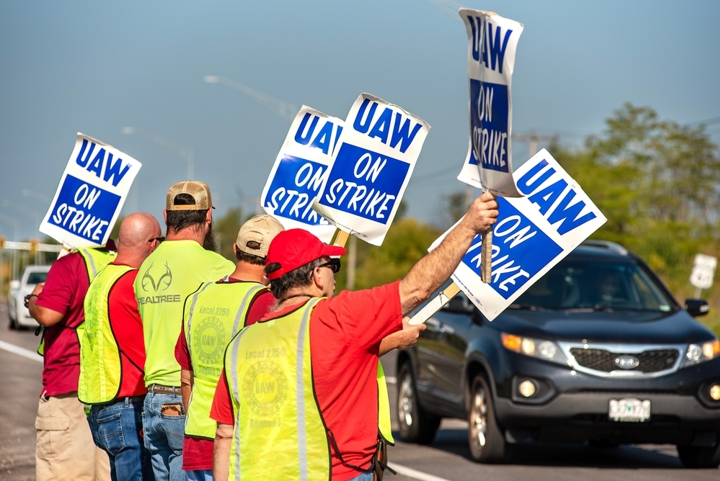
The widespread UAW strike can pose significant challenges for procurement professionals, particularly those in industries directly or indirectly connected to the automotive sector. Here are some strategies for navigating this challenging landscape:
Regular Supplier Assessment
Procurement professionals are responsible for regularly assessing suppliers to drive efficiency and business growth. These assessments, honing in on aspects like performance, capabilities, and risk levels, play an integral role in maintaining operational equilibrium, notably during crises such as a widespread UAW strike. Standard assessment tools include key performance indicators (KPIs) and service-level agreements (SLAs). Relevant KPIs include on-time delivery rate, lead time, and supplier responsiveness, all of which give you insight into how well a supplier navigates the effects of the UAW strike. For SLAs, you should consistently compare supplier performance with SLA obligations. Including penalty clauses in contracts can help ensure that business operations are not interrupted due to a supplier’s inability to navigate the consequences of the UAW strike.
Supplier Diversification
Supplier diversification should always be a focus in procurement operations, but it is imperative during supply chain uncertainty. As the UAW strike could spill over into upstream industries like metal and steel, you should ensure they have a widespread group of suppliers to mitigate supply chain risk. Diversifying allows greater flexibility in operations, as a larger number of suppliers reduces the likelihood of shipping delays, price shocks, and business disruptions. Additional benefits include increased price competition, bargaining power, and improved quality of goods and services throughout the supply chain. Re-examining suppliers and diversifying is especially important for industries affected by the strike, like metal and trucking.
Contract Management and Post-Strike Evaluations
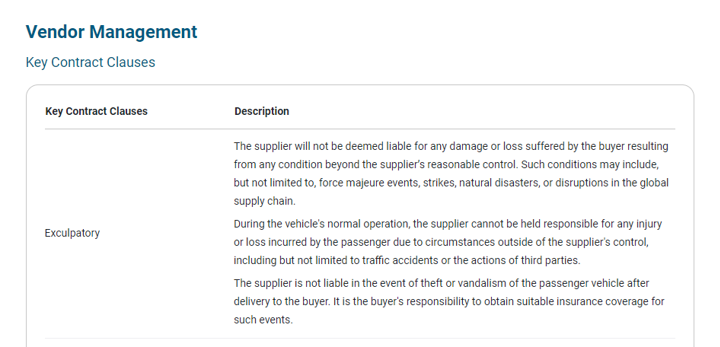
Key contract clauses are another way you can protect your business against labor strikes. For example, Force Majeure clauses free both parties from obligation during unexpected external events like widespread strikes. Additionally, key contract clauses related to Cancellation outline the circumstances allowing contract termination without incurring legal liabilities or penalties. These clauses can provide businesses with more control and flexibility during challenging situations. Readers can explore Force Majeure and Cancellation clauses under the Passenger Vehicles report in our procurement report library. You can see an example of our Key Contract Clauses section below.
Although the UAW strike is ongoing, you should implement post-strike evaluations upon its conclusion. Post-strike evaluations allow buyers to assess the strike’s impact on their supply chain while identifying vulnerable suppliers for future strike events. Fully quantifying the UAW strike's financial impact will help budget for similar labor movements that will add supply chain instability. You should also carefully examine existing contingency plans and lines of communication further to drive efficiency in the event of a future strike.
Final thoughts
The United Auto Workers (UAW) strike has considerably impacted various sectors, with significant implications for supply chains. This evolving event requires robust resilience strategies from procurement professionals regardless of industry. From regular supplier assessments and diversification to strategic contract management and thorough post-strike evaluations, these valuable approaches are necessary to navigate this uncertain supply chain landscape and potential future labor disputes. The situation underscores the importance of preparedness, adaptability, and vigilance in managing business operations amidst a constantly changing economic and labor environment.
Follow ProcurementIQ on LinkedIn to get notified of the latest procurement news and market developments from our experts to yours.


