Procurement Market Intelligence Report
Office Phones
Sourcing Guide & Market Intelligence
Smarter cost management starts with comprehensive market intelligence
 United States
 Global
Quick Navigation
Office Phones Global Overview
Definition
Summary
Office phones are handset telephones that offer additional functionality such as multiline options, call transfer, and automatic reception that are not normally featured in home phones. Buyers of office phones include businesses, government agencies, nonprofits, and resellers.
This Report Includes:
- Private Branch Exchange (PBX) Phone Systems
- Hosted PBX Services
- Voice-over-Internet Protocol (VoIP) Services
Not in this Report:
- Smartphones
- Telepresence Systems
Global Office Phones Procurement Trends
Discover the top international trends affecting procurement in the global Office Phones market.
Warning Trends
Tariffs to escalate prices for electronics and computing equipment
- The Trump administration’s reciprocating tariffs, which will increase the tariff on all products imported from nearly all US trade partners, are set to take effect on August 7 and are likely to drive price increases across a wide range of sectors.
- The United States is highly reliant on imported electronics, communication equipment, and computing devices, having imported more than $472 billion worth of electronics in 2024, or about half of the total domestic supply. Starting August 7, imports from key computer and electronics producers such as China (54,0%), Japan (15.0%), South Korea (15.0%), Thailand (19.0%), Vietnam (20.0%), and Taiwan (20.0%) will be subject to new tariff rates. Trade deals for many countries are still being negotiated, and these rates are subject to change.
- For this reason, the US electronics industry is highly exposed to price increases and supply chain disruptions when the tariffs take effect. For example, the cost of iPhones, which are predominantly manufactured in China, could rise by as much as 43.0% in response to tariffs, according to projections by Rosenblatt Securities.
- Overall, the Yale Budget Lab anticipates tariffs will increase the average cost of computers and electronics by 18.7% in the short term.
- The tariffs exempt semiconductors, limiting the cost increases for domestic electronics manufacturers, but the lack of domestic electronics assembly capacity means that this exemption will have a limited effect.
China bans exports of rare minerals to the United States
- On December 4, China announced a ban on all exports of gallium, germanium, graphite, and antimony to the United States, escalating existing trade restrictions on these materials.
- China is the leading global producer of each of these metals, producing 98.3%, 67.9%, 62.0%, and 48.2%, respectively, of the world’s gallium, germanium, graphite, and antimony supplies, respectively.
- The United States can still access these resources from other trade partners who make up most of the remaining global supply of the impacted commodities, such as Canada, Japan, and Brazil.
- However, the loss of supply from China, the leading producer of these materials, will increase prices and supply chain risk in a range of markets that rely on the affected metals, such as the semiconductor, batteries, and solar cell markets.
- China’s export ban on these materials is in retaliation to expanded US export bans on advanced semiconductor manufacturing equipment and technologies to China announced two days prior. This ongoing trade dispute adds further uncertainty to technology markets, which are often reliant on components and materials exported from China.
The FBI has warned that Chinese government hackers could disrupt critical infrastructure in the United States in the event of a conflict with China.
- The FBI announced on January 31 that it had thwarted an attempt by the Chinese government hacking group “Volt Typhoon” to plant malware onto electric power, water treatment and transportation systems in the United States using compromised end-of-life small office/home office (SOHO) routers from Cisco and Netgear. End-of-life devices have been discontinued by manufacturers and no longer receive software patches to eliminate vulnerabilities, which makes these devices attractive targets for hackers.
- US officials assess that China might disrupt critical US infrastructure to prevent the United States from responding to a Chinese attack on Taiwan. Volt Typhoon has been particularly active in Hawaii and Guam, which house some of the largest US military and naval installations in the Pacific.
- The FBI announced on September 18 that it had disrupted a botnet from another Chinese government hacking group known as “Flax Typhoon”. Flax Typhoon had infected 260,000 networking devices around the world, including SOHO routers, internet protocol (IP) cameras, digital video recorders (DVRs), and network-attached storage (NAS) devices.n
- The Cybersecurity and Infrastructure Security Agency (CISA) recommends that organizations use its Known Exploited Vulnerabilities (KEV) Catalog to identify any vulnerabilities in their systems. Furthermore, organizations can subscribe to receive KEV Catalog updates from the agency and may contact the agency for advice.
Global Office Phones Market - Suppliers by Region
| Country/Region | Number of Suppliers |
|---|---|
| #1 Oceania & Southeast Asia | 7,735 |
| #2 China | 5,670 |
| #3 Europe | 5,085 |
Explore supplier concentration across the globe
We've uncovered the 11 top regions for global procurement, based on feedback from our most strategic clients. Access vendor counts for each unique region when you subscribe.
2
Geography Drilldown - US
Average Cost of Office Phones
United States
2026 Market Pricing$25.00 to $XXX.XX
per phoneAverage Price
Prices in the Office Phones market range from $25.00 to $XXX.XX, depending on Type, Features and Phone Hardware. For example, lower prices are associated with Landline ($25.00 to $100), whereas higher prices are associated with Voice over internet protocol ($50.00 to $200).
Need the scoop on international price trends?
Between our Europe and Canada collections, we provide price data for 350 markets so you can instantly compare prices across borders. Or, use our custom research services for intel on prices in any region across the globe.
Office Phones Category Price Trends
Pricing trends are indicated by the compound annual growth rate (CAGR) during a set period of time. For the Office Phones market, prices in the US have grown 2.5% from 2022 to 2025. Subscribers can access price trend forecasts, price driver projections and forward-looking cost structure data. Learn more
United States (2022-2025)


Wondering where prices are heading?
Price trend forecasts are available to subscribers, along with price driver projections and forward-looking cost structure data.
Cost Analysis - Total Cost of Ownership for Office Phones
Total cost of ownership is High in the Office Phones market. The average cost of ownership differs depending on the contract but generally includes costs negotiated before the contract begins, costs billed during the contract period and unforeseen costs.
Negotiated Before
Installation
Billed During
Software
Buyer Power in Procurement Negotiations
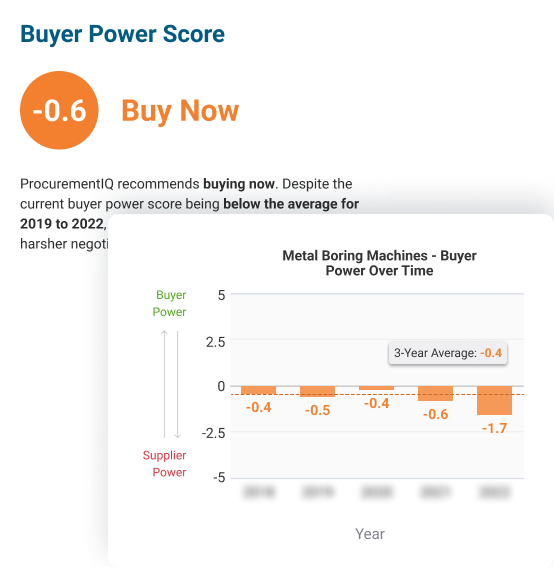
In 2026, buyer power amounts to -2.2 in the United States. Buyer power is most positively impacted by Recent Developments. It is most negatively impacted by Availability of Substitutes. Subscribers can access details on eight other factors that impact buyer power. Learn more
United States
Buyer power forecasts: your glimpse into the future
Develop strategies for the upcoming year and identify unforeseen opportunities for buying now
- Actionable "Buy Now" and "Buy Later" insights
- Near-real-time updates to current and forecast Buyer Power Scores
- Methodology and weightings for Buyer Power Score Components
Supply Chain Risk
The average level of supply chain risk is assessed as High, which has a negative impact on buyer power. The level of supply chain risk is affected by industry volatility, barriers to entry, competition, import penetration, regulation and industry financial risk. Buyers in this market can mitigate procurement and supply chain management risks by monitoring risk levels for individual first and second tier suppliers:
1st
Tier Suppliers
- Semiconductor & Circuit Manufacturing
- Plastic & Resin Manufacturing
- Wire & Cable Manufacturing
2nd
Tier Suppliers
- Copper Rolling, Drawing & Extruding
- Petroleum Refining
- Copper Mining
Biggest Office Phones Suppliers in the US by Revenue
The largest Office Phones vendors by revenue in the US are Yealink Network Technology Co. Ltd., At&T Inc. and Sony Corporation. Subscribers can sort and filter by market share concentration, profit level and other factors. Learn more
| Supplier | Operational Size | Headquarters | Number of Employees | Market Share (%) | Market Share Performance (3yr trend) | Total Revenue ($ million) | Profit Level (%) | Risk Level |
|---|---|---|---|---|---|---|---|---|
| Cisco Systems, Inc. | Global | SAN JOSE, CA | >10,000 | 20-25 | ||||
| Avaya Holdings Corp. | Global | DURHAM, NC | 1,001-10,000 | 5-10 | ||||
| VTech Holdings Limited | Global | Hong Kong, CN | >10,001 | 5-10 | ||||
| Plantronics, Inc. | Global | SANTA CRUZ, CA | 1,001-10,000 | 5-10 | ||||
| Axway Inc. | Global | Scottsdale, US | 1,001-10,000 | 5-10 | ||||
| Sony Corporation | Global | Tokyo, USA | >10,001 | < 5 | ||||
| Panasonic Corp | Global | Kadoma, JP | >10,001 | < 5 | ||||
| At&T Inc. | Global | DALLAS, TX | >10,000 | < 5 | ||||
| Mitel Networks Corp | Global | Ottowa, CA | 1,001-10,000 | < 5 | ||||
Looking for a list of suppliers by country?
Subscribers can access vendor information on Canadian and European suppliers, too. We also offer custom research services to help with vendor sourcing anywhere in the world.
Profit Analysis
The average profit margin across vendors in the Office Phones market is 9.0% and steady. Profit levels shift depending on suppliers' spend on wages, purchases and overhead. The highest cost component for vendors is Purchases. The cost trend for this component is falling, when considering movement between 2025 and 2026. To understand cost forecasts for 2027 and uncover the implications on profit, start your subscription. Learn more
Vendor & Supply Chain Analysis
The top four vendors hold between 35.0% to 50.0% of the total market share for manufacturing office phones, indicating a moderate level of concentration.
Average vendor risk is high due to high competition from substitutes and the market being in early decline.
Office phones are manufactured using a variety of inputs, including semiconductors, plastics, and wiring, which all have high levels of risk due to shifts in the price of these commodities as well as the implementation of tariffs. Supply chain risk is high as a result.
As a net importer of multiline office phones, US buyers should focus on negotiating competitive pricing by comparing price differences amongst foreign suppliers; however, when doing so, buyers should account for import taxes and tariffs, which can increase costs. Currently, finished office phones are not tariffed, helping reduce risk.
Supplier Information
Cisco Systems, Inc.
Cisco Systems, Inc. is a public company operating globally in the manufacturing, information and professional, scientific and technical services sectors. The company's offerings include rail signaling systems, office phones, print servers, computer servers, database management systems. Founded in 1984, the... Subscribe to learn more
Avaya Holdings Corp.
Avaya Holdings Corp. is a public company operating globally in the manufacturing and information sectors. The company's offerings include office phones, interactive voice response software, pbx phone systems and phone & video conference equipment. Founded in 2000, the company is currently headquartered in... Subscribe to learn more
Axway Inc.
74Software SA is a public company operating globally in the manufacturing and professional, scientific & technical services sectors. The company's offerings include office phones and mobile enterprise application platforms. Founded in 2000, the company is currently headquartered in Scottsdale, Arizona, United... Subscribe to learn more
Plantronics, Inc.
Plantronics, Inc. is a global communications technology company that designs, manufactures, and markets integrated communications and collaboration solutions for professionals. It offers a comprehensive selection of premium audio and video products, including wired and wireless communication headsets; open... Subscribe to learn more
VTech Holdings Limited
VTech Holdings Limited is a public company operating globally in the manufacturing sector. The company's offerings include office phones. Founded in 1989, the company is currently headquartered in Hong Kong, China with an estimated employee count of over 10,000. Subscribe to learn more
At&T Inc.
At&T Inc. is a public company operating globally in the manufacturing, information and professional, scientific and technical services sectors. The company's offerings include electronic logging devices, smartphones, office phones, air cards, mobile enterprise application platforms. Founded in 1885, the company... Subscribe to learn more
Mitel Networks Corp
Mitel Networks Corp is a private company operating globally in the manufacturing and information sectors. The company's offerings include office phones, hosted pbx services, pbx phone systems and videoconferencing software. Founded in 1973, the company is currently headquartered in Ottowa, Ontario, Canada... Subscribe to learn more
Panasonic Corp
Panasonic Corp is a public company operating globally in the manufacturing and information sectors. The company's offerings include warehouse management systems, commercial refrigerators & freezers, industrial freezers, alkaline batteries, lithium-ion batteries. Founded in 1918, the company is currently headquartered... Subscribe to learn more
Sony Corporation
Sony Corporation is a public company operating globally in the manufacturing sector. The company's offerings include smartphones, office phones, flash memory devices, e-reader devices, computer displays. Founded in 2002, the company is currently headquartered in Tokyo, United States of America, Japan with... Subscribe to learn more
Accelerate the vendor selection process
Get a clear picture of the competition in a market and discover which vendors are best-suited for your sourcing needs. Our supplier profiles include hard-to-find financial ranges for private companies, cover public company data and feature an interactive competitor matrix.
Procurement Management KPIs for the Office Phones Market
Managing vendor performance throughout the contract period is easier when tracking specific key performance indicators (KPIs). For example, buyers should monitor Cash Flow and Customer Retention Rate. Buyers may experience better performance throughout their contracts if they establish service level agreements (SLAs) based on Technical Support and other factors.
| KPI | Level of Importance (1-5) | Measurements | Key Considerations |
|---|---|---|---|
| Cash Flow |
|
Quick ratio Financial risk level |
Vendors with positive cash flow are preferred because it signifies a higher level of profitability and solvency of the vendor. These factors minimize the risk of a supplier abruptly exiting the market. If a vendor exits the market, their products become less valuable and can become unusable after a certain time. |
| Customer Retention Rate |
|
Client reviews Renewal rate |
Vendors with a higher customer retention rate indicate a higher quality of service and better office phones. Buyers should avoid vendors with a low customer retention rate. |

Questions to Ask During Procurement Negotiations
How can I gain leverage during negotiations?
Quality Control
How many reports of phone malfunctions has your company received in the past three years? How do you handle the discovery of faulty phones?
What types of technical issues have you experienced with this product?
Value-Added Services
What additional discounts and service upgrades do you offer those who are willing to buy office phones in bulk?
If I were to subscribe to your hosted PBX or VoIP business phone system solutions, could you provide your premium plan and a lower introductory rate?
Competition
What incentives do you give to new clients that are switching from a competitor?
What incentives do you give to long-term clients to stay with your company? Do you offer any incentives to firms that refer businesses to your company?
The ultimate prep for procurement negotations
View all 28 negotiation questions for this category when you subscribe.
Office Phones RFP Guidelines
What should my RFP include?
Organizational Overview
Buyers should describe and specify the size of their organization.
Buyers should indicate whether they only require office phones or if they also require additional hardware or communication and network equipment.
Statement Of Need
Buyers should indicate the number of office phones they need.
Buyers should provide any required specifications for the devices, such as programmable automatic attendant, call queue, Bluetooth capability and caller identification display.
Project Budget
Buyers should specify their budgets for office phones and related goods and services.
Buyers should indicate when payment will occur (e.g. the winning bidder will be paid in one lump sum upon award of the contract).
The RFP process made easy
Find out how you can access RFP templates for 800+ procurement categories to start writing better, more consistent RFPs.
We display average pricing information, trends and market data.
Our Reports include:
- Opportunity assessment
- Market dynamics
- Recent developments
- Positive and warning trends
- Buyer power levers
- Price environment and market pricing
- Geographic wage rates
- Global market updates
- Total cost of ownership
- Cost structure benchmarks and analysis
- Supply chain and vendors
- Global supplier breakdown
- Market share concentration
- Regulation and business requirements
- Vendor management and KPIs
- Sourcing strategy guidance