Procurement Market Intelligence Report
Antifreeze
Sourcing Guide & Market Intelligence
Smarter cost management starts with comprehensive market intelligence
 United States
 Global
Quick Navigation
Antifreeze Global Overview
Definition
Summary
Antifreeze is a chemical additive that lowers the freezing point of water-based liquids. Antifreeze is typically used as a coolant for internal combustion engines and helps prevent corrosion. Top buyers include automobile manufacturers, automotive parts vendors, and consumers. Buyers can purchase antifreeze from retailers, wholesalers, and directly from manufacturers.
This Report Includes:
- Concentrated/Diluted Antifreeze
- Ethylene/Propylene Glycol
Not in this Report:
- Lubricating Oils
- Gasoline
- Vehicular Fluids
Take the ProcurementIQ products and data tour
Explore live samples of price trend forecasts, price driver projections, forward-looking cost structure data and more.
Global Antifreeze Procurement Trends
Discover the top international trends affecting procurement in the global Antifreeze market.
Warning Trends
Tariffs on fuel additives, lubricants, and anti-corrosive materials to increase costs in the sector
- On August 1, the Trump Administration finalized sweeping tariffs on most major US import partners, in addition to the already announced 25.0% and 35.0% tariffs on Mexico and Canada, and a 10.0% tariff on energy imports from Canada. According to the Energy Information Administration, Canada and Mexico account for 71.2% of US crude oil imports, 35.7% of US petroleum product imports, and 99.6% of US natural gas imports.
- These tariffs will increase both the cost of importing fuel additives, lubricants, and anti-corrosive materials and the cost of sourcing primary inputs necessary for making these products, affecting both international and domestic suppliers. However, reduced oil and gas demand tied to higher tariffs and a possible economic slowdown may counteract some of the tariff price increases in this market.
- Tariffs on steel and aluminum and falling oil prices are also increasing vendor risk for upstream suppliers in the sector; according to the New York Times, tariffs on steel have pushed up the cost of new oil and gas wells by 10.0% to 20.0%. According to S&P Global, oil country tubular goods, made from steel, are anticipated to rise 15.0% in price with the increase in tariffs, and because these expenses account for 8.0% to 10.0% of drilling and completion costs, the fuel additives, lubricants, and anti-corrosive materials supply chain will see increased risk of disruption.
Neutral
Crude oil prices dip, but natural gas and fuel prices remain volatile in 2025
- Oil prices have been falling with the introduction of higher tariffs and the predicted decline in global demand. The OPEC+ group of countries also announced they would be unwinding production cuts and increasing their collective output target for May by 411,000 barrels per day.
- Trade wars, ongoing conflict between Hamas and Israel, and general unrest in the Middle East are causing uncertainty surrounding oil prices, which has led to volatility in prices. In the third week of May 2025, crude oil prices hit $63.67 per barrel, but volatility remains as geopolitical concerns remain.
- Natural gas prices rallied early in 2025 with colder-than-usual temperatures in the United States and high demand, topping out at $4.68/MMBtu in March. Prices have since fallen with the onset of trade wars and weakening demand projections to $3.64/MMBtu in the third week of May 2025.
- The national average of gasoline prices has been rising slightly due to refinery maintenance/outages and blending issues, hitting a national average of $3.15 per gallon in the third week of May 2025. However, gasoline futures have been volatile, falling due to fears of oversupply and deepening concerns about weakening demand with tariffs, but rising after trade deals.
Global Antifreeze Market - Suppliers by Region
| Country/Region | Number of Suppliers |
|---|---|
| #1 China | 26,255 |
| #2 Europe | 15,660 |
| #3 India | 12,895 |
Explore supplier concentration across the globe
We've uncovered the 11 top regions for global procurement, based on feedback from our most strategic clients. Access vendor counts for each unique region when you subscribe.
Geography Drilldown - US
Average Cost of Antifreeze
United States
2026 Market Pricing$7.98 to $XX.XX
per gallonAverage Price
Prices in the Antifreeze market range from $7.98 to $XX.XX, depending on Alcohol Base, Additives or Lubricants, Corrosion Inhibitors and Concentrate. For example, lower prices are associated with Ethylene glycol ($11.00 to $18.00 per gallon), whereas higher prices are associated with Propylene glycol ($13.00 to $21.00 per gallon).
Need the scoop on international price trends?
Between our Europe and Canada collections, we provide price data for 350 markets so you can instantly compare prices across borders. Or, use our custom research services for intel on prices in any region across the globe.
Antifreeze Category Price Trends
Pricing trends are indicated by the compound annual growth rate (CAGR) during a set period of time. For the Antifreeze market, prices in the US have grown 0.5% from 2022 to 2025. Subscribers can access price trend forecasts, price driver projections and forward-looking cost structure data. Learn more
United States (2022-2025)


Wondering where prices are heading?
Price trend forecasts are available to subscribers, along with price driver projections and forward-looking cost structure data.
Cost Analysis - Total Cost of Ownership for Antifreeze
Total cost of ownership is Low in the Antifreeze market. The average cost of ownership differs depending on the contract but generally includes costs negotiated before the contract begins, costs billed during the contract period and unforeseen costs. For example, unforeseen costs in the form of Delays may raise the total cost of ownership unexpectedly.
Negotiated Before
Transportation
Customization
Billed During
Maintenance
Disposal
Unforeseen
Delays
Spoilage
Buyer Power in Procurement Negotiations
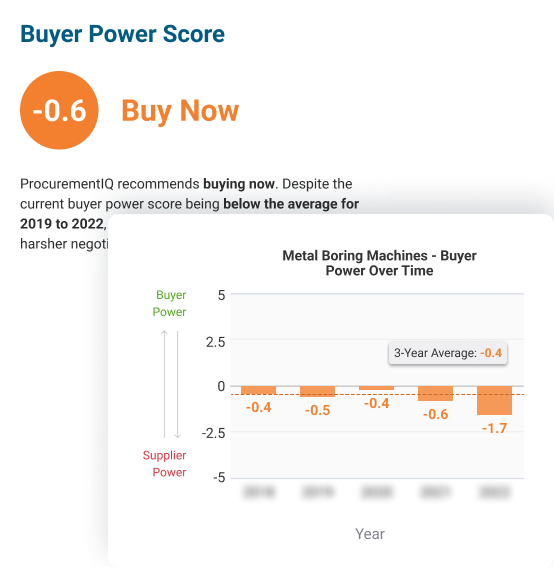
In 2026, buyer power amounts to -1.7 in the United States. Buyer power is most positively impacted by Recent Developments. It is most negatively impacted by Product Specialization. Subscribers can access details on eight other factors that impact buyer power. Learn more
United States
Buyer power forecasts: your glimpse into the future
Develop strategies for the upcoming year and identify unforeseen opportunities for buying now
- Actionable "Buy Now" and "Buy Later" insights
- Near-real-time updates to current and forecast Buyer Power Scores
- Methodology and weightings for Buyer Power Score Components
Supply Chain Risk
The average level of supply chain risk is assessed as High, which has a negative impact on buyer power. The level of supply chain risk is affected by industry volatility, barriers to entry, competition, import penetration, regulation and industry financial risk. Buyers in this market can mitigate procurement and supply chain management risks by monitoring risk levels for individual first and second tier suppliers:
1st
Tier Suppliers
- Organic Chemical Manufacturers
- Chemical Product Manufacturers
- Chemical Wholesalers
2nd
Tier Suppliers
- Petroleum Refiners
- Inorganic Chemical Manufacturers
- Nonferrous Metal Refiners
Biggest Antifreeze Suppliers in the US by Revenue
The largest Antifreeze vendors by revenue in the US are Phillips 66 Co, Valvoline Inc. and Autozone Inc. Subscribers can sort and filter by market share concentration, profit level and other factors. Learn more
| Supplier | Operational Size | Headquarters | Number of Employees | Market Share (%) | Market Share Performance (3yr trend) | Total Revenue ($ million) | Profit Level (%) | Risk Level |
|---|---|---|---|---|---|---|---|---|
| Bp Plc | Global | LONDON | >10,000 | 10-15 | ||||
| Honeywell International Inc. | Global | CHARLOTTE | >10,000 | 10-15 | ||||
| Valvoline Inc. | Global | Lexington, KY | 1,001-10,000 | 10-15 | ||||
| Royal Dutch Shell Plc | Global | LONDON | >10,000 | 5-10 | ||||
| Old World Industries, LLC | Global | Northbrook, IL | 251-500 | 5-10 | ||||
| Exxon Mobil Corporation | Global | SPRING | >10,000 | < 5 | ||||
| TotalEnergies SE | Courbevoie | >10,000 | < 5 | |||||
| Chevron Corp | Global | HOUSTON, CA | >10,000 | < 5 | ||||
| General Motors Company | International | DETROIT | >10,000 | < 5 | ||||
Looking for a list of suppliers by country?
Subscribers can access vendor information on Canadian and European suppliers, too. We also offer custom research services to help with vendor sourcing anywhere in the world.
Profit Analysis
The average profit margin across vendors in the Antifreeze market is 4.2% and steady. Profit levels shift depending on suppliers' spend on wages, purchases and overhead. The highest cost component for vendors is Purchases. The cost trend for this component is falling, when considering movement between 2025 and 2026. To understand cost forecasts for 2027 and uncover the implications on profit, start your subscription. Learn more
Vendor & Supply Chain Analysis
The average market vendor has low financial risk. Most suppliers provide various other goods and services, such as oil, gas, and chemicals, that improve the company's profits and have stable demand trends, decreasing the risk of supplier discontinuity.
The top four antifreeze suppliers account for approximately 45.0% of the total market revenue, indicating high market share concentration. Vendors with high brand name recognition; like Valvoline, Prestone (Honeywell), and Castrol (BP); occupy relatively significant shares.
Supply chain risk is high in the antifreeze market, and is anticipated to rise further as higher tariff rates disrupt upstream supply chains. Natural gas and crude oil refineries and inorganic and organic chemical manufacturers pose the greatest upstream threat to market suppliers, especially in the event of factory shutdowns.
The United States is a net exporter of antifreeze, which means buyers benefit from a consistent availability of domestic antifreeze. As a result, buyers benefit from greater domestic availability, the ability to seek foreign supply options, and a limited impact of rising tariffs.
Supplier Information
Bp Plc
Bp Plc is a public company operating globally in the manufacturing, manufacturing and finance and insurance sectors. The company's offerings include lubricating oils, jet fuel, diesel fuel, gasoline, bunker fuel. Founded in 1909, the company is currently headquartered in London, United Kingdom with an estimated... Subscribe to learn more
Honeywell International Inc.
Honeywell International Inc. is a global technology and manufacturing company that designs, develops, produces, and markets consumer and industrial products. It organizes its business into four reportable business segments: the Aerospace segment, which supplies products, software, and services for aircraft;... Subscribe to learn more
Valvoline Inc.
Valvoline Inc. is a public company operating globally in the manufacturing sector. The company's offerings include lubricating oils, diesel exhaust fluid (def), hydraulic oil and antifreeze. Founded in 1866, the company is currently headquartered in Lexington, Kentucky, United States of America with an estimated... Subscribe to learn more
Old World Industries, LLC
Old World Industries, LLC is a private company operating globally in the manufacturing sector. The company's offerings include diesel exhaust fluid (def) and antifreeze. Founded in 1973, the company is currently headquartered in Northbrook, Illinois, United States of America with an estimated 330 employees.... Subscribe to learn more
Royal Dutch Shell Plc
Royal Dutch Shell Plc is a public company operating globally in the manufacturing, manufacturing, finance and insurance and other services (except public administration) sectors. The company's offerings include refining catalysts, lubricating oils, jet fuel, diesel fuel, gasoline. Founded in 1907, the company... Subscribe to learn more
Autozone Inc.
Autozone Inc. is a public company operating internationally in the manufacturing and manufacturing sectors. The company's offerings include antifreeze and oil filters. Founded in 1979, the company is currently headquartered in Memphis, Tennessee, United States of America with an estimated 112000 employees.... Subscribe to learn more
Basf Se
Basf Se is a public company operating globally in the manufacturing, manufacturing and professional, scientific & technical services sectors. The company's offerings include pesticides, refining catalysts, plasticizers, preservatives, waterproofing coatings. Founded in 1865, the company is currently headquartered... Subscribe to learn more
Caterpillar Inc.
Caterpillar Inc. is a public company operating globally in the manufacturing, manufacturing, manufacturing, wholesale trade, real estate and rental and leasing and other services (except public administration) sectors. The company's offerings include antifreeze, drilling & exploration equipment, drilling Subscribe to learn more
Chevron Corp
Chevron Corp is a public company operating globally in the manufacturing and finance and insurance sectors. The company's offerings include lubricating oils, synthetic resins, jet fuel, diesel fuel, gasoline. Founded in 1879, the company is currently headquartered in SAN RAMON, California, United States of... Subscribe to learn more
Accelerate the vendor selection process
Get a clear picture of the competition in a market and discover which vendors are best-suited for your sourcing needs. Our supplier profiles include hard-to-find financial ranges for private companies, cover public company data and feature an interactive competitor matrix.
Procurement Management KPIs for the Antifreeze Market
Managing vendor performance throughout the contract period is easier when tracking specific key performance indicators (KPIs). For example, buyers should monitor Customer Complaints and Customer Retention Rate. Buyers may experience better performance throughout their contracts if they establish service level agreements (SLAs) based on Quality and other factors.
| KPI | Level of Importance (1-5) | Measurements | Key Considerations |
|---|---|---|---|
| Customer Complaints |
|
Number of customer responses Number of customer complaints |
Customer complaints represent customers’ overall complaints/dissatisfaction with a company or product. A high number of customer complaints for a company's product will require more research before procurement. Buyers should inquire with vendors about specific complaints to avoid similar issues. |
| Customer Retention Rate |
|
Number of customers at start of period Number of customers added within period |
The customer retention rate represents the number of customers a company is able to retain over a set timeframe. The customer retention rate can be used to determine the extent to which a company’s customer base fluctuates over time. |

Questions to Ask During Procurement Negotiations
How can I gain leverage during negotiations?
Price
What is the average price of your products?
How has your average price changed during the past three years?
Experience and Expertise
What is the benefit of working with you compared to another supplier?
What industry do you have the most experience working with?
Geographic Coverage
How many branches do you have across the United States? How about globally?
Can you ship internationally if needed?
The ultimate prep for procurement negotations
View all 30 negotiation questions for this category when you subscribe.
Antifreeze RFP Guidelines
What should my RFP include?
Organizational Overview
Buyers should give an overview of their organization and state the industry in which they operate.
Buyers should list the types of vehicles or equipment that require the use of antifreeze.
Statement Of Need
Buyers should specify the type of antifreeze that they require, including the base type and any functionality they require from additives and inhibitors.
Buyers should state the volume of product that they wish to purchase.
Project Budget
Buyers should indicate their maximum budget for the contract.
Buyers should request the per-unit price and a breakdown of any additional costs that they may incur during the course of the contract (e.g., delivery fees).
The RFP process made easy
Find out how you can access RFP templates for 800+ procurement categories to start writing better, more consistent RFPs.
We display average pricing information, trends and market data.
Our Reports include:
- Opportunity assessment
- Market dynamics
- Recent developments
- Positive and warning trends
- Buyer power levers
- Price environment and market pricing
- Geographic wage rates
- Global market updates
- Total cost of ownership
- Cost structure benchmarks and analysis
- Supply chain and vendors
- Global supplier breakdown
- Market share concentration
- Regulation and business requirements
- Vendor management and KPIs
- Sourcing strategy guidance