Procurement Market Intelligence Report
Bulldozers
Sourcing Guide & Market Intelligence
Smarter cost management starts with comprehensive market intelligence
 United States
 Global
Quick Navigation
Bulldozers Global Overview
Definition
Summary
Bulldozers are a type of construction equipment vehicle with large metal plates on the front called blades. They are used to grade and push material. Bulldozers are either wheeled or tracked and may also feature various attachments on the blades called rippers, which are meant for loosening densely compacted ground. Typical buyers include land developers, contractors, and mining companies.
This Report Includes:
- Wheel Dozers
- Crawler Dozers
- Mini Dozers
- New Bulldozers
- Used Bulldozers
Not in this Report:
- Front-End Loaders
- Excavators
- Cranes
- Graders
- Attachments & Accessories
Global Bulldozers Procurement Trends
Discover the top international trends affecting procurement in the global Bulldozers market.
Warning Trends
Fed lowers rates for the first time in 2025
- On September 17, the Federal Reserve’s Federal Open Market Committee (FOMC) voted to lower interest rates to a target range of 4.0% to 4.25%, down 0.25% from the rate it had been holding since November of last year.
- Despite indications at the start of the year that steady reductions to the relatively high 4.25% to 4.5% rate were on the horizon, the Fed held off on rate cuts for much of the year due to concerns that the combination of higher tariffs and a reduction in borrowing costs could cause rebounding inflation.
- The September cut to Fed interest rates signals a shift in this strategy, indicating that the Fed now considers weakening employment figures a greater threat than inflation. As a result, FOMC officials have also signaled that two additional rate cuts are likely before the end of the year in an effort to fight unemployment and stimulate the economy.
- Declining Fed funds rates will provide relief to borrowers by lowering the market interest rates for consumer and business loans. This reduction in the cost of borrowing will reduce the cost of many banking and financial services, and may spur increases in demand across the economy.
Tariffs to negatively impact the building and construction machinery sector
- The Trump Administration’s reciprocal tariffs, which apply general tariff rate increases to most countries the United States trades with, are set to take effect on August 7, after the administration finalized the national rates on August 1. As a result, leading sources of imported construction machinery face significantly higher tariff rates, including Japan (15.0%), Mexico (25.0%), South Korea (15.0%), the European Union (15.0%), the United Kingdom (10.0%), China (54.0%), and Canada (35.0%).
- The increase in tariffs on building and construction machinery imported from tariff-impacted countries will add to the price of imports, which are typically passed on to buyers in the form of higher prices. According to The Budget Lab at Yale, the additional tariffs on imports will increase overall prices for machinery and equipment by 13.3%.
- Additionally, the administration has already implemented 50.0% tariffs on all aluminum and steel imported into the United States, with the sole exception of imports from the United Kingdom. These tariffs will increase input costs even for construction machinery suppliers with domestic manufacturing operations.
- According to an April 2025 survey from Construction Equipment Magazine, around half of the respondents reported that the higher tariffs will increase operating costs by up to 15.0%, and more than half said they plan to pass those increases along to buyers.
- As many building and construction machinery brands source parts and components such as steel, engines, and electronics from foreign countries, higher tariff rates will put upward pressure on prices and lead to greater rental rates as manufacturers and dealers pass on costs. In addition, suppliers that source parts from tariff-affected regions may see supply chain disruptions as they seek alternative suppliers to mitigate tariff impacts.
Increased tariffs on copper imports take effect
- On August 1, the Trump administration implemented 50.0% tariffs on imported copper. Chile and Canada will be most impacted by these tariffs, as they account for a combined 87.0% of all copper imports in the United States.
- However, these tariffs are less sweeping than initially expected, only applying to semi-finished copper products, while excluding high-purity refined copper and copper input materials, such as ore and concentrate. As leading importers, such as Chile and Canada, have both high copper mining and refining capacities, they will likely avoid most of these tariffs by either exporting the copper in its unrefined form or refining the copper before exporting it to the United States
- These copper tariff exemptions limit the impact on the electronics and electrical equipment sectors because these applications require refined copper due to its optimal conductive properties.
- Thus, the prices of metal alloys that include copper, consumer products made from copper, tools, plumbing, corrosion-resistant alloys, and construction materials made from copper are forecast to rise by an average of 39.2%, according to the Yale Budget Lab.
Global Bulldozers Market - Suppliers by Region
| Country/Region | Number of Suppliers |
|---|---|
| #1 China | 3,170 |
| #2 Europe | 3,040 |
| #3 United States | 1,150 |
Explore supplier concentration across the globe
We've uncovered the 11 top regions for global procurement, based on feedback from our most strategic clients. Access vendor counts for each unique region when you subscribe.
2
Geography Drilldown - US
Average Cost of Bulldozers
United States
2026 Market Pricing$17,000.00 to $X,XXX,XXX.XX
per bulldozerAverage Price
Prices in the Bulldozers market range from $17,000.00 to $X,XXX,XXX.XX, depending on Engine Type, Bulldozer Type, Bulldozer Blade Type, Condition and Weight. For example, lower prices are associated with Engine with 80 to 92 horsepower (HP) ($10,000 to $40,000) and Lower-numbered cylinder engine ($10,000 to $45,000), whereas higher prices are associated with Engine with 600 to 850 HP ($70,000 to $200,000) and Higher-numbered cylinder engine ($80,000 to $220,000).
Need the scoop on international price trends?
Between our Europe and Canada collections, we provide price data for 350 markets so you can instantly compare prices across borders. Or, use our custom research services for intel on prices in any region across the globe.
Bulldozers Category Price Trends
Pricing trends are indicated by the compound annual growth rate (CAGR) during a set period of time. For the Bulldozers market, prices in the US have grown 0.5% from 2022 to 2025. Subscribers can access price trend forecasts, price driver projections and forward-looking cost structure data. Learn more
United States (2022-2025)


Wondering where prices are heading?
Price trend forecasts are available to subscribers, along with price driver projections and forward-looking cost structure data.
Cost Analysis - Total Cost of Ownership for Bulldozers
Total cost of ownership is High in the Bulldozers market. The average cost of ownership differs depending on the contract but generally includes costs negotiated before the contract begins, costs billed during the contract period and unforeseen costs.
Negotiated Before
Financing
Customization
Transportation
Billed During
Insurance
Maintenance
Fuel
Buyer Power in Procurement Negotiations
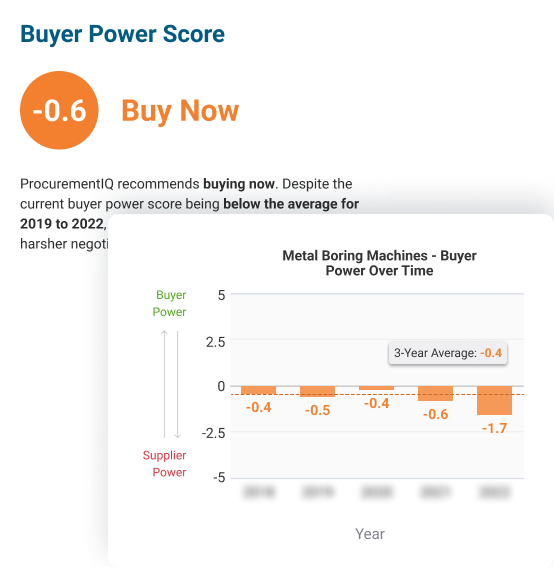
In 2026, buyer power amounts to -1.7 in the United States. Buyer power is most positively impacted by Recent Developments. It is most negatively impacted by Recent Price Volatility. Subscribers can access details on eight other factors that impact buyer power. Learn more
United States
Buyer power forecasts: your glimpse into the future
Develop strategies for the upcoming year and identify unforeseen opportunities for buying now
- Actionable "Buy Now" and "Buy Later" insights
- Near-real-time updates to current and forecast Buyer Power Scores
- Methodology and weightings for Buyer Power Score Components
Supply Chain Risk
The average level of supply chain risk is assessed as Medium, which has a negative impact on buyer power. The level of supply chain risk is affected by industry volatility, barriers to entry, competition, import penetration, regulation and industry financial risk. Buyers in this market can mitigate procurement and supply chain management risks by monitoring risk levels for individual first and second tier suppliers:
1st
Tier Suppliers
- Engine & Turbine Manufacturers
- Steel Framers
- Electric Power Transmissioners
2nd
Tier Suppliers
- Metal Door Manufacturers
Biggest Bulldozers Suppliers in the US by Revenue
The largest Bulldozers vendors by revenue in the US are Hyundai Heavy Industries Co. Ltd., Cnh Global N V and FAYAT SAS. Subscribers can sort and filter by market share concentration, profit level and other factors. Learn more
| Supplier | Operational Size | Headquarters | Number of Employees | Market Share (%) | Market Share Performance (3yr trend) | Total Revenue ($ million) | Profit Level (%) | Risk Level |
|---|---|---|---|---|---|---|---|---|
| Cnh Global N V | Global | BASILDON, ESSEX | >10,000 | 10-15 | ||||
| Caterpillar Inc. | Global | IRVING, IL | >10,000 | 25+ | ||||
| Ab Volvo | Global | Gothenburg, SE | >10,001 | 5-10 | ||||
| Deere & Co | National | MOLINE, IL | >10,000 | 5-10 | ||||
| Hyundai Heavy Industries Co. Ltd. | Global | Ulsan, KR | >10,001 | < 5 | ||||
| Hitachi Ltd. | Global | Tokyo, JPN | >10,001 | < 5 | ||||
| Komatsu Ltd | Global | Tokyo, JP | >10,001 | < 5 | ||||
| Terex Corp | Global | NORWALK, CT | 1,001-10,000 | < 5 | ||||
| FAYAT SAS | Global | Bordeua, FR | >10,000 | < 5 | ||||
Looking for a list of suppliers by country?
Subscribers can access vendor information on Canadian and European suppliers, too. We also offer custom research services to help with vendor sourcing anywhere in the world.
Profit Analysis
The average profit margin across vendors in the Bulldozers market is 5.5% and steady. Profit levels shift depending on suppliers' spend on wages, purchases and overhead. The highest cost component for vendors is Purchases. The cost trend for this component is falling, when considering movement between 2025 and 2026. To understand cost forecasts for 2027 and uncover the implications on profit, start your subscription. Learn more
Vendor & Supply Chain Analysis
Overall, vendor risk in this market is moderate. The high demand for bulldozers helps keep profit levels relatively stable.
The market share concentration for bulldozers is high due to the high barriers to entry for market vendors.
The supply chain risk for this market is moderate; many bulldozer suppliers face potential steel supply shortages due to uncertainties over tariffs and trade restrictions between the United States and other steel-producing countries, which can shift demand and supply dynamics overnight. However, the steel supply has been stable, and market suppliers have not been facing any inventory shortages.
The United States is a net importer of bulldozers, meaning it imports more than it exports. This increases foreign competition within the market but indicates that buyers have greater international options, which may result in a wider variety of products and potential cost advantages.
Supplier Information
Cnh Global N V
Cnh Global N V is a public company operating globally in the manufacturing sector. The company's offerings include harvesting machines, front-end loaders, motor graders, bulldozers, excavators. Founded in 1842, the company is currently headquartered in Basildon, United Kingdom with an estimated employee count... Subscribe to learn more
Caterpillar Inc.
Caterpillar Inc. is a public company operating globally in the manufacturing, manufacturing, manufacturing, wholesale trade, real estate and rental and leasing and other services (except public administration) sectors. The company's offerings include antifreeze, drilling & exploration equipment, drilling Subscribe to learn more
Ab Volvo
Ab Volvo is a public company operating globally in the manufacturing and wholesale trade sectors. The company's offerings include forestry & logging equipment, front-end loaders, motor graders, bulldozers, excavators. Founded in 1927, the company is currently headquartered in Gothenburg, Sweden with an estimated... Subscribe to learn more
Deere & Co
Deere & Co is a public company operating nationally in the manufacturing and wholesale trade sectors. The company's offerings include soil preparation machinery, planting & seeding machinery, harvesting machines, agricultural dispersing & spraying equipment, forestry & logging equipment. Founded in 1837, Subscribe to learn more
FAYAT SAS
FAYAT SAS is a private company operating globally in the manufacturing sector. The company's offerings include bulldozers and paving equipment. Founded in 1957, the company is currently headquartered in Bordeua, Cedex, France with an estimated 10000 employees. Subscribe to learn more
Hitachi Ltd.
Hitachi Ltd. is a public company operating globally in the manufacturing and wholesale trade sectors. The company's offerings include forestry & logging equipment, front-end loaders, bulldozers, excavators, building demolition machinery & equipment. Founded in 1910, the company is currently headquartered Subscribe to learn more
Hyundai Heavy Industries Co. Ltd.
Hyundai Heavy Industries Co. Ltd. is a public company operating globally in the construction and manufacturing sectors. The company's offerings include front-end loaders, excavators, building demolition machinery & equipment and oil & gas facility construction & maintenance. Founded in 1972, the company is... Subscribe to learn more
Komatsu Ltd
Komatsu Ltd is a public company operating globally in the manufacturing and wholesale trade sectors. The company's offerings include drilling & exploration equipment, forestry & logging equipment, front-end loaders, motor graders, bulldozers. Founded in 1921, the company is currently headquartered in Tokyo,... Subscribe to learn more
Liebherr Group
Liebherr-International AG is a private company operating globally in the manufacturing sector. The company's offerings include front-end loaders, bulldozers, excavators, building demolition machinery & equipment, tower cranes. Founded in 1949, the company is currently headquartered in Bulle, Switzerland with... Subscribe to learn more
Accelerate the vendor selection process
Get a clear picture of the competition in a market and discover which vendors are best-suited for your sourcing needs. Our supplier profiles include hard-to-find financial ranges for private companies, cover public company data and feature an interactive competitor matrix.
Procurement Management KPIs for the Bulldozers Market
Managing vendor performance throughout the contract period is easier when tracking specific key performance indicators (KPIs). For example, buyers should monitor Average Resolution Time and Average Time to Repair. Buyers may experience better performance throughout their contracts if they establish service level agreements (SLAs) based on Qualifications and other factors.
| KPI | Level of Importance (1-5) | Measurements | Key Considerations |
|---|---|---|---|
| Average Resolution Time |
|
Total resolution time Number of resolved tickets |
The average resolution time represents the average time it takes to resolve a support ticket. Because heavy machinery is essential to construction operations, a high average resolution time increases delays and the total cost of ownership. |
| Average Time to Repair |
|
Comprehensiveness of warranties Lifetime of warranty |
Some vendors may offer maintenance contracts for specific parts, which can help reduce downtime. Vendors will differ in the level of maintenance coverage included in their contracts. |

Questions to Ask During Procurement Negotiations
How can I gain leverage during negotiations?
Experience and Expertise
Can you meet your clients' customization needs? With what manufacturer/brand do you have the most experience working? How do you benefit from the partnership?
What is the benefit of working with you rather than with another supplier?
Quality Control
What differentiates your attachments from those of your competitors?
What have you done to improve your component reliability during the past few years?
Specifications
How versatile is this particular model? Can I expect it to perform well in my intended usage?
What is the average lifespan of your type(s) of bulldozers?
The ultimate prep for procurement negotations
View all 32 negotiation questions for this category when you subscribe.
Bulldozers RFP Guidelines
What should my RFP include?
Organizational Overview
Buyers should describe their organizations and explain why they are seeking bulldozers.
Buyers need to describe the earthmoving or excavation work that needs to be completed. This overview should give vendors enough information to quickly evaluate whether they can provide bulldozers that move the anticipated amount of earth efficiently.
Statement Of Need
Buyers must provide the intended application of the bulldozers, the number of units desired, and whether they plan to make an outright purchase or opt for financing.
Buyers should state the specifications of the bulldozers required.
Project Budget
Buyers should explicitly state the amount of the contract award.
Buyers should explain when and how many payments will be made.
The RFP process made easy
Find out how you can access RFP templates for 800+ procurement categories to start writing better, more consistent RFPs.
We display average pricing information, trends and market data.
Our Reports include:
- Opportunity assessment
- Market dynamics
- Recent developments
- Positive and warning trends
- Buyer power levers
- Price environment and market pricing
- Geographic wage rates
- Global market updates
- Total cost of ownership
- Cost structure benchmarks and analysis
- Supply chain and vendors
- Global supplier breakdown
- Market share concentration
- Regulation and business requirements
- Vendor management and KPIs
- Sourcing strategy guidance