Procurement Market Intelligence Report
Cement
Sourcing Guide & Market Intelligence
Smarter cost management starts with comprehensive market intelligence
 United States
 Canada
 Europe
 Global
Quick Navigation
Cement Global Overview
Definition
Summary
Cement is a powder composed of various minerals and other components that harden when combined with water; it is commonly used as a building material. There are a number of different types of cement available to buyers, including Portland cement, as well as various blends of masonry and mortar cement. Buyers can purchase cement in bulk or in individual bags.
This Report Includes:
- Portland Cement
- Masonry Cement
- Mortar Cement
- Bulk Cement
- Bagged Cement
Not in this Report:
- Lime
- Concrete
Global Cement Procurement Trends
Discover the top international trends affecting procurement in the global Cement market.
Warning Trends
Public sector demand slumps as the government enters shutdown
- On October 1, the US federal government entered a shutdown after negotiations for a new appropriations bill failed.
- During a government shutdown, essential federal government operations, such as law enforcement, air-traffic control, and social security, persist, while nonessential operations are paused and workers involved in these operations are furloughed. Thus, the current shutdown is expected to result in 750,000 federal workers being furloughed, representing a $400 million reduction in daily expenditure by the federal government.
- This significant reduction in federal spending and operations will affect the entire US economy, weakening aggregate demand and slowing economic growth. For example, the 35-day government shutdown in Q1, 2019, reduced aggregate demand in both the public and private sectors, resulting in a 0.2% reduction in GDP growth that quarter.
- The effects of the shutdown are likely to be most acute in markets where the public sector is a major buyer segment, weakening demand and increasing average vendor risk by destabilizing important revenue streams.
- As negotiations for a new appropriations bill to reopen the government remain ongoing, ProcurementIQ will continue to monitor the situation and update this story with the latest information.
Fed lowers rates for the first time in 2025
- On September 17, the Federal Reserve’s Federal Open Market Committee (FOMC) voted to lower interest rates to a target range of 4.0% to 4.25%, down 0.25% from the rate it had been holding since November of last year.
- Despite indications at the start of the year that steady reductions to the relatively high 4.25% to 4.5% rate were on the horizon, the Fed held off on rate cuts for much of the year due to concerns that the combination of higher tariffs and a reduction in borrowing costs could cause rebounding inflation.
- The September cut to Fed interest rates signals a shift in this strategy, indicating that the Fed now considers weakening employment figures a greater threat than inflation. As a result, FOMC officials have also signaled that two additional rate cuts are likely before the end of the year in an effort to fight unemployment and stimulate the economy.
- Declining Fed funds rates will provide relief to borrowers by lowering the market interest rates for consumer and business loans. This reduction in the cost of borrowing will reduce the cost of many banking and financial services, and may spur increases in demand across the economy.
Tariffs to negatively impact building and construction components and supplies sector
- The Trump Administration’s reciprocal tariffs, which impose higher tariffs on all products imported from most foreign nations, are set to take effect on August 7, after the rates were finalized on August 1. As a result, most construction material import sources face higher tariffs, including Mexico (25.0%), Canada (35.0%), Turkiye (15.0%), and China (54.0%).
- According to Realtor.com, about 70.0% of the softwood lumber and drywall gypsum (used for drywall) used in residential construction is imported from Canada and Mexico, respectively. According to the New York Times, drywall prices could rise by 22.0%. Other products like wood utility poles, medium-density fiberboard, particleboard, plywood, wood veneers, and wood pulp will also see higher prices as a result.
- The Yale Budget Lab estimates that construction inputs like cement could see a 3.5% increase in price with higher tariffs on imports. Turkiye, Canada, and Mexico, which account for over 65.0% of US imports, face tariff rates of 10.0%, 25.0%, and 25.0%, respectively.
- Specific steel and aluminum tariffs of 50.0% on all US imports are also negatively affecting buyers of building and construction components and supplies like sheet metal, automatic sliding doors, garage doors, ladders, posts and bollards, and more. In 2024, 23.0% of all steel used in the United States was imported from foreign countries such as Canada and Mexico.
- US manufacturers reliant on imported plastic resins from countries like China will not be impacted by tariffs as key resins, like polyethylene, polypropylene, and PET, will be exempt from the reciprocal tariffs. Other construction components and supplies that are compliant with the United States-Canada-Mexico Agreement will be exempt from tariffs.
Global Cement Market - Suppliers by Region
| Country/Region | Number of Suppliers |
|---|---|
| #1 China | 4,155 |
| #2 Europe | 2,970 |
| #3 India | 2,445 |
Explore supplier concentration across the globe
We've uncovered the 11 top regions for global procurement, based on feedback from our most strategic clients. Access vendor counts for each unique region when you subscribe.
2
Geography Drilldown - US, Canada & Europe
Average Cost of Cement
United States
2026 Market Pricing$80.00 to $XXX.XX
per metric ton
Average Price
Prices in the Cement market range from $80.00 to $XXX.XX, depending on Grade, Type, Certifications and Volume. For example, lower prices are associated with Grade 33 ($106 to $160), whereas higher prices are associated with Grade 43 ($110 to $180) and Grade 53 ($112 to $170).
Need the scoop on international price trends?
Between our Europe and Canada collections, we provide price data for 350 markets so you can instantly compare prices across borders. Or, use our custom research services for intel on prices in any region across the globe.
Cement Category Price Trends
Pricing trends are indicated by the compound annual growth rate (CAGR) during a set period of time. For the Cement market, prices in the US have grown 7.2% from 2022 to 2025. and +0.9% in Europe.
United States (2022-2025)

Europe (2022-2025)
Compound Annual Growth Rate
Wondering where prices are heading?
Price trend forecasts are available to subscribers, along with price driver projections and forward-looking cost structure data.
Cost Analysis - Total Cost of Ownership for Cement
Total cost of ownership is Medium in the Cement market. The average cost of ownership differs depending on the contract but generally includes costs negotiated before the contract begins, costs billed during the contract period and unforeseen costs. For example, unforeseen costs in the form of Restocking may raise the total cost of ownership unexpectedly.
Negotiated Before
Rentals
Transportation
Billed During
Consumables
Unforeseen
Restocking
Buyer Power in Procurement Negotiations
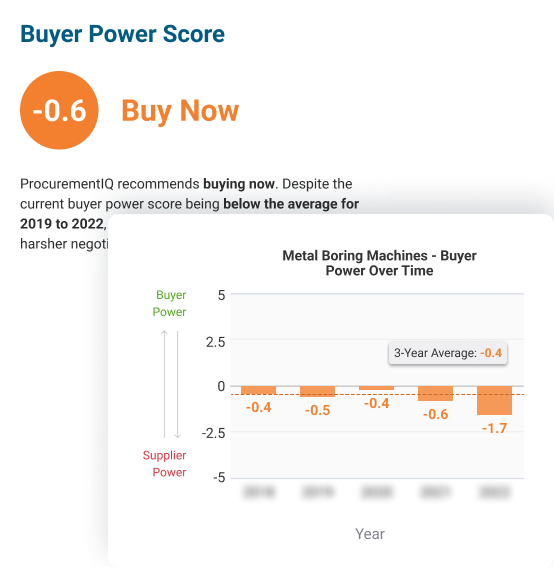
In 2026, buyer power amounts to -3.6 in the United States. Buyer power is most positively impacted by Recent Developments. It is most negatively impacted by Product Specialization. Subscribers can access details on eight other factors that impact buyer power. Learn more
United States
Buyer power forecasts: your glimpse into the future
Develop strategies for the upcoming year and identify unforeseen opportunities for buying now
- Actionable "Buy Now" and "Buy Later" insights
- Near-real-time updates to current and forecast Buyer Power Scores
- Methodology and weightings for Buyer Power Score Components
Supply Chain Risk
The average level of supply chain risk is assessed as High, which has a negative impact on buyer power. The level of supply chain risk is affected by industry volatility, barriers to entry, competition, import penetration, regulation and industry financial risk. Buyers in this market can mitigate procurement and supply chain management risks by monitoring risk levels for individual first and second tier suppliers:
1st
Tier Suppliers
- Coal & Natural Gas Power Providers
- Sand & Gravel Miners
- Mineral & Phosphate Miners
2nd
Tier Suppliers
- Coal Mining Operations
- Explosives Manufacturers
Biggest Cement Suppliers in the US by Revenue
The largest Cement vendors by revenue in the US are Titan Cement International S.A., Cemex Sab De Cv and Heidelbergcement Ag. Subscribers can sort and filter by market share concentration, profit level and other factors. Learn more
| Supplier | Operational Size | Headquarters | Number of Employees | Market Share (%) | Market Share Performance (3yr trend) | Total Revenue ($ million) | Profit Level (%) | Risk Level |
|---|---|---|---|---|---|---|---|---|
| CRH PLC | Global | DUBLIN 16 | >10,000 | 10-15 | ||||
| Heidelbergcement Ag | Global | Heidelberg, DE | >10,001 | 15-20 | ||||
| Cemex Sab De Cv | Global | San Pedro Garza García, MX | >10,001 | 15-20 | ||||
| Holcim Ltd. | Global | Zug, CH | >10,001 | 20-25 | ||||
| Buzzi Unicem SPA | Global | Casale Monferrato, IT | >10,001 | 5-10 | ||||
| Eagle Materials Inc. | National | DALLAS, TX | 1,001-10,000 | 5-10 | ||||
| Votorantim Cimentos | Global | Sao Paulo, BR | >10,001 | < 5 | ||||
| Vulcan Materials Company | International | BIRMINGHAM, AL | >10,000 | < 5 | ||||
| Titan Cement International S.A. | International | Brussels, BE | 1,001-10,000 | < 5 | ||||
Looking for a list of suppliers by country?
Subscribers can access vendor information on Canadian and European suppliers, too. We also offer custom research services to help with vendor sourcing anywhere in the world.
Profit Analysis
The average profit margin across vendors in the Cement market is 3.4% and steady. Profit levels shift depending on suppliers' spend on wages, purchases and overhead. The highest cost component for vendors is Overhead. The cost trend for this component is falling, when considering movement between 2025 and 2026. To understand cost forecasts for 2027 and uncover the implications on profit, start your subscription. Learn more
Vendor & Supply Chain Analysis
Changes in state regulations regarding cement manufacturing do not change as quickly as federal regulations, as the Environmental Protection Agency (EPA) is the primary agency dictating how cement manufacturers can operate.
Average vendor risk in the market is medium, indicating that buyers may face some service disruptions due to complications such as financial instability in vendors.
Market share concentration in the market is high, indicating that the leading vendors in the market control a significant portion of market revenue, making them operate less competitively.
Supply chain risk in the market is high due to shortages and volatile pricing for many of the minerals and fuels required to produce cement, and these risks are elevated due to shifting tariff policies. As a result, buyers face greater risk than a vendor may have product availability issues or change prices unpredictably.
The United States is a net importer of cement, indicating the presence of foreign vendors within the domestic market, increasing price-based competition. However, the reliance on foreign-sourced cement increases supply chain risk and the chance of supply disruptions.
Supplier Information
CRH PLC
CRH Public Ltd. Co. is engaged in the global material business. It organizes its business into three segments: the Americas Materials Division, which produces and supplies building materials and services for construction projects in the US and Canada, including cement, aggregates, ready-mixed concrete, and... Subscribe to learn more
Cemex Sab De Cv
Cemex Sab De Cv is a public company operating globally in the mining, construction and manufacturing sectors. The company's offerings include cement, construction aggregates, commercial concrete pipes and concrete pumping services. Founded in 1906, the company is currently headquartered in San Pedro Garza... Subscribe to learn more
Heidelbergcement Ag
Heidelbergcement Ag is a public company operating globally in the mining, construction and manufacturing sectors. The company's offerings include cement, construction aggregates, commercial concrete pipes and concrete pumping services. Founded in 1889, the company is currently headquartered in Heidelberg,... Subscribe to learn more
Holcim Ltd.
Holcim Ltd. is a public company operating globally in the mining, construction and manufacturing sectors. The company's offerings include cement, construction aggregates, commercial concrete pipes and concrete pumping services. Founded in 1912, the company is currently headquartered in Zug, Switzerland with... Subscribe to learn more
Buzzi Unicem SPA
Buzzi SpA is a public company operating globally in the manufacturing sector. The company's offerings include cement. Founded in 1907, the company is currently headquartered in Casale Monferrato, Alessandria, Italy with an estimated employee count of over 10,000. Subscribe to learn more
Eagle Materials Inc.
Eagle Materials Inc. is a public company operating nationally in the manufacturing sector. The company's offerings include cement. Founded in 1963, the company is currently headquartered in DALLAS, Texas, United States of America with an estimated 2400 employees. Subscribe to learn more
Titan Cement International S.A.
Titan Cement International S.A. is a public company operating internationally in the manufacturing sector. The company's offerings include cement. Founded in 1902, the company is currently headquartered in Brussels, Belgium with an estimated 5500 employees. Subscribe to learn more
Votorantim Cimentos
Votorantim Cimentos is a Global operator providing Cement from their headquarters in Sao Paulo, BR. This operator has a staff size of about >10,001 employees. According to ProcurementIQ estimates, Votorantim Cimentos holds < 5% of market share... Subscribe to learn more
Vulcan Materials Company
Vulcan Materials Company is a public company operating internationally in the mining, construction and manufacturing sectors. The company's offerings include cement, construction aggregates and concrete pumping services. Founded in 1909, the company is currently headquartered in BIRMINGHAM, Anguilla, United... Subscribe to learn more
Accelerate the vendor selection process
Get a clear picture of the competition in a market and discover which vendors are best-suited for your sourcing needs. Our supplier profiles include hard-to-find financial ranges for private companies, cover public company data and feature an interactive competitor matrix.
Procurement Management KPIs for the Cement Market
Managing vendor performance throughout the contract period is easier when tracking specific key performance indicators (KPIs). For example, buyers should monitor Average Resolution Time and Customer Complaints. Buyers may experience better performance throughout their contracts if they establish service level agreements (SLAs) based on Product Specifications and other factors.
| KPI | Level of Importance (1-5) | Measurements | Key Considerations |
|---|---|---|---|
| Average Resolution Time |
|
Number of days for vendor to resolve issues addressed by the buyer Average length of time before issues are resolved |
Assessing the speed at which vendors can resolve any issues, such as order delays or wrong product shipments, can be an indicator of a vendor's customer service. Buyers should keep track of what kind of issues are resolved the quickest. |
| Customer Complaints |
|
Number of complaints per order Average number of complaints per month |
Buyers should keep track of the number of complaints they issue against a vendor. Excessive complaints may warrant a switch in vendors. Buyers should weigh the number of minor complaints against major complaints to determine whether switching vendors is warranted or if contract renegotiation for incentives is a better alternative. |

Questions to Ask During Procurement Negotiations
How can I gain leverage during negotiations?
Quality Control
How do you ensure your product's quality? What performance-monitoring systems are in place at your company?
Do you test the compressive strength, workability and soundness of each batch of cement you produce? What other tests do you conduct?
Regulation
How has the EPA regulating GHG emissions affected your business? If the EPA finalizes the current regulations on GHGs, how would your company be affected?
Are you planning on upgrading a cement kiln within the next year or so?
Competition
What sets your cement product line apart from that of your competitors?
What is your reputation like among competitors and customers and how have you developed it?
The ultimate prep for procurement negotations
View all 29 negotiation questions for this category when you subscribe.
Cement RFP Guidelines
What should my RFP include?
Organizational Overview
Buyers should provide a description of their operations, including any relevant history of their company.
Buyers should provide an explanation of their organizational structure, including which department is in charge of the final vendor selection and budget overseeing.
Statement Of Need
Buyers should list the type of cement required. If more than one type of cement is required, buyers should list all the types being procured.
Buyers should provide a breakdown of the quantity needed for each type of cement.
Project Budget
Buyers should state their total budget for the purchase.
Buyers should break down their budget for each type of cement if more than one type is being purchased.
The RFP process made easy
Find out how you can access RFP templates for 800+ procurement categories to start writing better, more consistent RFPs.
We display average pricing information, trends and market data.
Our Reports include:
- Opportunity assessment
- Market dynamics
- Recent developments
- Positive and warning trends
- Buyer power levers
- Price environment and market pricing
- Geographic wage rates
- Global market updates
- Total cost of ownership
- Cost structure benchmarks and analysis
- Supply chain and vendors
- Global supplier breakdown
- Market share concentration
- Regulation and business requirements
- Vendor management and KPIs
- Sourcing strategy guidance