Procurement Market Intelligence Report
Construction Aggregates
Sourcing Guide & Market Intelligence
Smarter cost management starts with comprehensive market intelligence
 United States
 Global
Quick Navigation
Construction Aggregates Global Overview
Definition
Summary
Aggregates are used in the construction and maintenance of housing and nonresidential buildings, infrastructure, highways, and roads. Construction aggregates are often used to create level surfaces to build on or for drainage purposes. Construction aggregates are also used to strengthen and reinforce composite materials, such as concrete.
This Report Includes:
- Sand
- Gravel
- Crushed stone
- Artificial aggregates
Not in this Report:
- Concrete
- Cement
- Plaster products
Global Construction Aggregates Procurement Trends
Discover the top international trends affecting procurement in the global Construction Aggregates market.
Warning Trends
Public sector demand slumps as the government enters shutdown
- On October 1, the US federal government entered a shutdown after negotiations for a new appropriations bill failed.
- During a government shutdown, essential federal government operations, such as law enforcement, air-traffic control, and social security, persist, while nonessential operations are paused and workers involved in these operations are furloughed. Thus, the current shutdown is expected to result in 750,000 federal workers being furloughed, representing a $400 million reduction in daily expenditure by the federal government.
- This significant reduction in federal spending and operations will affect the entire US economy, weakening aggregate demand and slowing economic growth. For example, the 35-day government shutdown in Q1, 2019, reduced aggregate demand in both the public and private sectors, resulting in a 0.2% reduction in GDP growth that quarter.
- The effects of the shutdown are likely to be most acute in markets where the public sector is a major buyer segment, weakening demand and increasing average vendor risk by destabilizing important revenue streams.
- As negotiations for a new appropriations bill to reopen the government remain ongoing, ProcurementIQ will continue to monitor the situation and update this story with the latest information.
Tariffs to negatively impact building and construction components and supplies sector
- The Trump Administration’s reciprocal tariffs, which impose higher tariffs on all products imported from most foreign nations, are set to take effect on August 7, after the rates were finalized on August 1. As a result, most construction material import sources face higher tariffs, including Mexico (25.0%), Canada (35.0%), Turkiye (15.0%), and China (54.0%).
- According to Realtor.com, about 70.0% of the softwood lumber and drywall gypsum (used for drywall) used in residential construction is imported from Canada and Mexico, respectively. According to the New York Times, drywall prices could rise by 22.0%. Other products like wood utility poles, medium-density fiberboard, particleboard, plywood, wood veneers, and wood pulp will also see higher prices as a result.
- The Yale Budget Lab estimates that construction inputs like cement could see a 3.5% increase in price with higher tariffs on imports. Turkiye, Canada, and Mexico, which account for over 65.0% of US imports, face tariff rates of 10.0%, 25.0%, and 25.0%, respectively.
- Specific steel and aluminum tariffs of 50.0% on all US imports are also negatively affecting buyers of building and construction components and supplies like sheet metal, automatic sliding doors, garage doors, ladders, posts and bollards, and more. In 2024, 23.0% of all steel used in the United States was imported from foreign countries such as Canada and Mexico.
- US manufacturers reliant on imported plastic resins from countries like China will not be impacted by tariffs as key resins, like polyethylene, polypropylene, and PET, will be exempt from the reciprocal tariffs. Other construction components and supplies that are compliant with the United States-Canada-Mexico Agreement will be exempt from tariffs.
Global Construction Aggregates Market - Suppliers by Region
| Country/Region | Number of Suppliers |
|---|---|
| #1 China | 14,860 |
| #2 India | 11,355 |
| #3 Africa & Middle East | 7,830 |
Explore supplier concentration across the globe
We've uncovered the 11 top regions for global procurement, based on feedback from our most strategic clients. Access vendor counts for each unique region when you subscribe.
2
Geography Drilldown - US
Average Cost of Construction Aggregates
United States
2026 Market Pricing$4.00 to $XX.XX
per tonAverage Price
Prices in the Construction Aggregates market range from $4.00 to $XX.XX, depending on Type of Aggregate, Particle Size, Aggregate Material and Quantity. For example, lower prices are associated with Crushed gravel & stone ($10 to $30), Stone dust ($6 to $30) and Bank run fill ($6 to $25), whereas higher prices are associated with Decorative stone ($20 to $50) and Mason sand ($15 to $50).
Need the scoop on international price trends?
Between our Europe and Canada collections, we provide price data for 350 markets so you can instantly compare prices across borders. Or, use our custom research services for intel on prices in any region across the globe.
Construction Aggregates Category Price Trends
Pricing trends are indicated by the compound annual growth rate (CAGR) during a set period of time. For the Construction Aggregates market, prices in the US have declined -0.0% from 2022 to 2025. Subscribers can access price trend forecasts, price driver projections and forward-looking cost structure data. Learn more
United States (2022-2025)


Wondering where prices are heading?
Price trend forecasts are available to subscribers, along with price driver projections and forward-looking cost structure data.
Cost Analysis - Total Cost of Ownership for Construction Aggregates
Total cost of ownership is Low in the Construction Aggregates market. The average cost of ownership differs depending on the contract but generally includes costs negotiated before the contract begins, costs billed during the contract period and unforeseen costs. For example, unforeseen costs in the form of Delays may raise the total cost of ownership unexpectedly.
Negotiated Before
Transportation
Billed During
Fuel
Unforeseen
Delays
Buyer Power in Procurement Negotiations
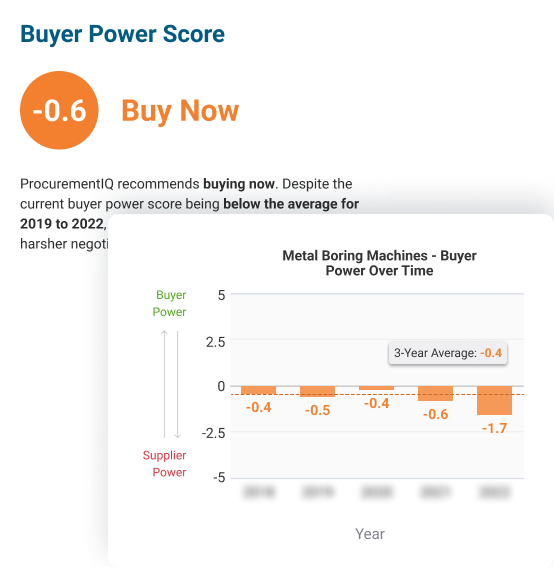
In 2026, buyer power amounts to -1.0 in the United States. Buyer power is most positively impacted by Recent Developments. It is most negatively impacted by Product Specialization. Subscribers can access details on eight other factors that impact buyer power. Learn more
United States
Buyer power forecasts: your glimpse into the future
Develop strategies for the upcoming year and identify unforeseen opportunities for buying now
- Actionable "Buy Now" and "Buy Later" insights
- Near-real-time updates to current and forecast Buyer Power Scores
- Methodology and weightings for Buyer Power Score Components
Supply Chain Risk
The average level of supply chain risk is assessed as Medium, which has a negative impact on buyer power. The level of supply chain risk is affected by industry volatility, barriers to entry, competition, import penetration, regulation and industry financial risk. Buyers in this market can mitigate procurement and supply chain management risks by monitoring risk levels for individual first and second tier suppliers:
1st
Tier Suppliers
- Explosives Manufacturing
- Chemical Wholesaling
- Construction & Mining Equipment Wholesalers
2nd
Tier Suppliers
- Oxygen & Hydrogen Manufacturing
- Fertilizer Manufacturer
- Chemical Product Manufacturing
- Mining, Oil & Gas Machinery Manufacturing
Biggest Construction Aggregates Suppliers in the US by Revenue
The largest Construction Aggregates vendors by revenue in the US are Cemex Sab De Cv, Mdu Resources Group Inc. and Heidelbergcement Ag. Subscribers can sort and filter by market share concentration, profit level and other factors. Learn more
| Supplier | Operational Size | Headquarters | Number of Employees | Market Share (%) | Market Share Performance (3yr trend) | Total Revenue ($ million) | Profit Level (%) | Risk Level |
|---|---|---|---|---|---|---|---|---|
| CRH PLC | Global | DUBLIN 16 | >10,000 | 5-10 | ||||
| Holcim Ltd. | Global | Zug, CH | >10,001 | 5-10 | ||||
| Vulcan Materials Company | International | BIRMINGHAM, AL | >10,000 | 5-10 | ||||
| Martin Marietta Materials Inc. | Global | Raleigh, NC | 1,001-10,000 | 5-10 | ||||
| Heidelbergcement Ag | Global | Heidelberg, DE | >10,001 | < 5 | ||||
| Cemex Sab De Cv | Global | San Pedro Garza García, MX | >10,001 | < 5 | ||||
| Granite Construction Inc. | National | WATSONVILLE | 1,001-10,000 | < 5 | ||||
| Mdu Resources Group Inc. | National | Bismarck | 1,001-10,000 | < 5 | ||||
| Rogers Group, Inc. | National | Nashville, TN | 1,001-10,000 | < 5 | ||||
Looking for a list of suppliers by country?
Subscribers can access vendor information on Canadian and European suppliers, too. We also offer custom research services to help with vendor sourcing anywhere in the world.
Profit Analysis
The average profit margin across vendors in the Construction Aggregates market is 9.9% and steady. Profit levels shift depending on suppliers' spend on wages, purchases and overhead. The highest cost component for vendors is Overhead. The cost trend for this component is stagnating, when considering movement between 2025 and 2026. To understand cost forecasts for 2027 and uncover the implications on profit, start your subscription. Learn more
Vendor & Supply Chain Analysis
Vendor financial risk is moderate throughout the market, indicating that buyers should inquire about the financial stability of a vendor prior to signing supply contracts in order to avoid service disruptions.
Low market share concentration indicates that no vendors control market pricing, thus fostering a competitive environment.
Moderate supply chain risk indicates that buyers may face disruptions due to issues in the vendor’s upstream suppliers and should inquire whether they frequently face disruptions. Tariff increases have been heightening these risks as global suppliers adapt to the increased cost of selling to US buyers or sourcing materials from outside the United States.
The US is a net importer of construction aggregates, meaning buyers may be able to leverage the availability of foreign vendors to gain greater buying power. However, both imports and exports of construction aggregates are relatively low because the cost of transporting construction aggregates is high in comparison to their price.
Supplier Information
CRH PLC
CRH Public Ltd. Co. is engaged in the global material business. It organizes its business into three segments: the Americas Materials Division, which produces and supplies building materials and services for construction projects in the US and Canada, including cement, aggregates, ready-mixed concrete, and... Subscribe to learn more
Holcim Ltd.
Holcim Ltd. is a public company operating globally in the mining, construction and manufacturing sectors. The company's offerings include cement, construction aggregates, commercial concrete pipes and concrete pumping services. Founded in 1912, the company is currently headquartered in Zug, Switzerland with... Subscribe to learn more
Martin Marietta Materials Inc.
Martin Marietta Materials Inc. is a private company operating globally in the mining sector. The company's offerings include construction aggregates. Founded in 1993, the company is currently headquartered in Raleigh, North Carolina, United States of America with an estimated 5500 employees. Subscribe to learn more
Vulcan Materials Company
Vulcan Materials Company is a public company operating internationally in the mining, construction and manufacturing sectors. The company's offerings include cement, construction aggregates and concrete pumping services. Founded in 1909, the company is currently headquartered in BIRMINGHAM, Anguilla, United... Subscribe to learn more
Carmeuse
Carmeuse SA is a private company operating globally in the mining sector. The company's offerings include construction aggregates. Founded in 1860, the company is currently headquartered in Louvain-la-Neuve, Belgium with an estimated 5500 employees. Subscribe to learn more
Cemex Sab De Cv
Cemex Sab De Cv is a public company operating globally in the mining, construction and manufacturing sectors. The company's offerings include cement, construction aggregates, commercial concrete pipes and concrete pumping services. Founded in 1906, the company is currently headquartered in San Pedro Garza... Subscribe to learn more
Granite Construction Inc.
Granite Construction Incorporated is a diversified construction and construction materials company. It organizes its business into two segments: the Construction segment, which constructs and rehabilitates public infrastructure, water-related construction, and various complex projects, including infrastructure... Subscribe to learn more
Heidelbergcement Ag
Heidelbergcement Ag is a public company operating globally in the mining, construction and manufacturing sectors. The company's offerings include cement, construction aggregates, commercial concrete pipes and concrete pumping services. Founded in 1889, the company is currently headquartered in Heidelberg,... Subscribe to learn more
Mdu Resources Group Inc.
MDU Resources Group, Inc. is a natural resource company that generates and distributes electric, natural gas, and other fuel sources and provides construction materials and services. It organizes its business into five reportable business segments: the Electric segment, which provides retail electric service... Subscribe to learn more
Accelerate the vendor selection process
Get a clear picture of the competition in a market and discover which vendors are best-suited for your sourcing needs. Our supplier profiles include hard-to-find financial ranges for private companies, cover public company data and feature an interactive competitor matrix.
Procurement Management KPIs for the Construction Aggregates Market
Managing vendor performance throughout the contract period is easier when tracking specific key performance indicators (KPIs). For example, buyers should monitor Number of Errors and On-Time Delivery (OTD). Buyers may experience better performance throughout their contracts if they establish service level agreements (SLAs) based on Gradation and other factors.
| KPI | Level of Importance (1-5) | Measurements | Key Considerations |
|---|---|---|---|
| Number of Errors |
|
Number of orders received with issues Aggregate size tolerance |
Buyers’ needs may vary, and gradation consistency may not be of high importance, but buyers that require consistent sizing within their aggregates may request a sample to assess gradation. Consistent issues in providing orders that meet the buyer's specifications may warrant a change in vendors. |
| On-Time Delivery (OTD) |
|
Average number of orders received outside of agreed upon timeframe Average variance from agreed upon timeframe |
On-time delivery is often critical for many construction projects and may cause delays for buyers’ projects. Buyers should assess their project timeline and needs to determine the importance of this KPI. Vendors should strive to ensure products are delivered on time and in full. |

Questions to Ask During Procurement Negotiations
How can I gain leverage during negotiations?
Shipping
Could you provide the locations of your domestic and international distribution facilities?
What are your shipping rates to my facilities? Do shipping rates vary if I need products shipped to more than one location?
Experience and Expertise
How long have you been producing construction aggregates? How long have you served operators in my industry?
What are some similar clients you have supplied products for, along with dates?
Inventory Control
Where are your manufacturing facilities located? What about your warehouses? What product does each location provide?
How will products flow from supply points to multiple distribution centers?
The ultimate prep for procurement negotations
View all 29 negotiation questions for this category when you subscribe.
Construction Aggregates RFP Guidelines
What should my RFP include?
Organizational Overview
Buyers should provide a description of their business and a brief outline of their company history and structure.
Buyers should state the purpose of issuing an RFP and the intended usage of the materials being requested.
Statement Of Need
Buyers should provide a list of the types of aggregates needed.
Buyers should provide a breakdown by type of the size and total volume of aggregates needed.
Project Budget
Buyers should state their total budget.
If buyers require an ongoing supply contract, buyers should provide their monthly and annual budget.
The RFP process made easy
Find out how you can access RFP templates for 800+ procurement categories to start writing better, more consistent RFPs.
We display average pricing information, trends and market data.
Our Reports include:
- Opportunity assessment
- Market dynamics
- Recent developments
- Positive and warning trends
- Buyer power levers
- Price environment and market pricing
- Geographic wage rates
- Global market updates
- Total cost of ownership
- Cost structure benchmarks and analysis
- Supply chain and vendors
- Global supplier breakdown
- Market share concentration
- Regulation and business requirements
- Vendor management and KPIs
- Sourcing strategy guidance