Procurement Market Intelligence Report
Flexible Packaging
Sourcing Guide & Market Intelligence
Smarter cost management starts with comprehensive market intelligence
 United States
 Canada
 Europe
 Global
Quick Navigation
Flexible Packaging Global Overview
Definition
Summary
Flexible packaging is used to enclose and protect products for distribution, storage, and retail purposes and is characterized by its malleability. When employed, flexible packaging often resembles a sealed pouch. Common buyers of flexible packaging include food manufacturers, consumer packaged goods manufacturers, coffee producers, and pharmaceutical companies.
This Report Includes:
- Standard Plastic Flexible Packaging
- Customized Plastic Flexible Packaging
Not in this Report:
- Paper Flexible Packaging
- Foil Flexible Packaging
- Cushioning Supplies
- Plastic Crates
Global Flexible Packaging Procurement Trends
Discover the top international trends affecting procurement in the global Flexible Packaging market.
Warning Trends
Reciprocal tariffs drive up packaging product prices
- The Trump administration’s reciprocal tariffs, which apply general tariff rate increases to all products imported from most nations, are set to take effect on August 7 after the national tariff rates were finalized on August 1. Additionally, 50.0% tariffs on all steel and aluminum imports, except those from the United Kingdom, went into effect in June.
- These tariffs will have a significant effect across the packaging industry as the United States imports a combined total of more than $127 billion worth of plastic, steel, and lumber annually, the three most common materials in packaging products.
- Leading packaging product importers include Canada, Mexico, and China, which face tariff rates of 35.0%, 25.0%, and 20.0%, respectively, with the Chinese import tariff rate set to rise to 54.0% in August. However, United States-Mexico-Canada Trade Agreement (USMCA)-originating goods, meaning those produced entirely in Canada or Mexico, are exempt from these tariffs.
- China accounts for 48.6% of imported plastic products in the United States, making current and upcoming tariffs on Chinese goods particularly impactful for the price of plastic packaging materials, which the Yale Budget Lab projects will rise in price by 11.0%.
- Likewise, Canada and Mexico provide a combined 51.6% of lumber imports, driving a 6.8% increase in the price of wooden products. Steel and aluminum tariffs are projected to fuel a 39.2% increase in the cost of metal packaging products on average.
Global Flexible Packaging Market - Suppliers by Region
| Country/Region | Number of Suppliers |
|---|---|
| #1 Europe | 11,810 |
| #2 Oceania & Southeast Asia | 9,470 |
| #3 India | 6,105 |
Explore supplier concentration across the globe
We've uncovered the 11 top regions for global procurement, based on feedback from our most strategic clients. Access vendor counts for each unique region when you subscribe.
2
Geography Drilldown - US, Canada & Europe
Average Cost of Flexible Packaging
United States
2026 Market Pricing$100.00 to $X,XXX.XX
per 1,000 customized plastic pouches
Average Price
Prices in the Flexible Packaging market range from $100.00 to $X,XXX.XX, depending on Size, Thickness, Sealant and Customization. For example, lower prices are associated with Snack-sized consumer packaging ($500 to $2,500 per 1,000 customized plastic pouches), whereas higher prices are associated with Industrial-sized bags and pouches ($1,250 to $3,000 per 1,000 customized plastic pouches).
Need the scoop on international price trends?
Between our Europe and Canada collections, we provide price data for 350 markets so you can instantly compare prices across borders. Or, use our custom research services for intel on prices in any region across the globe.
Flexible Packaging Category Price Trends
Pricing trends are indicated by the compound annual growth rate (CAGR) during a set period of time. For the Flexible Packaging market, prices in the US have grown 0.0% from 2022 to 2025. and +1.9% in Europe.
United States (2022-2025)

Europe (2022-2025)
Compound Annual Growth Rate
Wondering where prices are heading?
Price trend forecasts are available to subscribers, along with price driver projections and forward-looking cost structure data.
Cost Analysis - Total Cost of Ownership for Flexible Packaging
Total cost of ownership is Low in the Flexible Packaging market. The average cost of ownership differs depending on the contract but generally includes costs negotiated before the contract begins, costs billed during the contract period and unforeseen costs. For example, unforeseen costs in the form of Delays may raise the total cost of ownership unexpectedly.
Negotiated Before
Prototyping
Billed During
Storage
Unforeseen
Delays
Buyer Power in Procurement Negotiations
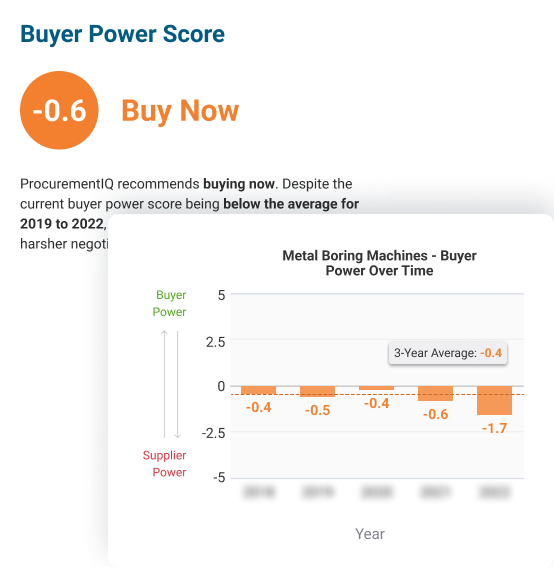
In 2026, buyer power amounts to -1.3 in the United States. Buyer power is most positively impacted by Recent Developments. It is most negatively impacted by Switching Costs. Subscribers can access details on eight other factors that impact buyer power. Learn more
United States

Buyer power forecasts: your glimpse into the future
Develop strategies for the upcoming year and identify unforeseen opportunities for buying now
- Actionable "Buy Now" and "Buy Later" insights
- Near-real-time updates to current and forecast Buyer Power Scores
- Methodology and weightings for Buyer Power Score Components
Supply Chain Risk
The average level of supply chain risk is assessed as High, which has a negative impact on buyer power. The level of supply chain risk is affected by industry volatility, barriers to entry, competition, import penetration, regulation and industry financial risk. Buyers in this market can mitigate procurement and supply chain management risks by monitoring risk levels for individual first and second tier suppliers:
1st
Tier Suppliers
- Plastic & Resin Manufacturers
- Toner Manufacturers
- Adhesive Manufacturers
2nd
Tier Suppliers
- Petrochemical Manufacturers
- Dye & Pigment Manufacturers
- Chemical Manufacturers
Biggest Flexible Packaging Suppliers in the US by Revenue
The largest Flexible Packaging vendors by revenue in the US are Printpack Holdings, Inc., Winpak Ltd. and Berry Global Group, Inc. Subscribers can sort and filter by market share concentration, profit level and other factors. Learn more
| Supplier | Operational Size | Headquarters | Number of Employees | Market Share (%) | Market Share Performance (3yr trend) | Total Revenue ($ million) | Profit Level (%) | Risk Level |
|---|---|---|---|---|---|---|---|---|
| Mondi PLC | Global | Addlestone, UK | >10,001 | 10-15 | ||||
| Winpak Ltd. | Global | Winnipeg, CA | 1,001-10,000 | 10-15 | ||||
| Sealed Air Corporation | Global | CHARLOTTE, NC | >10,000 | 15-20 | ||||
| Amcor Limited | Global | WARMLEY, BRISTOL | >10,000 | 5-10 | ||||
| Berry Global Group, Inc. | Global | EVANSVILLE, IN | >10,000 | 5-10 | ||||
| Novolex Holdings LLC | Global | Hartsville, SC | 1,001-10,000 | 5-10 | ||||
| Coveris Management GmbH | Global | 1100 Vienna, AT | 1,001-10,000 | 5-10 | ||||
| Sonoco Products Company | Global | HARTSVILLE, SC | >10,000 | < 5 | ||||
| ProAmpac Holdings Inc. | International | Cincinnati, OH | 1,001-10,000 | < 5 | ||||
Looking for a list of suppliers by country?
Subscribers can access vendor information on Canadian and European suppliers, too. We also offer custom research services to help with vendor sourcing anywhere in the world.
Profit Analysis
The average profit margin across vendors in the Flexible Packaging market is 3.2% and steady. Profit levels shift depending on suppliers' spend on wages, purchases and overhead. The highest cost component for vendors is Purchases. The cost trend for this component is falling, when considering movement between 2025 and 2026. To understand cost forecasts for 2027 and uncover the implications on profit, start your subscription. Learn more
Vendor & Supply Chain Analysis
Market share concentration is moderate in the flexible packaging market. Most top vendors are medium-sized and competition is high.
Vendor risk is moderate in the flexible packaging market. Vendors face upstream supply disruptions for plastic and adhesives, but availability is relatively stable because they have many sellers to choose from.
Supply chain risk is high in the flexible packaging market. Plastics are derived from oil, which is subject to frequent supply shocks and price volatility, and tariff increases have further destabilized the price of imported flexible packaging products and the input materials used to make them.
The United States is a net importer of plastic packaging goods, meaning they import more than they export. US buyers seeking to import plastic packaging goods may need to assess international manufacturers' quality standards and production capacities, with considerations like the expected lead times for delivery, quality and safety certifications, and the compatibility of the manufactured goods with US standards.
Supplier Information
Mondi PLC
Mondi PLC is a public company operating globally in the manufacturing sector. The company's offerings include paperboard & packaging papers, newsprint & offset papers, paper bags, flexible packaging, envelopes. Founded in 2007, the company is currently headquartered in Addlestone, United Kingdom with an estimated... Subscribe to learn more
Winpak Ltd.
Winpak Ltd. is a public company operating globally in the manufacturing sector. The company's offerings include plastic film, laminated papers and flexible packaging. Founded in 2005, the company is currently headquartered in Winnipeg, Canada with an estimated 5500 employees. Subscribe to learn more
Sealed Air Corporation
Sealed Air Corporation is a public company operating globally in the manufacturing sector. The company's offerings include plastic film, wooden shipping crates & boxes, flexible packaging, cushioning supplies and air-filled packing materials. Founded in 1962, the company is currently headquartered in CHARLOTTE,... Subscribe to learn more
Amcor Limited
Amcor plc is a packaging company for food, beverage, pharmaceutical, medical, home, and personal-care markets. Its packaging expertise covers all packaging materials, including paper, metal, plastic, recycled, and bio-based materials. It produces flexible and rigid packaging, specialty cartons, and closure... Subscribe to learn more
Berry Global Group, Inc.
Berry Global Group, Inc. is a global supplier of a broad range of innovative rigid, flexible, and non-woven products for the consumer and industrial end markets, including healthcare, personal care, and food and beverage. Its business comprises four reportable segments: the Consumer Packaging International... Subscribe to learn more
Coveris Management GmbH
Coveris Management GmbH is a private company operating globally in the manufacturing sector. The company's offerings include plastic film and flexible packaging. Founded in 2013, the company is currently headquartered in 1100 Vienna, Austria with an estimated 5500 employees. Subscribe to learn more
Novolex Holdings LLC
Novolex Holdings LLC is a private company operating globally in the manufacturing sector. The company's offerings include plastic film, laminated papers, paper cups, paper bags, plastic bags. Founded in 2004, the company is currently headquartered in Hartsville, South Carolina, United States of America with... Subscribe to learn more
Huhtamaki Group
Huhtamaki Group is a public company operating globally in the manufacturing sector. The company's offerings include paper cups, flexible packaging and molded fiber packaging. Founded in 1941, the company is currently headquartered in Espoo, Finland with an estimated employee count of over 10,000. Subscribe to learn more
Printpack Holdings, Inc.
Printpack Holdings, Inc. is a private company operating globally in the manufacturing sector. The company's offerings include plastic film and flexible packaging. Founded in 1956, the company is currently headquartered in Atlanta, Georgia, United States of America with an estimated 5500 employees. Subscribe to learn more
Accelerate the vendor selection process
Get a clear picture of the competition in a market and discover which vendors are best-suited for your sourcing needs. Our supplier profiles include hard-to-find financial ranges for private companies, cover public company data and feature an interactive competitor matrix.
Procurement Management KPIs for the Flexible Packaging Market
Managing vendor performance throughout the contract period is easier when tracking specific key performance indicators (KPIs). For example, buyers should monitor Average Resolution Time and Defect Density. Buyers may experience better performance throughout their contracts if they establish service level agreements (SLAs) based on Accuracy and other factors.
| KPI | Level of Importance (1-5) | Measurements | Key Considerations |
|---|---|---|---|
| Average Resolution Time |
|
Total Resolution Time Number of Resolved Tickets |
The average resolution time represents the average amount of time it takes to resolve a support ticket. The average resolution time can be used to determine a company’s support responsiveness. |
| Defect Density |
|
Number of Units Sold Number of Defective Units |
The defect density represents the share of defective products a company produces. The defect density can be used to determine whether manufacturing, assembly or quality assurance processes require improvement. |

Questions to Ask During Procurement Negotiations
How can I gain leverage during negotiations?
Quality Control
What kind of training do your employees receive? How often is this refreshed?
What is your primary method to check for quality? How often do you sample products for consistent quality?
Customer Service
What are the different methods by which you can be reached? Which is the best way to get a fast response?
What is the typical response time for each of your communication methods? Does the preferred method of contact depend on the issue?
Value-Added Services
What forms of special packaging do you have to protect food? What about for other types of products?
What added features do you provide to protect against physical damage?
The ultimate prep for procurement negotations
View all 31 negotiation questions for this category when you subscribe.
Flexible Packaging RFP Guidelines
What should my RFP include?
Organizational Overview
Buyers should provide vendors with an overview of their operations and describe their general use of flexible packaging.
Buyers should provide a description of the type(s) of flexible packaging used, package content as well as the duration items are held in packages.
Statement Of Need
Buyers should provide specifications such as shape, thickness and customization options for each individual type of flexible packaging they are looking to buy
Buyers should list the quantity of each type of flexible packaging they require.
Project Budget
Buyers should provide the total budget for their order, including a breakdown of the price per unit. This budget should account for any additional costs, such as shipping.
Buyers should protect themselves against future price increases by locking in a price per package.
The RFP process made easy
Find out how you can access RFP templates for 800+ procurement categories to start writing better, more consistent RFPs.
We display average pricing information, trends and market data.
Our Reports include:
- Opportunity assessment
- Market dynamics
- Recent developments
- Positive and warning trends
- Buyer power levers
- Price environment and market pricing
- Geographic wage rates
- Global market updates
- Total cost of ownership
- Cost structure benchmarks and analysis
- Supply chain and vendors
- Global supplier breakdown
- Market share concentration
- Regulation and business requirements
- Vendor management and KPIs
- Sourcing strategy guidance