Procurement Market Intelligence Report
Flexible Intermediate Bulk Containers
Sourcing Guide & Market Intelligence
Smarter cost management starts with comprehensive market intelligence
 United States
 Global
Quick Navigation
Flexible Intermediate Bulk Containers Global Overview
Definition
Summary
This report is intended to assist buyers of flexible intermediate bulk containers (FIBCs). FIBCs are specialized bags used for storing and transporting dry, flowable products, such as sand, fertilizers, grain, and granules of plastics. The primary buyers of FIBCs are ocean and coastal transportation companies, agricultural producers and transporters, and construction companies. Suppliers include manufacturers and wholesalers.
This Report Includes:
- Bulk Bags
- Baffle Bag
- Super Sack
Not in this Report:
- Intermediate Bulk Containers
- Rigid Containers
Global Flexible Intermediate Bulk Containers Procurement Trends
Discover the top international trends affecting procurement in the global Flexible Intermediate Bulk Containers market.
Warning Trends
Reciprocal tariffs drive up packaging product prices
- The Trump administration’s reciprocal tariffs, which apply general tariff rate increases to all products imported from most nations, are set to take effect on August 7 after the national tariff rates were finalized on August 1. Additionally, 50.0% tariffs on all steel and aluminum imports, except those from the United Kingdom, went into effect in June.
- These tariffs will have a significant effect across the packaging industry as the United States imports a combined total of more than $127 billion worth of plastic, steel, and lumber annually, the three most common materials in packaging products.
- Leading packaging product importers include Canada, Mexico, and China, which face tariff rates of 35.0%, 25.0%, and 20.0%, respectively, with the Chinese import tariff rate set to rise to 54.0% in August. However, United States-Mexico-Canada Trade Agreement (USMCA)-originating goods, meaning those produced entirely in Canada or Mexico, are exempt from these tariffs.
- China accounts for 48.6% of imported plastic products in the United States, making current and upcoming tariffs on Chinese goods particularly impactful for the price of plastic packaging materials, which the Yale Budget Lab projects will rise in price by 11.0%.
- Likewise, Canada and Mexico provide a combined 51.6% of lumber imports, driving a 6.8% increase in the price of wooden products. Steel and aluminum tariffs are projected to fuel a 39.2% increase in the cost of metal packaging products on average.
Global Flexible Intermediate Bulk Containers Market - Suppliers by Region
| Country/Region | Number of Suppliers |
|---|---|
| #1 Europe | 2,310 |
| #2 Oceania & Southeast Asia | 1,850 |
| #3 China | 1,550 |
Explore supplier concentration across the globe
We've uncovered the 11 top regions for global procurement, based on feedback from our most strategic clients. Access vendor counts for each unique region when you subscribe.
2
Geography Drilldown - US
Average Cost of Flexible Intermediate Bulk Containers
United States
2026 Market Pricing$4.00 to $XXX.XX
per containerAverage Price
Prices in the Flexible Intermediate Bulk Containers market range from $4.00 to $XXX.XX, depending on Size, Strength and Purchase Volume. For example, lower prices are associated with 35" x 35" x 40" ($10.00 to $70.00 per container), whereas higher prices are associated with 40" x 40" x 50" ($25.00 to $120 per container).
Need the scoop on international price trends?
Between our Europe and Canada collections, we provide price data for 350 markets so you can instantly compare prices across borders. Or, use our custom research services for intel on prices in any region across the globe.
Flexible Intermediate Bulk Containers Category Price Trends
Pricing trends are indicated by the compound annual growth rate (CAGR) during a set period of time. For the Flexible Intermediate Bulk Containers market, prices in the US have grown 2.1% from 2022 to 2025. Subscribers can access price trend forecasts, price driver projections and forward-looking cost structure data. Learn more
United States (2022-2025)


Wondering where prices are heading?
Price trend forecasts are available to subscribers, along with price driver projections and forward-looking cost structure data.
Cost Analysis - Total Cost of Ownership for Flexible Intermediate Bulk Containers
Total cost of ownership is Low in the Flexible Intermediate Bulk Containers market. The average cost of ownership differs depending on the contract but generally includes costs negotiated before the contract begins, costs billed during the contract period and unforeseen costs.
Negotiated Before
Customization
Transportation
Buyer Power in Procurement Negotiations
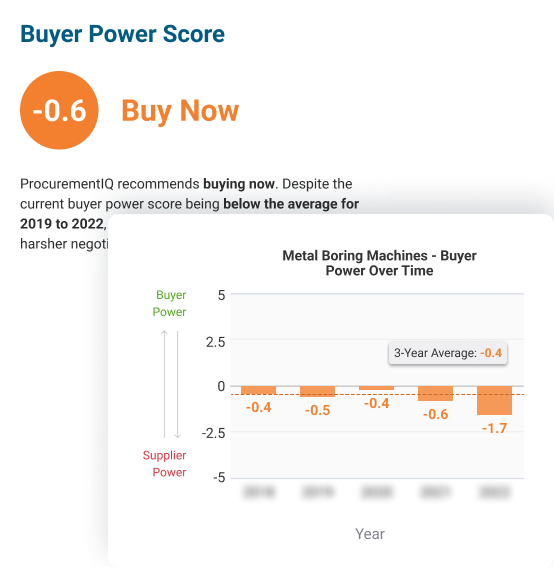
In 2026, buyer power amounts to -1.9 in the United States. Buyer power is most positively impacted by Recent Developments. It is most negatively impacted by Availability of Substitutes. Subscribers can access details on eight other factors that impact buyer power. Learn more
United States
Buyer power forecasts: your glimpse into the future
Develop strategies for the upcoming year and identify unforeseen opportunities for buying now
- Actionable "Buy Now" and "Buy Later" insights
- Near-real-time updates to current and forecast Buyer Power Scores
- Methodology and weightings for Buyer Power Score Components
Supply Chain Risk
The average level of supply chain risk is assessed as Medium, which has a negative impact on buyer power. The level of supply chain risk is affected by industry volatility, barriers to entry, competition, import penetration, regulation and industry financial risk. Buyers in this market can mitigate procurement and supply chain management risks by monitoring risk levels for individual first and second tier suppliers:
1st
Tier Suppliers
- Plastic & Resin Manufacturers
- Industrial Machinery & Equipment Wholesalers
- Synthetic Fiber Manufacturers
2nd
Tier Suppliers
- Petroleum Refiners
- Industrial Machinery Manufacturers
- Organic Chemical Manufacturers
Biggest Flexible Intermediate Bulk Containers Suppliers in the US by Revenue
The largest Flexible Intermediate Bulk Containers vendors by revenue in the US are AmeriGlobe LLC, Bulk-Pack Inc. and Berry Global Group, Inc. Subscribers can sort and filter by market share concentration, profit level and other factors. Learn more
| Supplier | Operational Size | Headquarters | Number of Employees | Market Share (%) | Market Share Performance (3yr trend) | Total Revenue ($ million) | Profit Level (%) | Risk Level |
|---|---|---|---|---|---|---|---|---|
| Berry Global Group, Inc. | Global | EVANSVILLE, IN | >10,000 | 5-10 | ||||
| Greif Inc. | Global | DELAWARE | >10,000 | 5-10 | ||||
| W.W. Grainger, Inc. | Global | LAKE FOREST | >10,000 | < 5 | ||||
| Fastenal Company | Global | WINONA, MN | >10,000 | < 5 | ||||
| Sonoco Products Company | Global | HARTSVILLE, SC | >10,000 | < 5 | ||||
| Uline, Inc. | International | Pleasant Prairie, WI | 1,001-10,000 | < 5 | ||||
| AmeriGlobe LLC | National | Lafayette, LA | 25-50 | < 5 | ||||
| Bulk-Pack Inc. | National | Monroe, LA | <25 | < 5 | ||||
| Intertape Polymer Group Inc. | Global | Montreal, CA | 1,001-10,000 | < 5 | ||||
Looking for a list of suppliers by country?
Subscribers can access vendor information on Canadian and European suppliers, too. We also offer custom research services to help with vendor sourcing anywhere in the world.
Profit Analysis
The average profit margin across vendors in the Flexible Intermediate Bulk Containers market is 4.3% and steady. Profit levels shift depending on suppliers' spend on wages, purchases and overhead. The highest cost component for vendors is Purchases. The cost trend for this component is falling, when considering movement between 2025 and 2026. To understand cost forecasts for 2027 and uncover the implications on profit, start your subscription. Learn more
Vendor & Supply Chain Analysis
Market share concentration is low, with the top four vendors consisting of less than 30.0% of the total market revenue.
Average vendor risk is moderate for FIBC suppliers as vendors benefit from strong demand trends but face high competition.
Supply chain risk for FIBCs is moderate due to the heightened volatility exhibited in the plastics, synthetic fibers, and industrial equipment markets.
The United States is a net importer of flexible intermediate bulk containers, meaning it imports more FIBCs than it exports. While this provides access to a greater range of competitively priced containers, buyers in the United States seeking to import FIBCs should consider the quality standards for production from international suppliers, including whether the product meets domestic regulatory requirements.
Supplier Information
Berry Global Group, Inc.
Berry Global Group, Inc. is a global supplier of a broad range of innovative rigid, flexible, and non-woven products for the consumer and industrial end markets, including healthcare, personal care, and food and beverage. Its business comprises four reportable segments: the Consumer Packaging International... Subscribe to learn more
Greif Inc.
Greif, Inc. is a global producer of industrial packaging products and services. It produces and sells containerboard, corrugated sheets, corrugated containers, and other corrugated products, coated recycled paperboard and uncoated recycled paperboard, recycled fiber, adhesives, and services, including container... Subscribe to learn more
AmeriGlobe LLC
AmeriGlobe LLC is a private company operating nationally in the manufacturing sector. The company's offerings include flexible intermediate bulk containers. Founded in 1985, the company is currently headquartered in Lafayette, Louisiana, United States of America with an estimated 75 employees. Subscribe to learn more
Bulk Lift International, Incorporated
Gravis LLC is a private company operating globally in the manufacturing sector. The company's offerings include flexible intermediate bulk containers. Founded in 1978, the company is currently headquartered in Rolling Meadows, Illinois, United States of America with an estimated 175 employees. Subscribe to learn more
Bulk-Pack Inc.
Bulk-Pack Inc. is a private company operating nationally in the manufacturing sector. The company's offerings include flexible intermediate bulk containers. Founded in 1980, the company is currently headquartered in Monroe, Louisiana, United States of America with an estimated 37 employees. Subscribe to learn more
Fastenal Company
Fastenal Company is a public company operating globally in the manufacturing, manufacturing, manufacturing and professional, scientific and technical services sectors. The company's offerings include hydraulic oil, metal cutting tools, flexible intermediate bulk containers, hydraulic hose & tube fittings,... Subscribe to learn more
Global-Pak, Inc.
Global-Pak, Inc. is a private company operating regionally in the manufacturing sector. The company's offerings include flexible intermediate bulk containers. Founded in 1998, the company is currently headquartered in Lisbon, Ohio, United States of America with an estimated 40 employees. Subscribe to learn more
Intertape Polymer Group Inc.
Intertape Polymer Group Inc. is a public company operating globally in the manufacturing and manufacturing sectors. The company's offerings include flexible intermediate bulk containers and packing tape. Founded in 1993, the company is currently headquartered in Montreal, Canada with an estimated 5500 employees.... Subscribe to learn more
Sonoco Products Company
Sonoco Products Company is a public company operating globally in the manufacturing, manufacturing, manufacturing and administration, business support and waste management services sectors. The company's offerings include polystyrene foam, paperboard & packaging papers, flexible intermediate bulk containers,... Subscribe to learn more
Accelerate the vendor selection process
Get a clear picture of the competition in a market and discover which vendors are best-suited for your sourcing needs. Our supplier profiles include hard-to-find financial ranges for private companies, cover public company data and feature an interactive competitor matrix.
Procurement Management KPIs for the Flexible Intermediate Bulk Containers Market
Managing vendor performance throughout the contract period is easier when tracking specific key performance indicators (KPIs). For example, buyers should monitor Cost of Goods Sold and Customer Satisfaction (CSAT). Buyers may experience better performance throughout their contracts if they establish service level agreements (SLAs) based on Quality and other factors.
| KPI | Level of Importance (1-5) | Measurements | Key Considerations |
|---|---|---|---|
| Cost of Goods Sold |
|
Average cost per container Average cost increase year-over-year |
Suppliers of FIBCs operate with a cost-plus pricing model, making the cost of goods sold a significant factor in pricing. Buyers should keep track of and measure vendors' cost of goods sold to understand the price of the containers they are paying for. Buyers should consider procuring from vendors that have stronger relationships with their own suppliers and are able to contain costs better. |
| Customer Satisfaction (CSAT) |
|
Customer satisfaction rate Number of customer referrals |
Buyers should keep track of a vendor's customer satisfaction rate to compare with that of other vendors. A low satisfaction rate signals issues with the product or professionalism of a vendor. Customer satisfaction is a key indicator of possible issues that can occur when procuring from a vendor, such as delays or innaccurate shipments. |

Questions to Ask During Procurement Negotiations
How can I gain leverage during negotiations?
Experience and Expertise
What is your repeat business rate for clients in my sector? How does that compare with your overall rates?
Could you provide a list of client references, along with contact information?
Quality Control
How often do you experience defects with your FIBCs?
What is the typical inspection process that your FIBCs undergo? What internal testing procedures do you use to ensure product quality?
Competition
How has your company dealt with competition from imports?
Considering that most of the FIBCs in this market are nearly identical, what sets your bags apart from those of your competitors?
The ultimate prep for procurement negotations
View all 31 negotiation questions for this category when you subscribe.
Flexible Intermediate Bulk Containers RFP Guidelines
What should my RFP include?
Organizational Overview
Buyers should give a description of their organization with information about their geographic location(s) and the size of their operations.
Buyers should describe how they plan to use the FIBCs in their operations.
Statement Of Need
Buyers should state the type of FIBCs (A, B, C or D) they require to meet their needs.
Buyers should indicate the maximum weight that the FIBCs must be able to hold.
Project Budget
Buyers should disclose the total value of the contract for the FIBCs they wish to purchase.
Buyers should include their preferences for the method and frequency of payments.
The RFP process made easy
Find out how you can access RFP templates for 800+ procurement categories to start writing better, more consistent RFPs.
We display average pricing information, trends and market data.
Our Reports include:
- Opportunity assessment
- Market dynamics
- Recent developments
- Positive and warning trends
- Buyer power levers
- Price environment and market pricing
- Geographic wage rates
- Global market updates
- Total cost of ownership
- Cost structure benchmarks and analysis
- Supply chain and vendors
- Global supplier breakdown
- Market share concentration
- Regulation and business requirements
- Vendor management and KPIs
- Sourcing strategy guidance