Procurement Market Intelligence Report
Hose Fittings
Sourcing Guide & Market Intelligence
Smarter cost management starts with comprehensive market intelligence
 United States
 Global
Quick Navigation
Hose Fittings Global Overview
Definition
Summary
Hydraulic hoses convey hydraulic fluid under high pressure, and fittings allow fluid to flow between hydraulic hoses, hydraulic pumps, pistons, and motors. Fittings refer to products such as threads and seals, which can be made from steel, brass, aluminum, or other materials. This report focuses on hydraulic hose and tube fittings (often called fittings or hydraulic fittings) used in industrial applications, such as construction, mining, and agricultural equipment. Key buyers include large corporations, public sector organizations, nonprofit organizations, unions and professional associations, and healthcare institutions.
This Report Includes:
- Couplings
- Adapters
- Tees
- Quick Connect Fittings
- Quick Disconnect Fittings
Not in this Report:
- Hoses or Tubes
- Fittings for Any Nonindustrial Application
Take the ProcurementIQ products and data tour
Explore live samples of price trend forecasts, price driver projections, forward-looking cost structure data and more.
Global Hose Fittings Procurement Trends
Discover the top international trends affecting procurement in the global Hose Fittings market.
Warning Trends
Tariffs to negatively impact the industrial manufacturing and processing machinery sector
- The Trump Administration’s reciprocal tariffs, which apply general tariff rate increases to most leading US trade partners, are set to take effect on August 7, after the administration finalized the rates on August 1. As a result, leading sources of industrial equipment imports face significantly increased tariffs, including Canada (35.0%), China (54.0%), the European Union (15.0%), Japan (15.0%), Mexico (25.0%), and South Korea (15.0%).
- Additionally, the administration increased tariffs on aluminum and steel, common input materials for industrial machinery, to 50.0%, which is likely to increase input costs for suppliers operating inside the United States.
- China, Mexico, and Japan are three of the top sources of US machinery imports, accounting for about 50.0% of US imports in total. In addition to the increased costs from tariffs on these countries, the Japanese and Mexican machinery sectors could face increased financial risk as a large share of their revenue comes from US clients.
- According to the Association of Equipment Manufacturers, the increase in tariff rates on steel and aluminum in 2018 led to a 78.0% increase in domestic equipment production costs, a trend that may be repeated following the latest increases in steel and aluminum tariffs.
- Suppliers that source machinery or parts from tariff-affected countries may see supply chain disruptions or extended lead times as they seek alternative suppliers to mitigate tariff impacts. In addition, buyers seeking to rent industrial machinery will likely see higher rental rates as dealers pass on higher costs and possibly limited available units if supply chain issues occur.
Increased tariffs on copper imports take effect
- On August 1, the Trump administration implemented 50.0% tariffs on imported copper. Chile and Canada will be most impacted by these tariffs, as they account for a combined 87.0% of all copper imports in the United States.
- However, these tariffs are less sweeping than initially expected, only applying to semi-finished copper products, while excluding high-purity refined copper and copper input materials, such as ore and concentrate. As leading importers, such as Chile and Canada, have both high copper mining and refining capacities, they will likely avoid most of these tariffs by either exporting the copper in its unrefined form or refining the copper before exporting it to the United States
- These copper tariff exemptions limit the impact on the electronics and electrical equipment sectors because these applications require refined copper due to its optimal conductive properties.
- Thus, the prices of metal alloys that include copper, consumer products made from copper, tools, plumbing, corrosion-resistant alloys, and construction materials made from copper are forecast to rise by an average of 39.2%, according to the Yale Budget Lab.
Neutral
Crude oil prices dip, but natural gas and fuel prices remain volatile in 2025
- Oil prices have been falling with the introduction of higher tariffs and the predicted decline in global demand. The OPEC+ group of countries also announced they would be unwinding production cuts and increasing their collective output target for May by 411,000 barrels per day.
- Trade wars, ongoing conflict between Hamas and Israel, and general unrest in the Middle East are causing uncertainty surrounding oil prices, which has led to volatility in prices. In the third week of May 2025, crude oil prices hit $63.67 per barrel, but volatility remains as geopolitical concerns remain.
- Natural gas prices rallied early in 2025 with colder-than-usual temperatures in the United States and high demand, topping out at $4.68/MMBtu in March. Prices have since fallen with the onset of trade wars and weakening demand projections to $3.64/MMBtu in the third week of May 2025.
- The national average of gasoline prices has been rising slightly due to refinery maintenance/outages and blending issues, hitting a national average of $3.15 per gallon in the third week of May 2025. However, gasoline futures have been volatile, falling due to fears of oversupply and deepening concerns about weakening demand with tariffs, but rising after trade deals.
Global Hose Fittings Market - Suppliers by Region
| Country/Region | Number of Suppliers |
|---|---|
| #1 Europe | 32,090 |
| #2 China | 25,150 |
| #3 India | 18,245 |
Explore supplier concentration across the globe
We've uncovered the 11 top regions for global procurement, based on feedback from our most strategic clients. Access vendor counts for each unique region when you subscribe.
Geography Drilldown - US
Average Cost of Hose Fittings
United States
2026 Market Pricing$3.30 to $XX.XX
per fittingAverage Price
Prices in the Hose Fittings market range from $3.30 to $XX.XX, depending on Product Type, Complexity, Material Type, Size and Availability. For example, lower prices are associated with Tube fittings & adapters ($1.18 to $200 per fitting), whereas higher prices are associated with Hydraulic hose fittings ($7.00 to $250 per fitting).
Need the scoop on international price trends?
Between our Europe and Canada collections, we provide price data for 350 markets so you can instantly compare prices across borders. Or, use our custom research services for intel on prices in any region across the globe.
Hose Fittings Category Price Trends
Pricing trends are indicated by the compound annual growth rate (CAGR) during a set period of time. For the Hose Fittings market, prices in the US have grown 0.3% from 2022 to 2025. Subscribers can access price trend forecasts, price driver projections and forward-looking cost structure data. Learn more
United States (2022-2025)


Wondering where prices are heading?
Price trend forecasts are available to subscribers, along with price driver projections and forward-looking cost structure data.
Cost Analysis - Total Cost of Ownership for Hose Fittings
Total cost of ownership is Low in the Hose Fittings market. The average cost of ownership differs depending on the contract but generally includes costs negotiated before the contract begins, costs billed during the contract period and unforeseen costs. For example, unforeseen costs in the form of Spoilage may raise the total cost of ownership unexpectedly.
Negotiated Before
Installation
Unforeseen
Spoilage
Buyer Power in Procurement Negotiations
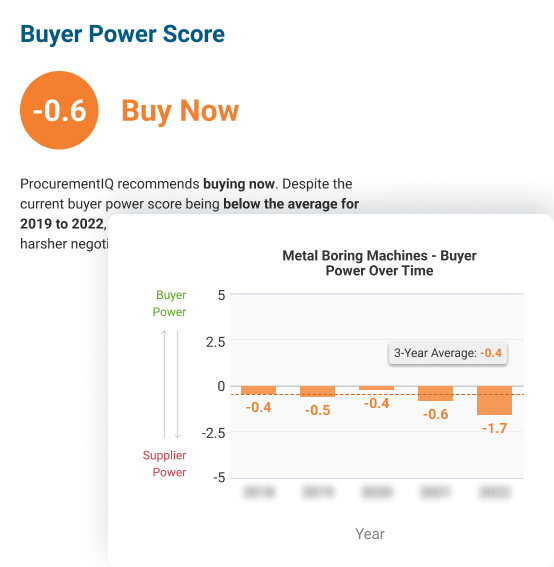
In 2026, buyer power amounts to -2.5 in the United States. Buyer power is most positively impacted by Recent Developments. It is most negatively impacted by Switching Costs. Subscribers can access details on eight other factors that impact buyer power. Learn more
United States
Buyer power forecasts: your glimpse into the future
Develop strategies for the upcoming year and identify unforeseen opportunities for buying now
- Actionable "Buy Now" and "Buy Later" insights
- Near-real-time updates to current and forecast Buyer Power Scores
- Methodology and weightings for Buyer Power Score Components
Supply Chain Risk
The average level of supply chain risk is assessed as High, which has a negative impact on buyer power. The level of supply chain risk is affected by industry volatility, barriers to entry, competition, import penetration, regulation and industry financial risk. Buyers in this market can mitigate procurement and supply chain management risks by monitoring risk levels for individual first and second tier suppliers:
1st
Tier Suppliers
- Metal Pipe & Tube Manufacturers
- Ferrous Metal Foundry Product Manufacturers
- Metalworking Machinery Manufacturers
2nd
Tier Suppliers
- Iron & Steel Manufacturers
- Steel Rolling & Drawing Companies
- Structural Metal Product Manufacturers
Biggest Hose Fittings Suppliers in the US by Revenue
The largest Hose Fittings vendors by revenue in the US are Brennan Industries, Inc., W.W. Grainger, Inc. and Parker-Hannifin Corporation. Subscribers can sort and filter by market share concentration, profit level and other factors. Learn more
| Supplier | Operational Size | Headquarters | Number of Employees | Market Share (%) | Market Share Performance (3yr trend) | Total Revenue ($ million) | Profit Level (%) | Risk Level |
|---|---|---|---|---|---|---|---|---|
| Eaton Corporation Plc | Global | DUBLIN | >10,000 | 10-15 | ||||
| Parker-Hannifin Corporation | Global | CLEVELAND, OH | >10,000 | 10-15 | ||||
| Gates Industrial Corporation Plc | Global | DENVER | >10,000 | 10-15 | ||||
| W.W. Grainger, Inc. | Global | LAKE FOREST | >10,000 | 5-10 | ||||
| Fastenal Company | Global | WINONA, MN | >10,000 | < 5 | ||||
| Applied Industrial Technologies Inc. | Global | CLEVELAND, OH | 1,001-10,000 | < 5 | ||||
| Msc industrial direct co., inc. | Global | MELVILLE | 1,001-10,000 | < 5 | ||||
| McMaster-Carr Supply Company | International | Aurora, OH | 501-1,000 | < 5 | ||||
| Northern Tool & Equipment Co. | National | Burnsville, MN | 1,001-10,000 | < 5 | ||||
Looking for a list of suppliers by country?
Subscribers can access vendor information on Canadian and European suppliers, too. We also offer custom research services to help with vendor sourcing anywhere in the world.
Profit Analysis
The average profit margin across vendors in the Hose Fittings market is 7.8% and steady. Profit levels shift depending on suppliers' spend on wages, purchases and overhead. The highest cost component for vendors is Purchases. The cost trend for this component is falling, when considering movement between 2025 and 2026. To understand cost forecasts for 2027 and uncover the implications on profit, start your subscription. Learn more
Vendor & Supply Chain Analysis
Vendor risk is moderate in the hydraulic fittings market. Upstream suppliers have lower profit margins and face higher supply chain risks than market vendors, so they frequently pass these costs down; however, vendors face low competition from substitutes because fittings are a necessary component of hydraulic machinery.
Supply chain risk is high in the hydraulic fittings market. Tariffs and price volatility for inputs such as steel and aluminum put market vendors and upstream suppliers at risk.
Market share concentration is moderate in the hydraulic fittings market. A few large vendors control a moderate proportion of market sales, but there are many small and medium-size vendors to choose from.
Because the United States is a net importer of hydraulic hose and tube fittings, buyers have access to a wide range of imported fittings that they can leverage to mitigate supply chain risk, lower costs, or improve negotiating power.
Supplier Information
Eaton Corporation Plc
Eaton Corporation Plc is a public company operating globally in the manufacturing sector. The company's offerings include electric vehicle charging station construction & maintenance, electric vehicle charging stations, electric ac motors, electric dc motors, hydraulic motors. Founded in 2018, the company... Subscribe to learn more
Gates Industrial Corporation Plc
Gates Industrial Corp. Plc is a global manufacturer of highly engineered power transmission and fluid power solutions. It organizes its business into two segments: the Power Transmission segment, which includes elastomer drive belts and related components for efficient transfer of power in stationary and Subscribe to learn more
Parker-Hannifin Corporation
Parker-Hannifin Corporation is a motion and control technology company that designs, manufactures, and provides aftermarket support for highly engineered solutions for the global aerospace & defense, in-plant & industrial equipment, transportation, off-highway, energy, and HVAC & refrigeration markets. It... Subscribe to learn more
W.W. Grainger, Inc.
WW Grainger, Inc. is a diversified global company that supplies maintenance, repair, and operating (MRO) products and services. It offers products under several categories, including safety and security, material handling and storage, pumps and plumbing equipment, cleaning and maintenance, metalworking, and... Subscribe to learn more
Applied Industrial Technologies Inc.
Applied Industrial Technologies Inc. is a public company operating globally in the manufacturing sector. The company's offerings include hydraulic hose & tube fittings, hydraulic cylinders, pneumatic cylinders and hoses & hose fittings. Founded in 1923, the company is currently headquartered in Cleveland,... Subscribe to learn more
Brennan Industries, Inc.
Brennan Industries, Inc. is a private company operating globally in the manufacturing sector. The company's offerings include hydraulic hose & tube fittings and hoses & hose fittings. Founded in 1953, the company is currently headquartered in Solon, Ohio, United States of America with an estimated 375 employees.... Subscribe to learn more
Fastenal Company
Fastenal Company is a public company operating globally in the manufacturing, manufacturing, manufacturing and professional, scientific and technical services sectors. The company's offerings include hydraulic oil, metal cutting tools, flexible intermediate bulk containers, hydraulic hose & tube fittings,... Subscribe to learn more
McMaster-Carr Supply Company
McMaster-Carr Supply Company is a private company operating internationally in the manufacturing and manufacturing sectors. The company's offerings include metal cutting tools, air-filled packing materials, pneumatic motors, mechanical cable and bearings. Founded in 1901, the company is currently headquartered... Subscribe to learn more
Msc industrial direct co., inc.
MSC Industrial Direct Co., Inc. is a distributor of metalworking and maintenance, repair, and operations (MRO) products and services. It offers cutting tools, measuring instruments, tooling components, metalworking products, fasteners, flat stock, raw materials, abrasives, hand and power tools, safety and... Subscribe to learn more
Accelerate the vendor selection process
Get a clear picture of the competition in a market and discover which vendors are best-suited for your sourcing needs. Our supplier profiles include hard-to-find financial ranges for private companies, cover public company data and feature an interactive competitor matrix.
Procurement Management KPIs for the Hose Fittings Market
Managing vendor performance throughout the contract period is easier when tracking specific key performance indicators (KPIs). For example, buyers should monitor Customer Satisfaction (CSAT) and Defect Density. Buyers may experience better performance throughout their contracts if they establish service level agreements (SLAs) based on Accuracy and other factors.
| KPI | Level of Importance (1-5) | Measurements | Key Considerations |
|---|---|---|---|
| Customer Satisfaction (CSAT) |
|
Number of positive customer responses Number of customer responses |
Customer satisfaction represents customers’ overall satisfaction with a company. Customer satisfaction can be used to determine whether customer improvements are required. Customer satisfaction can be used to evaluate a company’s reputation. |
| Defect Density |
|
Number of units sold Number of defective units |
The defect density represents the share of defective products a company produces. The defect density can be used to determine whether manufacturing, assembly, or quality assurance processes require improvement. |

Questions to Ask During Procurement Negotiations
How can I gain leverage during negotiations?
Competition
Do you match your competitors' prices?
How are you able to stay competitive in the market? In what key areas are you particularly efficient?
Customer Service
Do you have any staff members dedicated specifically to customer service? If so, how many and how long have they been working at your company?
How do you deal with customer complaints?
Shipping
What shipping supplier do you use? How long have you been using them?
When was the last time you evaluated your shipping needs or switched shipping suppliers? Why did you switch suppliers?
The ultimate prep for procurement negotations
View all 25 negotiation questions for this category when you subscribe.
Hose Fittings RFP Guidelines
What should my RFP include?
Organizational Overview
Buyers should describe their organizations and explain why they are seeking hydraulic hose and tube fittings.
Buyers need to give a description of the typical usage environment that the hydraulic hose and tube fittings will face. This overview should give vendors enough information to quickly evaluate whether they can provide hydraulic hose and tube fittings that work for buyers.
Statement Of Need
Buyers must provide the intended application of the hydraulic hose and tube fittings and the number of units desired.
Buyers should state if hydraulic hose and tube fittings must operate under extreme conditions, including temperatures, vibrations, exposure to corrosive chemicals or unusually high operating pressures.
Project Budget
Buyers should explicitly state the amount of the contract award.
Buyers should explain when and how many payments will be made.
The RFP process made easy
Find out how you can access RFP templates for 800+ procurement categories to start writing better, more consistent RFPs.
We display average pricing information, trends and market data.
Our Reports include:
- Opportunity assessment
- Market dynamics
- Recent developments
- Positive and warning trends
- Buyer power levers
- Price environment and market pricing
- Geographic wage rates
- Global market updates
- Total cost of ownership
- Cost structure benchmarks and analysis
- Supply chain and vendors
- Global supplier breakdown
- Market share concentration
- Regulation and business requirements
- Vendor management and KPIs
- Sourcing strategy guidance