Procurement Market Intelligence Report
Satellite Phones
Sourcing Guide & Market Intelligence
Smarter cost management starts with comprehensive market intelligence
 United States
 Global
Quick Navigation
Satellite Phones Global Overview
Definition
Summary
Satellite phones are mobile phones that connect to satellites instead of local or ground-based cell sites. Satellite phones are beneficial because they are not affected by weather conditions and can be used in almost any location. They are used by search and rescue organizations, government organizations and shipping companies.
This Report Includes:
- Satellite Phones
- Satellite Phone Accessories
Not in this Report:
- Satellite Communication Services
- Satellite Equipment Repair Services
Global Satellite Phones Procurement Trends
Discover the top international trends affecting procurement in the global Satellite Phones market.
Warning Trends
Public sector demand slumps as the government enters shutdown
- On October 1, the US federal government entered a shutdown after negotiations for a new appropriations bill failed.
- During a government shutdown, essential federal government operations, such as law enforcement, air-traffic control, and social security, persist, while nonessential operations are paused and workers involved in these operations are furloughed. Thus, the current shutdown is expected to result in 750,000 federal workers being furloughed, representing a $400 million reduction in daily expenditure by the federal government.
- This significant reduction in federal spending and operations will affect the entire US economy, weakening aggregate demand and slowing economic growth. For example, the 35-day government shutdown in Q1, 2019, reduced aggregate demand in both the public and private sectors, resulting in a 0.2% reduction in GDP growth that quarter.
- The effects of the shutdown are likely to be most acute in markets where the public sector is a major buyer segment, weakening demand and increasing average vendor risk by destabilizing important revenue streams.
- As negotiations for a new appropriations bill to reopen the government remain ongoing, ProcurementIQ will continue to monitor the situation and update this story with the latest information.
Tariffs to escalate prices for electronics and computing equipment
- The Trump administration’s reciprocating tariffs, which will increase the tariff on all products imported from nearly all US trade partners, are set to take effect on August 7 and are likely to drive price increases across a wide range of sectors.
- The United States is highly reliant on imported electronics, communication equipment, and computing devices, having imported more than $472 billion worth of electronics in 2024, or about half of the total domestic supply. Starting August 7, imports from key computer and electronics producers such as China (54,0%), Japan (15.0%), South Korea (15.0%), Thailand (19.0%), Vietnam (20.0%), and Taiwan (20.0%) will be subject to new tariff rates. Trade deals for many countries are still being negotiated, and these rates are subject to change.
- For this reason, the US electronics industry is highly exposed to price increases and supply chain disruptions when the tariffs take effect. For example, the cost of iPhones, which are predominantly manufactured in China, could rise by as much as 43.0% in response to tariffs, according to projections by Rosenblatt Securities.
- Overall, the Yale Budget Lab anticipates tariffs will increase the average cost of computers and electronics by 18.7% in the short term.
- The tariffs exempt semiconductors, limiting the cost increases for domestic electronics manufacturers, but the lack of domestic electronics assembly capacity means that this exemption will have a limited effect.
Russian invasion of Ukraine is putting additional strain on US chip supply
- Until recently, the United States sourced nearly all of its neon gas (an essential material in the laser imprinting process to produce semiconductors) from Ukrainian and Russian producers. Previous conflicts between the two nations, specifically related to the Crimea conflict in 2014, resulted in a nearly 600.0% increase in the price of neon.
- The Russian Ministry of Industry and Trade announced in early June that it would be limiting neon gas exports as part of its sanctions against countries it views as unfriendly. This move will add to lead times and prices for neon.
- Downstream semiconductor manufacturers keep stockpiles of neon gas that have allowed them to continue manufacturing chips, though it is unknown how long these stockpiles will last. Semiconductor manufacturers will likely pay higher prices for neon gas outside Ukraine as global supplies dwindle.
Global Satellite Phones Market - Suppliers by Region
| Country/Region | Number of Suppliers |
|---|---|
| #1 Oceania & Southeast Asia | 155 |
| #2 China | 115 |
| #3 Europe | 100 |
Explore supplier concentration across the globe
We've uncovered the 11 top regions for global procurement, based on feedback from our most strategic clients. Access vendor counts for each unique region when you subscribe.
2
Geography Drilldown - US
Average Cost of Satellite Phones
United States
2026 Market Pricing$500.00 to $X,XXX.XX
per deviceAverage Price
Prices in the Satellite Phones market range from $500.00 to $X,XXX.XX, depending on Performance, Coverage, Durability and Additional Capabilities. For example, lower prices are associated with Low performance ($500 to $850 per device), whereas higher prices are associated with High performance ($1,000 to $1,900 per device).
Need the scoop on international price trends?
Between our Europe and Canada collections, we provide price data for 350 markets so you can instantly compare prices across borders. Or, use our custom research services for intel on prices in any region across the globe.
Satellite Phones Category Price Trends
Pricing trends are indicated by the compound annual growth rate (CAGR) during a set period of time. For the Satellite Phones market, prices in the US have grown 3.6% from 2022 to 2025. Subscribers can access price trend forecasts, price driver projections and forward-looking cost structure data. Learn more
United States (2022-2025)


Wondering where prices are heading?
Price trend forecasts are available to subscribers, along with price driver projections and forward-looking cost structure data.
Cost Analysis - Total Cost of Ownership for Satellite Phones
Total cost of ownership is Medium in the Satellite Phones market. The average cost of ownership differs depending on the contract but generally includes costs negotiated before the contract begins, costs billed during the contract period and unforeseen costs. For example, unforeseen costs in the form of Delays may raise the total cost of ownership unexpectedly.
Negotiated Before
Transportation
Unforeseen
Delays
Buyer Power in Procurement Negotiations
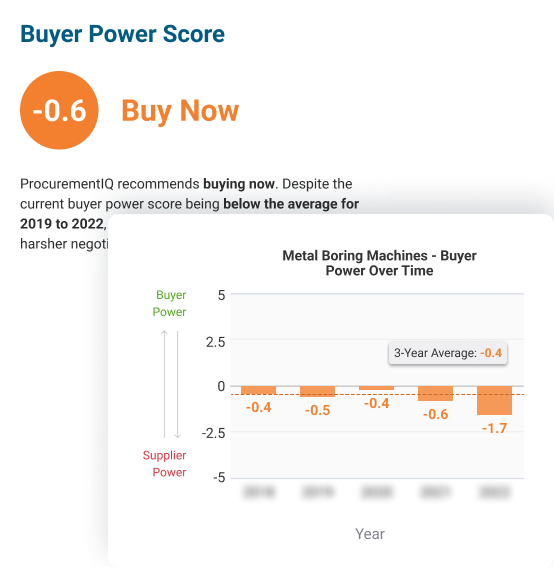
In 2026, buyer power amounts to -2.3 in the United States. Buyer power is most positively impacted by Recent Developments. It is most negatively impacted by Product Specialization. Subscribers can access details on eight other factors that impact buyer power. Learn more
United States
Buyer power forecasts: your glimpse into the future
Develop strategies for the upcoming year and identify unforeseen opportunities for buying now
- Actionable "Buy Now" and "Buy Later" insights
- Near-real-time updates to current and forecast Buyer Power Scores
- Methodology and weightings for Buyer Power Score Components
Supply Chain Risk
The average level of supply chain risk is assessed as Medium, which has a negative impact on buyer power. The level of supply chain risk is affected by industry volatility, barriers to entry, competition, import penetration, regulation and industry financial risk. Buyers in this market can mitigate procurement and supply chain management risks by monitoring risk levels for individual first and second tier suppliers:
1st
Tier Suppliers
- Telecom Networking Equipment Manufacturers
- Satellite Manufacturers
2nd
Tier Suppliers
- Semiconductor Manufacturers
- Circuit Board & Electronic Component Manufacturers
- Wire & Cable Manufacturers
Biggest Satellite Phones Suppliers in the US by Revenue
The largest Satellite Phones vendors by revenue in the US are Inmarsat Plc, Itron, Inc. and ORBCOMM Inc. Subscribers can sort and filter by market share concentration, profit level and other factors. Learn more
| Supplier | Operational Size | Headquarters | Number of Employees | Market Share (%) | Market Share Performance (3yr trend) | Total Revenue ($ million) | Profit Level (%) | Risk Level |
|---|---|---|---|---|---|---|---|---|
| Thuraya Telecommunications Company | Global | Dubai, AE | 501-1,000 | 20-25 | ||||
| Inmarsat Plc | Global | London, UK | 1,001-10,000 | 25+ | ||||
| Iridium Communications Inc. | International | MCLEAN | 501-1,000 | 25+ | ||||
| Qualcomm Inc. | Global | SAN DIEGO, CA | >10,000 | < 5 | ||||
| Itron, Inc. | Global | LIBERTY LAKE | 1,001-10,000 | < 5 | ||||
| Globalstar Inc. | Global | COVINGTON, | 251-500 | < 5 | ||||
| ORBCOMM Inc. | Global | ROCHELLE PARK, NJ | 501-1,000 | < 5 | ||||
Looking for a list of suppliers by country?
Subscribers can access vendor information on Canadian and European suppliers, too. We also offer custom research services to help with vendor sourcing anywhere in the world.
Profit Analysis
The average profit margin across vendors in the Satellite Phones market is 13.3% and steady. Profit levels shift depending on suppliers' spend on wages, purchases and overhead. The highest cost component for vendors is Purchases. The cost trend for this component is stagnating, when considering movement between 2025 and 2026. To understand cost forecasts for 2027 and uncover the implications on profit, start your subscription. Learn more
Vendor & Supply Chain Analysis
The average vendor risk in this market is moderate. This market has a stable amount of vendors participating with others influencing a larger percentage of the market, which is compensated by other smaller vendors, which influences high competition.
Market share concentration is moderate. Moderate concentration is a result of the substantial capital investments required to start a satellite manufacturing company.
Supply chain risk has been moderate, as risks mostly involve the initial purchase of inputs required to build the infrastructure that allows for the manufacturing of highly complicated devices such as satellite phones.
The United States is a net importer of data transmission devices, showing a high degree of market competition from international suppliers. This comes with the benefit of access to cutting-edge technology but also introduces supply chain risks, especially given the sensitive nature of data transmission products.
Supplier Information
Thuraya Telecommunications Company
Thuraya Telecommunications Company is a private company operating globally in the manufacturing and information sectors. The company's offerings include satellite phones and satellite & earth communication systems services. Founded in 1997, the company is currently headquartered in Dubai, United Arab Emirates... Subscribe to learn more
Inmarsat Plc
Inmarsat Plc is a private company operating globally in the manufacturing sector. The company's offerings include satellite phones. Founded in 1979, the company is currently headquartered in London, United Kingdom with an estimated 5500 employees. Subscribe to learn more
Iridium Communications Inc.
Iridium Communications Inc. is a commercial provider of communications services through its low-earth orbit (LEO) L-band network. It provides voice and data communications services to businesses, the US and foreign governments, non-governmental organizations, and consumers. It serves the emergency services,... Subscribe to learn more
Globalstar Inc.
Globalstar, Inc. is a mobile satellite services (MSS) provider to areas not served or underserved by conventional wireless and wireline networks or with service interruptions due to disasters. It offers two-way voice communication and data transmission, one-way or two-way communication and data transmissions... Subscribe to learn more
Itron, Inc.
Itron, Inc. is a global technology company offering energy and water management, smart city applications, Industrial Internet-of-things (IIoT), and intelligent infrastructure and related services to utilities and municipalities. Its solutions include networks, software, services, devices, sensors, and data... Subscribe to learn more
ORBCOMM Inc.
ORBCOMM Inc. is a global provider of industrial Internet-of-Things solutions, including network connectivity, devices, device management, and web reporting applications. It offers a comprehensive industrial IoT telematics devices, modems, and cellular wireless subscriber identity modules (SIMs) to resellers... Subscribe to learn more
Qualcomm Inc.
Qualcomm Inc. is a public company operating globally in the manufacturing and information sectors. The company's offerings include central processing units, satellite phones and push-to-talk over cellular services. Founded in 1985, the company is currently headquartered in SAN DIEGO, California, United States... Subscribe to learn more
Accelerate the vendor selection process
Get a clear picture of the competition in a market and discover which vendors are best-suited for your sourcing needs. Our supplier profiles include hard-to-find financial ranges for private companies, cover public company data and feature an interactive competitor matrix.
Procurement Management KPIs for the Satellite Phones Market
Managing vendor performance throughout the contract period is easier when tracking specific key performance indicators (KPIs). For example, buyers should monitor Average Order Value and Cost of Goods Sold. Buyers may experience better performance throughout their contracts if they establish service level agreements (SLAs) based on Pricing and other factors.
| KPI | Level of Importance (1-5) | Measurements | Key Considerations |
|---|---|---|---|
| Average Order Value |
|
Total revenue Number of orders |
The average order value represents the revenue generated from an average order for the vendor This can indicate a company's reputation as well as consumer's willingness to select this specific vendors to order from in the market, rather than one of the other major competitors |
| Cost of Goods Sold |
|
Total revenue Total additional costs |
The cost of goods sold takes into account the costs that are required to produce the satellite phones, and can be used to measure profitability after taking these costs into account. |

Questions to Ask During Procurement Negotiations
How can I gain leverage during negotiations?
Shipping
Can you provide a list of your satellite phone distribution facilities locations, domestically and internationally?
What are your shipping rates to my facilities? Do shipping rates vary if I need products shipped to more than one location?
Competition
Do you offer any value-added products or services related to satellite phones that your competitors do not?
How do you stay competitive in the satellite phone market?
Cost Containment
How have input cost fluctuations affected your product prices during the past three years?
What percentage of your revenue was dedicated to depreciation in the past three years? How has that changed? Why?
The ultimate prep for procurement negotations
View all 25 negotiation questions for this category when you subscribe.
Satellite Phones RFP Guidelines
What should my RFP include?
Organizational Overview
Buyers should provide an overview of their company, including number of employees and geographic regions where they operate.
Buyers should state the types of satellite phones they desire.
Statement Of Need
Buyers should specify exact counts of the types of satellite phones they need
Buyers should specify the size of the satellite phones they wish to purchase.
Project Budget
Buyers should specify the total budget for the satellite phones they wish to purchase.
Buyers should include details about per-unit spending expectations and limitations.
The RFP process made easy
Find out how you can access RFP templates for 800+ procurement categories to start writing better, more consistent RFPs.
We display average pricing information, trends and market data.
Our Reports include:
- Opportunity assessment
- Market dynamics
- Recent developments
- Positive and warning trends
- Buyer power levers
- Price environment and market pricing
- Geographic wage rates
- Global market updates
- Total cost of ownership
- Cost structure benchmarks and analysis
- Supply chain and vendors
- Global supplier breakdown
- Market share concentration
- Regulation and business requirements
- Vendor management and KPIs
- Sourcing strategy guidance