Procurement Market Intelligence Report
Building Lighting Control Systems
Sourcing Guide & Market Intelligence
Smarter cost management starts with comprehensive market intelligence
 United States
 Global
Quick Navigation
Building Lighting Control Systems Global Overview
Definition
Summary
Building lighting control systems are composed of multiple sensors and electronic components that are connected and installed in a building to regulate and manage lighting. Often, the entire building’s lighting can be monitored and controlled from a single system. Suppliers retrofit systems to older buildings as well as install systems in newly developed facilities to maximize energy efficiency and reduce energy costs. Common suppliers of building lighting control systems are manufacturers, installers and wholesalers. Buyers include commercial property owners, government institutions and educational institutions.
This Report Includes:
- Motion Sensor Controls
- Occupancy Sensors
- Integrated Lighting Controls
- Dimmer Switches
Not in this Report:
- HVAC Regulation Systems
Global Building Lighting Control Systems Procurement Trends
Discover the top international trends affecting procurement in the global Building Lighting Control Systems market.
Warning Trends
Tariffs to negatively impact the electrical systems and lighting components sector
- The Trump Administration’s reciprocal tariffs, which apply general tariff rate increases to most leading US trade partners, are set to take effect on August 7, after the administration finalized the rates on August 1. These changes will significantly increase the tariff rate on leading electrical system and lighting component exporting countries, including China (54.0%), Mexico (25.0%), Vietnam (20.0%), and Taiwan (20.0%).
- The United States also raised tariffs on aluminum and steel, common inputs in electrical systems and components, to 50.0% in July, adding to rising costs in this sector.
- Lighting companies, such as Signify, commonly operate factories in Mexico and import components from China, indicating that higher tariffs will increase operating costs for suppliers with domestic manufacturing operations, in addition to increasing the cost of imported finished products.
- As many electrical systems and components, such as electrical transformers and switchgear systems, are already facing shortages and price increases, higher tariffs are likely to drive up prices further. For example, electrical transformer prices have already risen 70.0% to 100.0% since 2020, and higher tariffs are expected to push up prices further as Mexico, Canada, and China supply 80.0% of the transformers used in the United States.
- Likewise, the United States is reliant on imports for many major lighting components. For example, according to the Department of Energy, 94.0% of all LED imports to the United States were manufactured in China.
China bans exports of rare minerals to the United States
- On December 4, China announced a ban on all exports of gallium, germanium, graphite, and antimony to the United States, escalating existing trade restrictions on these materials.
- China is the leading global producer of each of these metals, producing 98.3%, 67.9%, 62.0%, and 48.2%, respectively, of the world’s gallium, germanium, graphite, and antimony supplies, respectively.
- The United States can still access these resources from other trade partners who make up most of the remaining global supply of the impacted commodities, such as Canada, Japan, and Brazil.
- However, the loss of supply from China, the leading producer of these materials, will increase prices and supply chain risk in a range of markets that rely on the affected metals, such as the semiconductor, batteries, and solar cell markets.
- China’s export ban on these materials is in retaliation to expanded US export bans on advanced semiconductor manufacturing equipment and technologies to China announced two days prior. This ongoing trade dispute adds further uncertainty to technology markets, which are often reliant on components and materials exported from China.
Global Building Lighting Control Systems Market - Suppliers by Region
| Country/Region | Number of Suppliers |
|---|---|
| #1 Oceania & Southeast Asia | 65,335 |
| #2 China | 47,870 |
| #3 Europe | 42,955 |
Explore supplier concentration across the globe
We've uncovered the 11 top regions for global procurement, based on feedback from our most strategic clients. Access vendor counts for each unique region when you subscribe.
2
Geography Drilldown - US
Average Cost of Building Lighting Control Systems
United States
2026 Market Pricing$10.00 to $XXX.XX
Followed teagueelectric source for types of home building light control systems.Average Price
Prices in the Building Lighting Control Systems market range from $10.00 to $XXX.XX, depending on Method of Control, Building Characteristics, Location and Capabilities. For example, lower prices are associated with Simple panels with basic dials ($300 to $2,000 per system), whereas higher prices are associated with Systems with advanced software and displays ($5,000 to $9,000 per system).
Need the scoop on international price trends?
Between our Europe and Canada collections, we provide price data for 350 markets so you can instantly compare prices across borders. Or, use our custom research services for intel on prices in any region across the globe.
Building Lighting Control Systems Category Price Trends
Pricing trends are indicated by the compound annual growth rate (CAGR) during a set period of time. For the Building Lighting Control Systems market, prices in the US have grown 3.5% from 2022 to 2025. Subscribers can access price trend forecasts, price driver projections and forward-looking cost structure data. Learn more
United States (2022-2025)


Wondering where prices are heading?
Price trend forecasts are available to subscribers, along with price driver projections and forward-looking cost structure data.
Cost Analysis - Total Cost of Ownership for Building Lighting Control Systems
Total cost of ownership is Medium in the Building Lighting Control Systems market. The average cost of ownership differs depending on the contract but generally includes costs negotiated before the contract begins, costs billed during the contract period and unforeseen costs. For example, unforeseen costs in the form of Downtime may raise the total cost of ownership unexpectedly.
Billed During
Maintenance
Software
Inspections
Utilities
Unforeseen
Downtime
Buyer Power in Procurement Negotiations
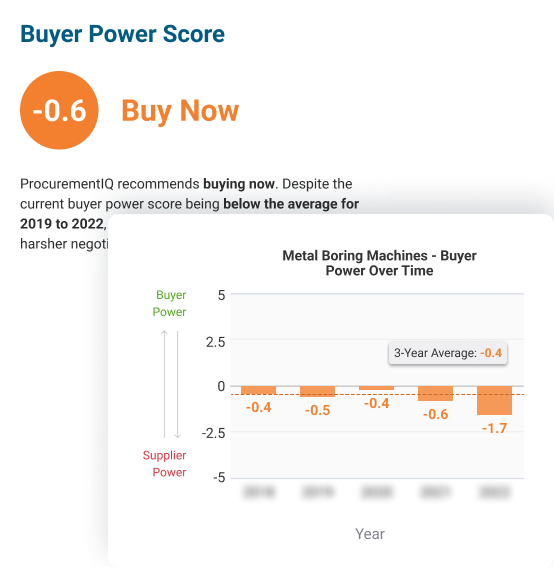
In 2026, buyer power amounts to -2.4 in the United States. Buyer power is most positively impacted by Recent Developments. It is most negatively impacted by Market Share Concentration. Subscribers can access details on eight other factors that impact buyer power. Learn more
United States
Buyer power forecasts: your glimpse into the future
Develop strategies for the upcoming year and identify unforeseen opportunities for buying now
- Actionable "Buy Now" and "Buy Later" insights
- Near-real-time updates to current and forecast Buyer Power Scores
- Methodology and weightings for Buyer Power Score Components
Supply Chain Risk
The average level of supply chain risk is assessed as Medium, which has a negative impact on buyer power. The level of supply chain risk is affected by industry volatility, barriers to entry, competition, import penetration, regulation and industry financial risk. Buyers in this market can mitigate procurement and supply chain management risks by monitoring risk levels for individual first and second tier suppliers:
1st
Tier Suppliers
- Electrical Component Manufacturers
- Software Publishers
- Wire & Cable Manufacturers
- Iron & Steel Manufacturers
2nd
Tier Suppliers
- Semiconductor & Circuit Manufacturers
- Intellectual Property Licensing Firms
- Copper Rolling, Drawing, & Extruding Service Providers
- Iron Ore Mines
Biggest Building Lighting Control Systems Suppliers in the US by Revenue
The largest Building Lighting Control Systems vendors by revenue in the US are Lutron Electronics Inc., Rosendin Electric Inc. and Emcor Group, Inc. Subscribers can sort and filter by market share concentration, profit level and other factors. Learn more
| Supplier | Operational Size | Headquarters | Number of Employees | Market Share (%) | Market Share Performance (3yr trend) | Total Revenue ($ million) | Profit Level (%) | Risk Level |
|---|---|---|---|---|---|---|---|---|
| Acuity Brands, Inc. | Global | ATLANTA, GA | >10,000 | 5-10 | ||||
| General Electric Company | Global | EVENDALE | >10,000 | < 5 | ||||
| Schneider Electric Se | Global | Paris, FR | >10,001 | < 5 | ||||
| Wesco International, Inc. | Global | PITTSBURGH, PA | >10,000 | < 5 | ||||
| Emcor Group, Inc. | International | NORWALK, CT | >10,000 | < 5 | ||||
| Signify N.V. | Global | Eindhoven, NL | >10,001 | < 5 | ||||
| Hubbell Inc. | Global | SHELTON | >10,000 | < 5 | ||||
| Osram Licht Ag | Global | Munich, US | >10,001 | < 5 | ||||
| Lutron Electronics Inc. | Global | Coopersburg, PA | 1,001-10,000 | < 5 | ||||
Looking for a list of suppliers by country?
Subscribers can access vendor information on Canadian and European suppliers, too. We also offer custom research services to help with vendor sourcing anywhere in the world.
Profit Analysis
The average profit margin across vendors in the Building Lighting Control Systems market is 4.8% and steady. Profit levels shift depending on suppliers' spend on wages, purchases and overhead. The highest cost component for vendors is Purchases. The cost trend for this component is stagnating, when considering movement between 2025 and 2026. To understand cost forecasts for 2027 and uncover the implications on profit, start your subscription. Learn more
Vendor & Supply Chain Analysis
Average vendor risk is low and will likely remain that way for the foreseeable future, as profit margins and demand continue to grow. This benefits buyers by reducing the likelihood of business disruptions.
Low market share concentration among installers and wholesalers enhances buyer power because it encourages price-based competition.
Given that various types of manufacturers make up the majority of market suppliers’ upstream supply chains, supply chain risk in this market is moderate overall.
As the United States is a net importer of light switching equipment, buyers can effectively leverage the ability of sourcing from an international supplier or a domestic supplier.
Supplier Information
Acuity Brands, Inc.
Acuity Inc. (DE) is an industrial technology company that designs and manufactures space and lighting solutions. Its operations comprise two reportable segments: the Acuity Brands Lighting segment, which offers sustainable and intelligent lighting solutions under various brands, including, among others, Aculux™,... Subscribe to learn more
Emcor Group, Inc.
Emcor Group, Inc. is a public company operating internationally in the construction, manufacturing, professional, scientific and technical services, administration, business support and waste management services and other services (except public administration) sectors. The company's offerings include building... Subscribe to learn more
General Electric Company
General Electric Company (dba GE Aerospace) is a global aerospace company that provides engines, systems, and services to commercial, government, and military markets. It organizes its business into two segments: the Commercial Engines & Services segment, which designs and manufactures jet engines for commercial... Subscribe to learn more
Hubbell Inc.
Hubbell Incorporated is a global manufacturer of electrical and utility solutions for electrical distribution and transmission, water and gas distribution, telecommunications, energy, non-residential, wireless communications, transportation, data centers, and light and heavy industrial markets. It organizes... Subscribe to learn more
Lutron Electronics Inc.
Lutron Electronics Co. Inc. is a private company operating globally in the manufacturing sector. The company's offerings include building lighting control systems and window blinds & shades. Founded in 1961, the company is currently headquartered in Coopersburg, Pennsylvania, United States of America with... Subscribe to learn more
Osram Licht Ag
ams-OSRAM AG is a public company operating globally in the manufacturing sector. The company's offerings include light bulbs & tubes, street lighting fixtures, flood lights, security lighting, emergency lighting systems. Founded in 1906, the company is currently headquartered in Premstaetten, Austria with... Subscribe to learn more
Rosendin Electric Inc.
Rosendin Electric Inc. is a private company operating nationally in the construction and manufacturing sectors. The company's offerings include building lighting control systems, solar panel installation and electrical contracting services. Founded in 1919, the company is currently headquartered in San Jose,... Subscribe to learn more
Schneider Electric Se
Schneider Electric Se is a public company operating globally in the manufacturing, information, finance & insurance and professional, scientific & technical services sectors. The company's offerings include dampers, power supply units, power adapters & inverters, uninterruptible power supply systems, panelboards.... Subscribe to learn more
Signify N.V.
Signify N.V. is a public company operating globally in the manufacturing sector. The company's offerings include light bulbs & tubes, commercial lighting fixtures, street lighting fixtures, flood lights, emergency lighting systems. Founded in 1997, the company is currently headquartered in Eindhoven, Netherlands... Subscribe to learn more
Accelerate the vendor selection process
Get a clear picture of the competition in a market and discover which vendors are best-suited for your sourcing needs. Our supplier profiles include hard-to-find financial ranges for private companies, cover public company data and feature an interactive competitor matrix.
Procurement Management KPIs for the Building Lighting Control Systems Market
Managing vendor performance throughout the contract period is easier when tracking specific key performance indicators (KPIs). For example, buyers should monitor Average Time Between Failures and Customer Retention Rate. Buyers may experience better performance throughout their contracts if they establish service level agreements (SLAs) based on Accessibility and other factors.
| KPI | Level of Importance (1-5) | Measurements | Key Considerations |
|---|---|---|---|
| Average Time Between Failures |
|
System uptime Number of failures |
The average time between failures indicates how often a system is likely to cease operating. The average time between failures is a proxy for reliability of building lighting control systems. |
| Customer Retention Rate |
|
Number of customers at start of period Number of customers added within period |
The customer retention rate represents the number of customers a company is able to retain over a set timeframe. Since buyers are more likely to stay with an incumbent vendor than incur switching costs, a low customer retention rate can be a red flag. |

Questions to Ask During Procurement Negotiations
How can I gain leverage during negotiations?
Experience and Expertise
How long has your company been a provider of building lighting control systems?
What type of training do your electricians have?
Reliability
On average, how much maintenance is required to keep your building lighting control systems in working order?
What is the average cost per year to repair and maintain your systems?
Customer Service
If the system malfunctions, does your company provide technical support and maintenance? If so, what is the average response time?
Can you provide customer testimonials?
The ultimate prep for procurement negotations
View all 24 negotiation questions for this category when you subscribe.
Building Lighting Control Systems RFP Guidelines
What should my RFP include?
Organizational Overview
Buyers should describe their organization, including information about the industries they operate in.
Buyers should state where their buildings are located and where the building lighting control systems will be installed.
Statement Of Need
Buyers should provide information about the size of the building that needs lighting control systems.
Buyers should provide information on the type of control system they are seeking in each area/building.
Project Budget
Buyers should state the amount of the contract.
Buyers should state the payment terms (e.g. upon completion, in installments).
The RFP process made easy
Find out how you can access RFP templates for 800+ procurement categories to start writing better, more consistent RFPs.
We display average pricing information, trends and market data.
Our Reports include:
- Opportunity assessment
- Market dynamics
- Recent developments
- Positive and warning trends
- Buyer power levers
- Price environment and market pricing
- Geographic wage rates
- Global market updates
- Total cost of ownership
- Cost structure benchmarks and analysis
- Supply chain and vendors
- Global supplier breakdown
- Market share concentration
- Regulation and business requirements
- Vendor management and KPIs
- Sourcing strategy guidance