Procurement Market Intelligence Report
Bulk Food-Grade Transportation Services
Sourcing Guide & Market Intelligence
Smarter cost management starts with comprehensive market intelligence
 United States
 Global
Quick Navigation
Bulk Food-Grade Transportation Services Global Overview
Definition
Summary
Bulk food-grade transportation services specialize in transporting large quantities of food products, typically in bulk or large volumes. These services involve the transportation of various food items such as grains, flour, sugar, liquids, and other food ingredients or finished products. For bulk food-grade transportation services, suppliers of these services transport a variety of dry and liquid bulk food-grade products, including milk, wine, cooking oils, grains, sweeteners, juices, and vinegar. Suppliers in the market are generally trucking and logistics companies, while typical buyers in the market are food manufacturers and wholesalers. Key buyers include dairy, juice, and snack producers, food wholesalers, and food retailers.
This Report Includes:
- Bulk Food-Grade Transportation Services
- Dry and Liquid Bulk Food-Grade Transportation Services
Not in this Report:
- National Transportation Services
- Rail Shipping
- Waterborne Shipping
- Shipping for Pharmaceutical and Healthcare Purposes
Global Bulk Food-Grade Transportation Services Procurement Trends
Discover the top international trends affecting procurement in the global Bulk Food-Grade Transportation Services market.
Neutral
Crude oil prices dip, but natural gas and fuel prices remain volatile in 2025
- Oil prices have been falling with the introduction of higher tariffs and the predicted decline in global demand. The OPEC+ group of countries also announced they would be unwinding production cuts and increasing their collective output target for May by 411,000 barrels per day.
- Trade wars, ongoing conflict between Hamas and Israel, and general unrest in the Middle East are causing uncertainty surrounding oil prices, which has led to volatility in prices. In the third week of May 2025, crude oil prices hit $63.67 per barrel, but volatility remains as geopolitical concerns remain.
- Natural gas prices rallied early in 2025 with colder-than-usual temperatures in the United States and high demand, topping out at $4.68/MMBtu in March. Prices have since fallen with the onset of trade wars and weakening demand projections to $3.64/MMBtu in the third week of May 2025.
- The national average of gasoline prices has been rising slightly due to refinery maintenance/outages and blending issues, hitting a national average of $3.15 per gallon in the third week of May 2025. However, gasoline futures have been volatile, falling due to fears of oversupply and deepening concerns about weakening demand with tariffs, but rising after trade deals.
Global Bulk Food-Grade Transportation Services Market - Suppliers by Region
| Country/Region | Number of Suppliers |
|---|---|
| #1 Oceania & Southeast Asia | 20,850 |
| #2 Africa & Middle East | 14,185 |
| #3 Europe | 13,385 |
Explore supplier concentration across the globe
We've uncovered the 11 top regions for global procurement, based on feedback from our most strategic clients. Access vendor counts for each unique region when you subscribe.
2
Geography Drilldown - US
Average Cost of Bulk Food-Grade Transportation Services
United States
2026 Market Pricing$2.70 to $X.XX
per mileAverage Price
Prices in the Bulk Food-Grade Transportation Services market range from $2.70 to $X.XX, depending on Distance, Truck Type, Product Type and Contract Length. For example, lower prices are associated with Short distance of travel, whereas higher prices are associated with Long distance of travel.
Need the scoop on international price trends?
Between our Europe and Canada collections, we provide price data for 350 markets so you can instantly compare prices across borders. Or, use our custom research services for intel on prices in any region across the globe.
Bulk Food-Grade Transportation Services Category Price Trends
Pricing trends are indicated by the compound annual growth rate (CAGR) during a set period of time. For the Bulk Food-Grade Transportation Services market, prices in the US have grown 4.6% from 2022 to 2025. Subscribers can access price trend forecasts, price driver projections and forward-looking cost structure data. Learn more
United States (2022-2025)


Wondering where prices are heading?
Price trend forecasts are available to subscribers, along with price driver projections and forward-looking cost structure data.
Cost Analysis - Total Cost of Ownership for Bulk Food-Grade Transportation Services
Total cost of ownership is Low in the Bulk Food-Grade Transportation Services market. The average cost of ownership differs depending on the contract but generally includes costs negotiated before the contract begins, costs billed during the contract period and unforeseen costs. For example, unforeseen costs in the form of Delays may raise the total cost of ownership unexpectedly.
Negotiated Before
Transportation
Billed During
Additional Fees
Unforeseen
Delays
Buyer Power in Procurement Negotiations
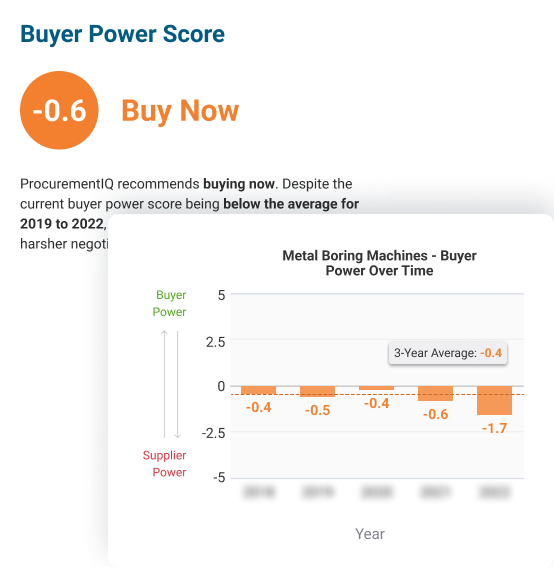
In 2026, buyer power amounts to -2.9 in the United States. Buyer power is most positively impacted by Forecast Price Trend. It is most negatively impacted by Market Share Concentration. Subscribers can access details on eight other factors that impact buyer power. Learn more
United States
Buyer power forecasts: your glimpse into the future
Develop strategies for the upcoming year and identify unforeseen opportunities for buying now
- Actionable "Buy Now" and "Buy Later" insights
- Near-real-time updates to current and forecast Buyer Power Scores
- Methodology and weightings for Buyer Power Score Components
Supply Chain Risk
The average level of supply chain risk is assessed as High, which has a negative impact on buyer power. The level of supply chain risk is affected by industry volatility, barriers to entry, competition, import penetration, regulation and industry financial risk. Buyers in this market can mitigate procurement and supply chain management risks by monitoring risk levels for individual first and second tier suppliers:
1st
Tier Suppliers
- Gasoline & Petroleum Wholesalers
- Truck Manufacturers
- Tire Wholesalers
2nd
Tier Suppliers
- Gasoline & Petroleum Bulk Stations
- Auto Parts Manufacturers
- Tire Manufacturers
Biggest Bulk Food-Grade Transportation Services Suppliers in the US by Revenue
The largest Bulk Food-Grade Transportation Services vendors by revenue in the US are KLLM Transport Services Inc., Prime Inc. and Ruan Transportation Management Systems. Subscribers can sort and filter by market share concentration, profit level and other factors. Learn more
| Supplier | Operational Size | Headquarters | Number of Employees | Market Share (%) | Market Share Performance (3yr trend) | Total Revenue ($ million) | Profit Level (%) | Risk Level |
|---|---|---|---|---|---|---|---|---|
| Foodliner Inc. | National | Stockton, CA | 1,001-10,000 | < 5 | ||||
| KLLM Transport Services Inc. | National | Richland, MS | 1,001-10,000 | < 5 | ||||
| Prime Inc. | National | Springfield, MO | 1,001-10,000 | < 5 | ||||
| Ruan Transportation Management Systems | International | Des Moines, IA | 1,001-10,000 | < 5 | ||||
| Stevens Transport | International | Dallas, TX | 1,001-10,000 | < 5 | ||||
| Trimac Inc. | International | Calgary, CA | 1,001-10,000 | < 5 | ||||
| Indian River Transport Co. | International | Winter Haven, FL | 501-1,000 | < 5 | ||||
| Marten Transport Ltd | National | MONDOVI | 1,001-10,000 | < 5 | ||||
| Caledonia Haulers | International | Caledonia, MN | 101-250 | < 5 | ||||
Looking for a list of suppliers by country?
Subscribers can access vendor information on Canadian and European suppliers, too. We also offer custom research services to help with vendor sourcing anywhere in the world.
Profit Analysis
The average profit margin across vendors in the Bulk Food-Grade Transportation Services market is 6.2% and steady. Profit levels shift depending on suppliers' spend on wages, purchases and overhead. The highest cost component for vendors is Overhead. The cost trend for this component is rising, when considering movement between 2025 and 2026. To understand cost forecasts for 2027 and uncover the implications on profit, start your subscription. Learn more
Vendor & Supply Chain Analysis
Average vendor risk in this market is low, as there are established players within the market. Considering that there is minimal barriers to entry, competition is high, which limits significant price growths from occurring.
There is a low level of market share concentration in the bulk food-grade transportation service market, with about 5,700 suppliers in this market, and the top four suppliers accounting for less than 20.0% of market revenue. Low market share concentration is a result of fragmentation; most suppliers operate locally rather than nationally, and thus cannot scale up enough to gain a greater market share.
Bulk food-grade carriers have a very high degree of supply chain risk due to the level of risk posed by their upstream suppliers, harming buyers. Gasoline and petroleum bulk stations present a high and volatile level of risk due to the significant volatility in the world price of crude oil, and because of this volatility, gasoline and petroleum wholesalers (which purchase fuel directly from gasoline and petroleum bulk stations) are subject to frequent price hikes.
The United States is a net importer of vehicles for goods transport, suggesting a high level of competition in the market due to the substantial presence of foreign vendors. However, this increased dependence on imported goods could escalate supply chain risks and vulnerability to fluctuating trade policies.
Supplier Information
Caledonia Haulers
Caledonia Haulers LLC is a private company operating internationally. The company's offerings include bulk food-grade transportation services. Founded in 1965, the company is currently headquartered in Caledonia, Minnesota, United States of America with an estimated 175 employees. Subscribe to learn more
Cherokee Freight Lines
Cherokee Freight Lines is a private company operating regionally. The company's offerings include bulk food-grade transportation services. Founded in 1945, the company is currently headquartered in Stockton, California, United States of America with an estimated 375 employees. Subscribe to learn more
Foodliner Inc.
Foodliner Inc. is a private company operating nationally. The company's offerings include bulk food-grade transportation services. Founded in 1958, the company is currently headquartered in Stockton, California, United States of America with an estimated 5500 employees. Subscribe to learn more
Indian River Transport Co.
Indian River Transport Co. is a private company operating internationally. The company's offerings include bulk food-grade transportation services. Founded in 1974, the company is currently headquartered in Winter Haven, Florida, United States of America with an estimated 750 employees. Subscribe to learn more
KLLM Transport Services Inc.
KLLM Transport Services Inc. is a private company operating nationally. The company's offerings include refrigerated trucking services and bulk food-grade transportation services. Founded in 1963, the company is currently headquartered in Richland, Mississippi, United States of America with an estimated 5500... Subscribe to learn more
Marten Transport Ltd
Marten Transport, Ltd. is a transportation company that specializes in time- and temperature-sensitive and dry truck-based transportation and distribution. It provides regional short-, medium-, and long-haul, full-load transportation services for food and other consumer packaged goods using temperature-controlled... Subscribe to learn more
Prime Inc.
Prime Inc. is a private company operating nationally. The company's offerings include refrigerated trucking services and bulk food-grade transportation services. Founded in 1970, the company is currently headquartered in Springfield, Missouri, United States of America with an estimated 5500 employees. Subscribe to learn more
Ruan Transportation Management Systems
Ruan Transportation Management Systems is a private company operating internationally. The company's offerings include petroleum & chemical trucking services, bulk food-grade transportation services and bulk earth transportation services. Founded in 1932, the company is currently headquartered in Des Moines,... Subscribe to learn more
Stevens Transport
Stevens Transport is a private company operating internationally. The company's offerings include refrigerated trucking services and bulk food-grade transportation services. Founded in 1979, the company is currently headquartered in Dallas, Texas, United States of America with an estimated 5500 employees.... Subscribe to learn more
Accelerate the vendor selection process
Get a clear picture of the competition in a market and discover which vendors are best-suited for your sourcing needs. Our supplier profiles include hard-to-find financial ranges for private companies, cover public company data and feature an interactive competitor matrix.
Procurement Management KPIs for the Bulk Food-Grade Transportation Services Market
Managing vendor performance throughout the contract period is easier when tracking specific key performance indicators (KPIs). For example, buyers should monitor Cost of Goods Sold and Customer Satisfaction (CSAT). Buyers may experience better performance throughout their contracts if they establish service level agreements (SLAs) based on Pricing and other factors.
| KPI | Level of Importance (1-5) | Measurements | Key Considerations |
|---|---|---|---|
| Cost of Goods Sold |
|
Total revenue Total labor cost Total material cost Total service cost Total delivery cost |
Knowing the cost of goods sold is used to determine market profitability, which is helpful to gauge the performance of the service for a vendor. Knowing the cost of goods sold is beneficial to the vendor for price determination of their transportation services. |
| Customer Satisfaction (CSAT) |
|
Number of positive customer responses Number of customer responses |
Customer satisfaction represents customers’ overall satisfaction with a company or vendor. Customer satisfaction can be used to evaluate a company’s overall reputation for quality and well-priced bulk food-grade transportation services. |

Questions to Ask During Procurement Negotiations
How can I gain leverage during negotiations?
Experience and Expertise
How long have you provided trucking services to customers in my market?
How long has your longest tenured client been with you?
Reliability
How many drivers do you employ and what are their credentials and histories?
What is your driver safety record and turnover rate?
Customer Service
What is the average wait time to speak with a customer service representative?
How many customer service representatives are on call during business hours? Outside of business hours?
The ultimate prep for procurement negotations
View all 20 negotiation questions for this category when you subscribe.
Bulk Food-Grade Transportation Services RFP Guidelines
What should my RFP include?
Organizational Overview
Buyers should describe their organization and explain why they are contracting bulk food-grade transportation services.
Buyers should detail the locations to which they require cargo transportation.
Statement Of Need
Buyers should state what types of bulk food deliveries they require, and any known schedules for repeated deliveries.
Buyers should specify the capacity that they will require, including the size of the tank or van trailers that they prefer their cargo to be moved in.
Project Budget
Buyers should indicate whether they wish to enter into a continuous contract or purchase services on an ad hoc basis.
Buyers should request a detailed breakdown of the vendor’s base rate, fuel surcharge schedule and other mandatory fees applied to each shipment.
The RFP process made easy
Find out how you can access RFP templates for 800+ procurement categories to start writing better, more consistent RFPs.
We display average pricing information, trends and market data.
Our Reports include:
- Opportunity assessment
- Market dynamics
- Recent developments
- Positive and warning trends
- Buyer power levers
- Price environment and market pricing
- Geographic wage rates
- Global market updates
- Total cost of ownership
- Cost structure benchmarks and analysis
- Supply chain and vendors
- Global supplier breakdown
- Market share concentration
- Regulation and business requirements
- Vendor management and KPIs
- Sourcing strategy guidance