Procurement Market Intelligence Report
Commercial Photography
Sourcing Guide & Market Intelligence
Smarter cost management starts with comprehensive market intelligence
 United States
 Global
Quick Navigation
Commercial Photography Global Overview
Definition
Summary
Commercial photographers provide images for commercial use, such as generating money or publicity for clients. Commercial photography includes but is not limited to advertising, food and fashion photography, forensics, and land surveying. Vendors in this market are mostly freelancers or small regional companies. Typical buyers are businesses that promote their products through advertising campaigns or use photography of their products in-store. This report focuses on assignment photography, in which a photographer is commissioned to take new photographs.
This Report Includes:
- Assignment Photography
- Advertising Photography
Not in this Report:
- Photojournalism
- Stock Photography
Global Commercial Photography Market - Suppliers by Region
| Country/Region | Number of Suppliers |
|---|---|
| #1 Europe | 193,110 |
| #2 Oceania & Southeast Asia | 156,685 |
| #3 India | 129,110 |
Explore supplier concentration across the globe
We've uncovered the 11 top regions for global procurement, based on feedback from our most strategic clients. Access vendor counts for each unique region when you subscribe.
2
Geography Drilldown - US
Average Cost of Commercial Photography
United States
2026 Market Pricing$500.00 to $XX,XXX.XX
per dayAverage Price
Prices in the Commercial Photography market range from $500.00 to $XX,XXX.XX, depending on Length of Shoot, By the Image, Specialty and Experience. For example, lower prices are associated with Single-day shoots and Photos that can be planned out ahead of time, whereas higher prices are associated with Multi-day photo shoots and Photos that take more time.
Need the scoop on international price trends?
Between our Europe and Canada collections, we provide price data for 350 markets so you can instantly compare prices across borders. Or, use our custom research services for intel on prices in any region across the globe.
Commercial Photography Category Price Trends
Pricing trends are indicated by the compound annual growth rate (CAGR) during a set period of time. For the Commercial Photography market, prices in the US have grown 0.1% from 2022 to 2025. Subscribers can access price trend forecasts, price driver projections and forward-looking cost structure data. Learn more
United States (2022-2025)


Wondering where prices are heading?
Price trend forecasts are available to subscribers, along with price driver projections and forward-looking cost structure data.
Cost Analysis - Total Cost of Ownership for Commercial Photography
Total cost of ownership is High in the Commercial Photography market. The average cost of ownership differs depending on the contract but generally includes costs negotiated before the contract begins, costs billed during the contract period and unforeseen costs. For example, unforeseen costs in the form of Cancellations may raise the total cost of ownership unexpectedly.
Negotiated Before
Implementation
Set Up Fees
Billed During
Labor
License fees
Unforeseen
Cancellations
Buyer Power in Procurement Negotiations
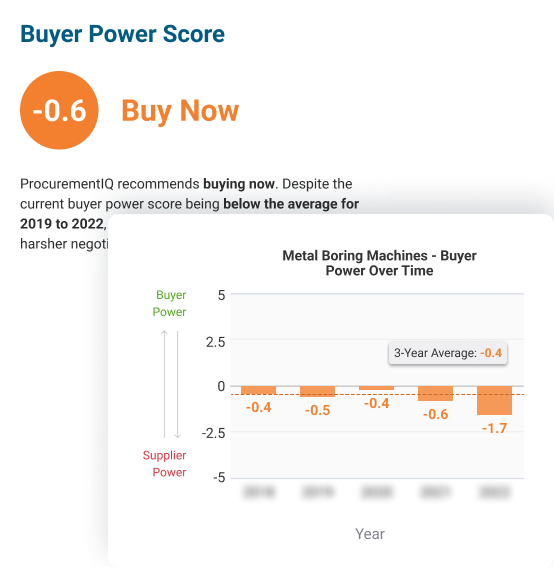
In 2026, buyer power amounts to 0.3 in the United States. Buyer power is most positively impacted by Price Driver Volatility. It is most negatively impacted by Market Share Concentration. Subscribers can access details on eight other factors that impact buyer power. Learn more
United States
Buyer power forecasts: your glimpse into the future
Develop strategies for the upcoming year and identify unforeseen opportunities for buying now
- Actionable "Buy Now" and "Buy Later" insights
- Near-real-time updates to current and forecast Buyer Power Scores
- Methodology and weightings for Buyer Power Score Components
Supply Chain Risk
The average level of supply chain risk is assessed as Medium, which has a negative impact on buyer power. The level of supply chain risk is affected by industry volatility, barriers to entry, competition, import penetration, regulation and industry financial risk. Buyers in this market can mitigate procurement and supply chain management risks by monitoring risk levels for individual first and second tier suppliers:
1st
Tier Suppliers
- Camera & Film Wholesalers
- Camera Stores
- Electrical Equipment Wholesalers
- Photofinishers
2nd
Tier Suppliers
- Computer Manufacturers
Procurement Management KPIs for the Commercial Photography Market
Managing vendor performance throughout the contract period is easier when tracking specific key performance indicators (KPIs). For example, buyers should monitor Change Requests and Customer Satisfaction (CSAT). Buyers may experience better performance throughout their contracts if they establish service level agreements (SLAs) based on Timeliness of Service and other factors.
| KPI | Level of Importance (1-5) | Measurements | Key Considerations |
|---|---|---|---|
| Change Requests |
|
Photographers’ ability to adapt to buyer’s request. Photographers’ flexibility in skill. |
Buyers will often have to go through multiple photo shoots before deciding on which ones to use. Buyer will find that after seeing the finished products their expectations might not have been met. Therefore, the vendors willingness and their ability to adapt to request changes is an important consideration. |
| Customer Satisfaction (CSAT) |
|
Total number of complaints against photographer. Total Number of reviews for the photographer. |
Customer satisfaction with the photographer represents the buyer’s overall satisfaction of the services. Customer satisfaction represents the likelihood of re-contracting for future services. |

Questions to Ask During Procurement Negotiations
How can I gain leverage during negotiations?
Service Performance
Can you provide consultation services to discuss details of the shoot?
How much creative direction do you typically take in meeting buyers' needs?
Business Relationships
What is the best way to contact you?
What service expectations do you have for your business? How often do you revise service expectations based upon client feedback?
Quality Control
What steps do you take during pre production and planning to ensure a successful photo shoot?
How much time do you typically spend retouching photos?
The ultimate prep for procurement negotations
View all 34 negotiation questions for this category when you subscribe.
Commercial Photography RFP Guidelines
What should my RFP include?
Organizational Overview
Buyers should describe their organization and explain what type of commercial photography services are needed.
Buyers should describe their desired photography services and the extent of the services required.
Statement Of Need
Buyers should provide a detailed description of the number of photographs they need.
Buyers should also include a detailed description of the types of print and digital formats required.
Project Budget
Buyers should explicitly state how much they are contracting the photographer’s services.
Buyers should explain the payment method for services for each project.
The RFP process made easy
Find out how you can access RFP templates for 800+ procurement categories to start writing better, more consistent RFPs.
We display average pricing information, trends and market data.
Our Reports include:
- Opportunity assessment
- Market dynamics
- Recent developments
- Positive and warning trends
- Buyer power levers
- Price environment and market pricing
- Geographic wage rates
- Global market updates
- Total cost of ownership
- Cost structure benchmarks and analysis
- Supply chain and vendors
- Global supplier breakdown
- Market share concentration
- Regulation and business requirements
- Vendor management and KPIs
- Sourcing strategy guidance