Procurement Market Intelligence Report
Electrical Conduits
Sourcing Guide & Market Intelligence
Smarter cost management starts with comprehensive market intelligence
 United States
 Global
Quick Navigation
Electrical Conduits Global Overview
Definition
Summary
This report is intended to assist buyers of electrical conduits. Electrical conduits are tubing systems designed to help protect and route electrical wires through buildings or other structures. Electrical conduits are used extensively in wire installations and are commonly made of steel, aluminum, or polyvinyl chloride (PVC).
This Report Includes:
- Rigid Electrical Conduits
- Flexible Electrical Conduits
Not in this Report:
- Conduit Bodies
- Electrical Boxes
- Electrical Raceways
Global Electrical Conduits Procurement Trends
Discover the top international trends affecting procurement in the global Electrical Conduits market.
Warning Trends
Tariffs to negatively impact the electrical systems and lighting components sector
- The Trump Administration’s reciprocal tariffs, which apply general tariff rate increases to most leading US trade partners, are set to take effect on August 7, after the administration finalized the rates on August 1. These changes will significantly increase the tariff rate on leading electrical system and lighting component exporting countries, including China (54.0%), Mexico (25.0%), Vietnam (20.0%), and Taiwan (20.0%).
- The United States also raised tariffs on aluminum and steel, common inputs in electrical systems and components, to 50.0% in July, adding to rising costs in this sector.
- Lighting companies, such as Signify, commonly operate factories in Mexico and import components from China, indicating that higher tariffs will increase operating costs for suppliers with domestic manufacturing operations, in addition to increasing the cost of imported finished products.
- As many electrical systems and components, such as electrical transformers and switchgear systems, are already facing shortages and price increases, higher tariffs are likely to drive up prices further. For example, electrical transformer prices have already risen 70.0% to 100.0% since 2020, and higher tariffs are expected to push up prices further as Mexico, Canada, and China supply 80.0% of the transformers used in the United States.
- Likewise, the United States is reliant on imports for many major lighting components. For example, according to the Department of Energy, 94.0% of all LED imports to the United States were manufactured in China.
Increased tariffs on copper imports take effect
- On August 1, the Trump administration implemented 50.0% tariffs on imported copper. Chile and Canada will be most impacted by these tariffs, as they account for a combined 87.0% of all copper imports in the United States.
- However, these tariffs are less sweeping than initially expected, only applying to semi-finished copper products, while excluding high-purity refined copper and copper input materials, such as ore and concentrate. As leading importers, such as Chile and Canada, have both high copper mining and refining capacities, they will likely avoid most of these tariffs by either exporting the copper in its unrefined form or refining the copper before exporting it to the United States
- These copper tariff exemptions limit the impact on the electronics and electrical equipment sectors because these applications require refined copper due to its optimal conductive properties.
- Thus, the prices of metal alloys that include copper, consumer products made from copper, tools, plumbing, corrosion-resistant alloys, and construction materials made from copper are forecast to rise by an average of 39.2%, according to the Yale Budget Lab.
United States announces new tariffs on all imported steel
- In February 2025, the United States announced 25.0% tariffs on all imported steel with no exemptions or exceptions. The tariffs took effect on March 12, 2025. On June 4th, these tariffs were increased further to 50%. These tariffs were not impacted by a recent court decision that temporarily suspended duties on certain goods as they were implemented under Section 232 of the Trade Expansion Act.
- Previously, countries such as Canada, Mexico, and Brazil, the top exporters of steel to the United States, had exemptions from tariffs. These have now been removed and all imported steel, regardless of origin, will be subject to the 50.0% tariff. However, on May 8th, the US announced an agreement with the United Kingdom to remove all levies on steel exported from the UK.
- Due to these tariff increases, the Yale Budget Lab currently projects that metals prices will rise by 30.9% on average in the United States, significantly increasing the cost of metal conduits regardless of whether they are imported or manufactured domestically.
Global Electrical Conduits Market - Suppliers by Region
| Country/Region | Number of Suppliers |
|---|---|
| #1 China | 5,530 |
| #2 Europe | 4,550 |
| #3 India | 2,560 |
Explore supplier concentration across the globe
We've uncovered the 11 top regions for global procurement, based on feedback from our most strategic clients. Access vendor counts for each unique region when you subscribe.
2
Geography Drilldown - US
Average Cost of Electrical Conduits
United States
2026 Market Pricing$2.50 to $XXX.XX
per 10-foot conduitAverage Price
Prices in the Electrical Conduits market range from $2.50 to $XXX.XX, depending on Materials, Trade Size, Flexibility and Special Features. For example, lower prices are associated with PVC ($7 to $160 per 10-foot conduit), whereas higher prices are associated with Steel ($15 to $300 per 10-foot conduit) and Aluminum ($30 to $300 per 10-foot conduit).
Need the scoop on international price trends?
Between our Europe and Canada collections, we provide price data for 350 markets so you can instantly compare prices across borders. Or, use our custom research services for intel on prices in any region across the globe.
Electrical Conduits Category Price Trends
Pricing trends are indicated by the compound annual growth rate (CAGR) during a set period of time. For the Electrical Conduits market, prices in the US have declined -2.8% from 2022 to 2025. Subscribers can access price trend forecasts, price driver projections and forward-looking cost structure data. Learn more
United States (2022-2025)


Wondering where prices are heading?
Price trend forecasts are available to subscribers, along with price driver projections and forward-looking cost structure data.
Cost Analysis - Total Cost of Ownership for Electrical Conduits
Total cost of ownership is High in the Electrical Conduits market. The average cost of ownership differs depending on the contract but generally includes costs negotiated before the contract begins, costs billed during the contract period and unforeseen costs.
Negotiated Before
Installation
Billed During
Labor
Hardware
Buyer Power in Procurement Negotiations
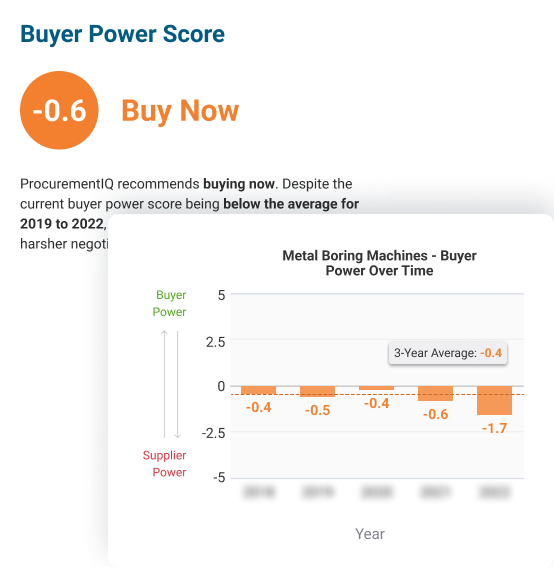
In 2026, buyer power amounts to -1.2 in the United States. Buyer power is most positively impacted by Recent Developments. It is most negatively impacted by Market Share Concentration. Subscribers can access details on eight other factors that impact buyer power. Learn more
United States
Buyer power forecasts: your glimpse into the future
Develop strategies for the upcoming year and identify unforeseen opportunities for buying now
- Actionable "Buy Now" and "Buy Later" insights
- Near-real-time updates to current and forecast Buyer Power Scores
- Methodology and weightings for Buyer Power Score Components
Supply Chain Risk
The average level of supply chain risk is assessed as High, which has a negative impact on buyer power. The level of supply chain risk is affected by industry volatility, barriers to entry, competition, import penetration, regulation and industry financial risk. Buyers in this market can mitigate procurement and supply chain management risks by monitoring risk levels for individual first and second tier suppliers:
1st
Tier Suppliers
- Plastic Pipe & Parts Manufacturers
- Aluminum Manufacturers
- Steel Rollers & Drawers
2nd
Tier Suppliers
- Plastic & Resin Manufacturers
- Electric Power Transmission Providers
- Coal Miners
- Iron Ore Miners
Biggest Electrical Conduits Suppliers in the US by Revenue
The largest Electrical Conduits vendors by revenue in the US are Zekelman Industries, Inc., Mitsubishi Materials Corporation and W.W. Grainger, Inc. Subscribers can sort and filter by market share concentration, profit level and other factors. Learn more
| Supplier | Operational Size | Headquarters | Number of Employees | Market Share (%) | Market Share Performance (3yr trend) | Total Revenue ($ million) | Profit Level (%) | Risk Level |
|---|---|---|---|---|---|---|---|---|
| Abb Ltd | Global | Zurich | >10,000 | 10-15 | ||||
| Eaton Corporation Plc | Global | DUBLIN | >10,000 | 5-10 | ||||
| Southwire Co | Global | Carrollton, GA | 1,001-10,000 | 5-10 | ||||
| Mitsubishi Materials Corporation | Global | Tokyo, JP | >10,001 | < 5 | ||||
| Schneider Electric Se | Global | Paris, FR | >10,001 | < 5 | ||||
| Nucor Corporation | Global | CHARLOTTE, NC | >10,000 | < 5 | ||||
| Aptiv Plc | Global | SCHAFFHAUSEN | >10,000 | < 5 | ||||
| Emerson Electric Co. | Global | ST LOUIS, MO | >10,000 | < 5 | ||||
| W.W. Grainger, Inc. | Global | LAKE FOREST | >10,000 | < 5 | ||||
Looking for a list of suppliers by country?
Subscribers can access vendor information on Canadian and European suppliers, too. We also offer custom research services to help with vendor sourcing anywhere in the world.
Profit Analysis
The average profit margin across vendors in the Electrical Conduits market is 6.1% and steady. Profit levels shift depending on suppliers' spend on wages, purchases and overhead. The highest cost component for vendors is Purchases. The cost trend for this component is rising, when considering movement between 2025 and 2026. To understand cost forecasts for 2027 and uncover the implications on profit, start your subscription. Learn more
Vendor & Supply Chain Analysis
Buyers benefit from low market share concentration in the electrical conduit market. Due to the wide availability of vendors, if a supplier raises its prices or delivers low-quality products, buyers can easily find another supplier that can meet their needs.
Due to the reliance on raw materials that are prone to price fluctuations, such as PVC, steel, and aluminum, for the production of electrical conduits, supply chain risk is high. Consequently, conduit prices and availability may be unstable due to upstream disruptions in the supply chain, risks that have risen due to recent shifts in US tariff policy.
Average vendor risk is low because most conduit vendors sell a wide variety of electrical equipment, tools or hardware, allowing them to maintain consistent revenue streams through their diversified offerings.
The moderate pace of regulatory change in the electrical conduit market means that buyers may face some compliance costs, particularly due to conduit installation guidlines.
The United States is a net exporter of electrical conduits, meaning that buyers benefit from access to many globally competitive domestic vendors. Additionally, there is still a high availability of imported conduits if buyers wish to expand their vendor search outside of the domestic market.
Supplier Information
Abb Ltd
ABB Ltd. is a global technology company that offers comprehensive electrification, robotics, automation, and motion solutions, primarily serving the distribution utilities, renewables, and transport & infrastructure markets. It organizes its business into four segments: the Electrification segment, which Subscribe to learn more
Eaton Corporation Plc
Eaton Corporation Plc is a public company operating globally in the manufacturing sector. The company's offerings include electric vehicle charging station construction & maintenance, electric vehicle charging stations, electric ac motors, electric dc motors, hydraulic motors. Founded in 2018, the company... Subscribe to learn more
Southwire Co
Southwire Co is a private company operating globally in the manufacturing sector. The company's offerings include electrical wire, electrical cable, work lights, electrical fuses and electrical conduits. Founded in 1950, the company is currently headquartered in Carrollton, Georgia, United States of America... Subscribe to learn more
Anamet Electrical Inc.
Anamet Electrical Inc. is a private company operating globally in the manufacturing sector. The company's offerings include electrical conduits. Founded in 1958, the company is currently headquartered in Mattoon, Illinois, United States of America with an estimated 175 employees. Subscribe to learn more
Aptiv Plc
Aptiv PLC (formerly Delphi Automotive PLC) is engaged in the design and manufacture of vehicle components for the global automotive and commercial vehicle markets. It also provides electrical and electronic and active safety technology solutions for vehicle component manufacturers. Its business is organized... Subscribe to learn more
Atkore International Group Inc.
Atkore International Group Inc. is a public company operating globally in the manufacturing sector. The company's offerings include posts & bollards and electrical conduits. Founded in 1959, the company is currently headquartered in Harvey, Illinois, United States of America with an estimated 5000 employees.... Subscribe to learn more
Emerson Electric Co.
Emerson Electric Co. is a public company operating globally in the manufacturing, professional, scientific and technical services and other services (except public administration) sectors. The company's offerings include downhole instrumentation, welding machines, industrial refrigerators, auxiliary generators,... Subscribe to learn more
Hubbell Inc.
Hubbell Incorporated is a global manufacturer of electrical and utility solutions for electrical distribution and transmission, water and gas distribution, telecommunications, energy, non-residential, wireless communications, transportation, data centers, and light and heavy industrial markets. It organizes... Subscribe to learn more
Legrand
Legrand is a public company operating globally in the manufacturing sector. The company's offerings include electrical fuses, electrical safety devices, electrical conduits and projection screens. Founded in 1904, the company is currently headquartered in Limoges, France with an estimated employee count of... Subscribe to learn more
Accelerate the vendor selection process
Get a clear picture of the competition in a market and discover which vendors are best-suited for your sourcing needs. Our supplier profiles include hard-to-find financial ranges for private companies, cover public company data and feature an interactive competitor matrix.
Procurement Management KPIs for the Electrical Conduits Market
Managing vendor performance throughout the contract period is easier when tracking specific key performance indicators (KPIs). For example, buyers should monitor Defect Density and Delivery In Full On Time Rate. Buyers may experience better performance throughout their contracts if they establish service level agreements (SLAs) based on Specifications & Quality and other factors.
| KPI | Level of Importance (1-5) | Measurements | Key Considerations |
|---|---|---|---|
| Defect Density |
|
The number of defective or damaged conduit segments divided by the total number of conduit segments The percentage of conduit segments that need to be replaced before they reach their expected life span |
Defective electrical conduits can result in serious damage to the wiring housed within and can create safety hazards, so buyers should carefully track the rate of damaged or defective conduit segments. Buyers should also differentiate between major and minor defects when tracking this value. |
| Delivery In Full On Time Rate |
|
Percent of deliveries completed on-time |
The delivery in full on time rate is a measure of how often a supplier is able to complete deliveries according to the specifications of the order. Because conduits are often used in time-sensitive construction projects, this metric is important for assessing the likelihood of delivery delays. |

Questions to Ask During Procurement Negotiations
How can I gain leverage during negotiations?
Competition
How do you win and retain business?
How long have you provided product to your longest tenured client?
Supply Chain Risk
Do you source materials with high exposure to market disruptions resulting from the coronavirus? How are you coping with these disruptions?
How diversified is your supplier base for inputs? Do you source from multiple suppliers in different global regions?
Environment
What tests do you perform to ensure that your conduits can withstand specific environmental conditions?
Do your conduits fulfill standards as set by the National Electrical Code?
The ultimate prep for procurement negotations
View all 28 negotiation questions for this category when you subscribe.
Electrical Conduits RFP Guidelines
What should my RFP include?
Organizational Overview
Buyers should describe their operations (e.g., commercial, industrial, municipal, etc.), to help vendors understand their electrical usage and housing needs.
Buyers should provide a detailed description of their operational structure, including to whom vendors will report.
Statement Of Need
Buyers should describe their specific conduit needs, including the number of feet of conduit needed, as well as conduit components, such as disconnects and metering sockets.
Buyers should include a description of any ancillary services that may need to be performed, such as switching main power sources and the demolition and removal of old electrical infrastructure.
Project Budget
Buyers should state the amount for the award.
Given the volatility inherent in inputs like steel, buyers should list desired price ceilings or rate hikes that can arise from fluctuating input costs.
The RFP process made easy
Find out how you can access RFP templates for 800+ procurement categories to start writing better, more consistent RFPs.
We display average pricing information, trends and market data.
Our Reports include:
- Opportunity assessment
- Market dynamics
- Recent developments
- Positive and warning trends
- Buyer power levers
- Price environment and market pricing
- Geographic wage rates
- Global market updates
- Total cost of ownership
- Cost structure benchmarks and analysis
- Supply chain and vendors
- Global supplier breakdown
- Market share concentration
- Regulation and business requirements
- Vendor management and KPIs
- Sourcing strategy guidance