Procurement Market Intelligence Report
Flame-Resistant Uniforms
Sourcing Guide & Market Intelligence
Smarter cost management starts with comprehensive market intelligence
 United States
 Global
Quick Navigation
Flame-Resistant Uniforms Global Overview
Definition
Summary
This report is intended to help buyers of flame-resistant (FR) uniforms. FR uniforms are made of materials that keep fire from spreading and resist ignition. To block out flames, specially engineered fibers are used in these uniforms and flame-retardant substances are applied to the fabric. FR uniforms are used in occupations involving high-temperature, hazardous environments, such as electrical work, welding, and oil refining. FR uniforms protect against flash fires and electric arc flashes and help mitigate burn injury from thermal exposure.
This Report Includes:
- Flame-Resistant Uniforms for Industrial Applications
- Arc-Resistant Uniforms for Electrical Work
Not in this Report:
- Firefighting Clothes
- Uniform Rentals
Global Flame-Resistant Uniforms Procurement Trends
Discover the top international trends affecting procurement in the global Flame-Resistant Uniforms market.
Positive Trends
Cotton prices stabilize after multi-month decline
- In the first half of 2022, global cotton prices surged to their highest point since 2011 as a result of droughts in the United States and increased competition for farmland caused by shortages of other highly-demanded crops.
- However, demand for cotton has been falling as high inflation has detracted from consumer demand and increased central bank lending rates in much of the world have raised the risk of a global economic slowdown. As a result, global cotton spot prices have declined about 35.0% from their peak in May.
- After several months of rapid decline, global cotton prices have settled at a new equilibrium as September 2023 and October 2023 saw only slight changes in all major regional cotton markets.
Global Flame-Resistant Uniforms Market - Suppliers by Region
| Country/Region | Number of Suppliers |
|---|---|
| #1 Oceania & Southeast Asia | 11,250 |
| #2 India | 11,170 |
| #3 Africa & Middle East | 3,690 |
Explore supplier concentration across the globe
We've uncovered the 11 top regions for global procurement, based on feedback from our most strategic clients. Access vendor counts for each unique region when you subscribe.
2
Geography Drilldown - US
Average Cost of Flame-Resistant Uniforms
United States
2026 Market Pricing$171.00 to $XXX.XX
per uniform (coveralls)Average Price
Prices in the Flame-Resistant Uniforms market range from $171.00 to $XXX.XX, depending on Product Type and Features, Type of FR Fabric, Brand, Customization and Purchase Quantity. For example, lower prices are associated with Sleeves and Balaclavas, whereas higher prices are associated with Coveralls and Jackets.
Need the scoop on international price trends?
Between our Europe and Canada collections, we provide price data for 350 markets so you can instantly compare prices across borders. Or, use our custom research services for intel on prices in any region across the globe.
Flame-Resistant Uniforms Category Price Trends
Pricing trends are indicated by the compound annual growth rate (CAGR) during a set period of time. For the Flame-Resistant Uniforms market, prices in the US have grown 1.8% from 2022 to 2025. Subscribers can access price trend forecasts, price driver projections and forward-looking cost structure data. Learn more
United States (2022-2025)


Wondering where prices are heading?
Price trend forecasts are available to subscribers, along with price driver projections and forward-looking cost structure data.
Cost Analysis - Total Cost of Ownership for Flame-Resistant Uniforms
Total cost of ownership is Medium in the Flame-Resistant Uniforms market. The average cost of ownership differs depending on the contract but generally includes costs negotiated before the contract begins, costs billed during the contract period and unforeseen costs. For example, unforeseen costs in the form of Duties & Taxes may raise the total cost of ownership unexpectedly.
Negotiated Before
Transportation
Billed During
Training
Compliance
Unforeseen
Duties & Taxes
Buyer Power in Procurement Negotiations
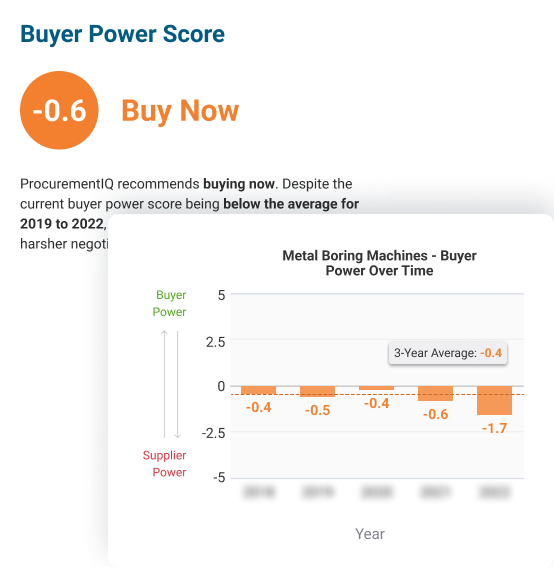
In 2026, buyer power amounts to -0.5 in the United States. Buyer power is most positively impacted by Price Driver Volatility. It is most negatively impacted by Recent Developments. Subscribers can access details on eight other factors that impact buyer power. Learn more
United States
Buyer power forecasts: your glimpse into the future
Develop strategies for the upcoming year and identify unforeseen opportunities for buying now
- Actionable "Buy Now" and "Buy Later" insights
- Near-real-time updates to current and forecast Buyer Power Scores
- Methodology and weightings for Buyer Power Score Components
Supply Chain Risk
The average level of supply chain risk is assessed as Medium, which has a negative impact on buyer power. The level of supply chain risk is affected by industry volatility, barriers to entry, competition, import penetration, regulation and industry financial risk. Buyers in this market can mitigate procurement and supply chain management risks by monitoring risk levels for individual first and second tier suppliers:
1st
Tier Suppliers
- Plastic & Resin Manufacturers
- Textile Manufacturers
- Chemical Product Manufacturers
2nd
Tier Suppliers
- Petroleum Refiners
- Synthetic Fiber Manufacturers
- Cotton Producers
- Inorganic Chemical Manufacturers
- Organic Chemical Manufacturers
Biggest Flame-Resistant Uniforms Suppliers in the US by Revenue
The largest Flame-Resistant Uniforms vendors by revenue in the US are Carhartt Inc., Codet Inc. and National Safety Apparel, Inc. Subscribers can sort and filter by market share concentration, profit level and other factors. Learn more
| Supplier | Operational Size | Headquarters | Number of Employees | Market Share (%) | Market Share Performance (3yr trend) | Total Revenue ($ million) | Profit Level (%) | Risk Level |
|---|---|---|---|---|---|---|---|---|
| Dupont De Nemours, Inc. | Global | WILMINGTON | >10,000 | 5-10 | ||||
| Cintas Corporation | International | CINCINNATI, OH | >10,000 | 5-10 | ||||
| Workwear Outfitters LLC | Global | Nachville, TN | 1,001-10,000 | 5-10 | ||||
| Honeywell International Inc. | Global | CHARLOTTE | >10,000 | < 5 | ||||
| W.W. Grainger, Inc. | Global | LAKE FOREST | >10,000 | < 5 | ||||
| Vestis Corp | Global | ROSWELL | >10,000 | < 5 | ||||
| Unifirst Corporation | Global | WILMINGTON, MA | >10,000 | < 5 | ||||
| Carhartt Inc. | Global | Dearborn, MI | 1,001-10,000 | < 5 | ||||
| Codet Inc. | International | Coaticook, CA | 51-100 | < 5 | ||||
Looking for a list of suppliers by country?
Subscribers can access vendor information on Canadian and European suppliers, too. We also offer custom research services to help with vendor sourcing anywhere in the world.
Profit Analysis
The average profit margin across vendors in the Flame-Resistant Uniforms market is 2.6% and steady. Profit levels shift depending on suppliers' spend on wages, purchases and overhead. The highest cost component for vendors is Purchases. The cost trend for this component is falling, when considering movement between 2025 and 2026. To understand cost forecasts for 2027 and uncover the implications on profit, start your subscription. Learn more
Vendor & Supply Chain Analysis
Vendors have low risk in the FR uniform market overall. Vendors benefit from slow regulatory change, and supply chain risks are offset by consistent demand for FR uniforms.
Market share concentration is low in the FR uniforms market. Top players have strong reputations for quality but compete with a broad range of smaller companies.
Supply chain risk is moderate in the FR uniform market, as synthetic fibers are made using oil, which has a highly volatile global market. Vendors pass most of the cost of market disruptions on to buyers in the FR uniform market.
The United States is a net importer of uniforms, increasing the level of competition in the domestic market due to the presence of foreign competitors. While reliance on overseas vendors heightens supply chain risk, the increased competition helps keep prices at bay.
Supplier Information
Cintas Corporation
Cintas Corporation is a public company operating internationally in the manufacturing, manufacturing, information, professional, scientific and technical services, administration, business support and waste management services and other services (except public administration) sectors. The company's offerings... Subscribe to learn more
Dupont De Nemours, Inc.
DuPont de Nemours, Inc. is a global company that develops technology-based materials, ingredients, and solutions for electronics, transportation, building and construction, health and wellness, food, and worker safety markets. It organizes its business into two reportable segments: the Electronics & Industrial... Subscribe to learn more
Workwear Outfitters LLC
Workwear Outfitters LLC is a private company operating globally in the manufacturing and manufacturing sectors. The company's offerings include safety footwear and flame-resistant uniforms. Founded in 1999, the company is currently headquartered in Nachville, Tennessee, United States of America with an estimated... Subscribe to learn more
Carhartt Inc.
Carhartt Inc. is a private company operating globally in the manufacturing sector. The company's offerings include safety apparel, high-visibility uniforms, flame-resistant uniforms and medical uniforms. Founded in 1889, the company is currently headquartered in Dearborn, Michigan, United States of America... Subscribe to learn more
Codet Inc.
Codet Inc. is a private company operating internationally in the manufacturing and wholesale trade sectors. The company's offerings include flame-resistant uniforms. Founded in 1946, the company is currently headquartered in Coaticook, Quebec, Canada with an estimated 75 employees. Subscribe to learn more
Honeywell International Inc.
Honeywell International Inc. is a global technology and manufacturing company that designs, develops, produces, and markets consumer and industrial products. It organizes its business into four reportable business segments: the Aerospace segment, which supplies products, software, and services for aircraft;... Subscribe to learn more
Lakeland Industries Inc.
Lakeland Industries, Inc. is a global provider of safety products for chemical, clean room, energy, fire service, manufacturing, and utility applications. It designs, manufactures, and sells firefighter protective apparel and accessories, high-end chemical protective suits, limited-use/disposable protective... Subscribe to learn more
National Safety Apparel, Inc.
National Safety Apparel, Inc. is a private company operating nationally in the manufacturing sector. The company's offerings include safety apparel and flame-resistant uniforms. Founded in 1935, the company is currently headquartered in Cleveland, Ohio, United States of America with an estimated 375 employees.... Subscribe to learn more
True North Gear LLC
True North Gear LLC is a private company operating internationally in the manufacturing sector. The company's offerings include flame-resistant uniforms. Founded in 1992, the company is currently headquartered in Seattle, Washington, United States of America with an estimated 37 employees. Subscribe to learn more
Accelerate the vendor selection process
Get a clear picture of the competition in a market and discover which vendors are best-suited for your sourcing needs. Our supplier profiles include hard-to-find financial ranges for private companies, cover public company data and feature an interactive competitor matrix.
Procurement Management KPIs for the Flame-Resistant Uniforms Market
Managing vendor performance throughout the contract period is easier when tracking specific key performance indicators (KPIs). For example, buyers should monitor Customer Retention Rate and Defect Density. Buyers may experience better performance throughout their contracts if they establish service level agreements (SLAs) based on Compliance and other factors.
| KPI | Level of Importance (1-5) | Measurements | Key Considerations |
|---|---|---|---|
| Customer Retention Rate |
|
Number of customers at start of period Number of Customers at End of Period Number of Customers Added within Period |
The customer retention rate represents the number of customers a company is able to retain over a set time frame. The customer retention rate can be used to determine the extent to which a company’s customer base fluctuates over time. |
| Defect Density |
|
Number of units sold Number of defective units |
The defect density represents the share of defective products a company produces. The defect density can be used to determine whether manufacturing, assembly, or quality assurance processes require improvement. |

Questions to Ask During Procurement Negotiations
How can I gain leverage during negotiations?
Quality Control
What are the typical applications of your FR uniforms?
Can you describe some of the characteristics and limitations of your FR uniforms?
Service Performance
What measures do you take to achieve high-quality fabric standards?
Do you use any special construction techniques to improve product durability?
Customer Service
Do you provide presale technical and consultative assistance?
How easily can you respond to my changing needs, such as order volume and product specifications?
The ultimate prep for procurement negotations
View all 33 negotiation questions for this category when you subscribe.
Flame-Resistant Uniforms RFP Guidelines
What should my RFP include?
Organizational Overview
Buyers should outline details of their organization, including the number of employees, locations and organizational structure.
Buyers should include a detailed description of the workplace conditions and related requirements (e.g., electrical work, welding and oil refining).
Statement Of Need
Buyers should specify the types of FR uniforms needed (e.g., coveralls, jackets or pants).
Buyers should specify any desired features of FR uniforms (e.g., size, color, and material type).
Project Budget
If one exists, buyers should specify a budget for their desired uniforms and any related products and services.
Buyers should include information about any budgetary constraints.
The RFP process made easy
Find out how you can access RFP templates for 800+ procurement categories to start writing better, more consistent RFPs.
We display average pricing information, trends and market data.
Our Reports include:
- Opportunity assessment
- Market dynamics
- Recent developments
- Positive and warning trends
- Buyer power levers
- Price environment and market pricing
- Geographic wage rates
- Global market updates
- Total cost of ownership
- Cost structure benchmarks and analysis
- Supply chain and vendors
- Global supplier breakdown
- Market share concentration
- Regulation and business requirements
- Vendor management and KPIs
- Sourcing strategy guidance