Procurement Market Intelligence Report
HVAC System Construction & Maintenance
Sourcing Guide & Market Intelligence
Smarter cost management starts with comprehensive market intelligence
 United States
 Canada
 Europe
 Global
Quick Navigation
HVAC System Construction & Maintenance Global Overview
Definition
Summary
This report is intended to assist buyers of heating, ventilation and air-conditioning (HVAC) construction and maintenance, also referred to as mechanical services. Vendors provide HVAC, refrigeration, building automation and other mechanical construction services, such as process piping, fireplace, natural gas, ventilation and ductwork. Vendors include specialty HVAC installers, plumbers and general contractors.
This Report Includes:
- Ventilation Maintenance
- Ductwork
Not in this Report:
- Electrical Services
- Plumbing Services
Global HVAC System Construction & Maintenance Procurement Trends
Discover the top international trends affecting procurement in the global HVAC System Construction & Maintenance market.
Warning Trends
Fed lowers rates for the first time in 2025
- On September 17, the Federal Reserve’s Federal Open Market Committee (FOMC) voted to lower interest rates to a target range of 4.0% to 4.25%, down 0.25% from the rate it had been holding since November of last year.
- Despite indications at the start of the year that steady reductions to the relatively high 4.25% to 4.5% rate were on the horizon, the Fed held off on rate cuts for much of the year due to concerns that the combination of higher tariffs and a reduction in borrowing costs could cause rebounding inflation.
- The September cut to Fed interest rates signals a shift in this strategy, indicating that the Fed now considers weakening employment figures a greater threat than inflation. As a result, FOMC officials have also signaled that two additional rate cuts are likely before the end of the year in an effort to fight unemployment and stimulate the economy.
- Declining Fed funds rates will provide relief to borrowers by lowering the market interest rates for consumer and business loans. This reduction in the cost of borrowing will reduce the cost of many banking and financial services, and may spur increases in demand across the economy.
Tariffs to negatively impact the building and construction machinery sector
- The Trump Administration’s reciprocal tariffs, which apply general tariff rate increases to most countries the United States trades with, are set to take effect on August 7, after the administration finalized the national rates on August 1. As a result, leading sources of imported construction machinery face significantly higher tariff rates, including Japan (15.0%), Mexico (25.0%), South Korea (15.0%), the European Union (15.0%), the United Kingdom (10.0%), China (54.0%), and Canada (35.0%).
- The increase in tariffs on building and construction machinery imported from tariff-impacted countries will add to the price of imports, which are typically passed on to buyers in the form of higher prices. According to The Budget Lab at Yale, the additional tariffs on imports will increase overall prices for machinery and equipment by 13.3%.
- Additionally, the administration has already implemented 50.0% tariffs on all aluminum and steel imported into the United States, with the sole exception of imports from the United Kingdom. These tariffs will increase input costs even for construction machinery suppliers with domestic manufacturing operations.
- According to an April 2025 survey from Construction Equipment Magazine, around half of the respondents reported that the higher tariffs will increase operating costs by up to 15.0%, and more than half said they plan to pass those increases along to buyers.
- As many building and construction machinery brands source parts and components such as steel, engines, and electronics from foreign countries, higher tariff rates will put upward pressure on prices and lead to greater rental rates as manufacturers and dealers pass on costs. In addition, suppliers that source parts from tariff-affected regions may see supply chain disruptions as they seek alternative suppliers to mitigate tariff impacts.
Increased tariffs on copper imports take effect
- On August 1, the Trump administration implemented 50.0% tariffs on imported copper. Chile and Canada will be most impacted by these tariffs, as they account for a combined 87.0% of all copper imports in the United States.
- However, these tariffs are less sweeping than initially expected, only applying to semi-finished copper products, while excluding high-purity refined copper and copper input materials, such as ore and concentrate. As leading importers, such as Chile and Canada, have both high copper mining and refining capacities, they will likely avoid most of these tariffs by either exporting the copper in its unrefined form or refining the copper before exporting it to the United States
- These copper tariff exemptions limit the impact on the electronics and electrical equipment sectors because these applications require refined copper due to its optimal conductive properties.
- Thus, the prices of metal alloys that include copper, consumer products made from copper, tools, plumbing, corrosion-resistant alloys, and construction materials made from copper are forecast to rise by an average of 39.2%, according to the Yale Budget Lab.
Global HVAC System Construction & Maintenance Market - Suppliers by Region
| Country/Region | Number of Suppliers |
|---|---|
| #1 Europe | 214,815 |
| #2 China | 207,765 |
| #3 Africa & Middle East | 116,725 |
Explore supplier concentration across the globe
We've uncovered the 11 top regions for global procurement, based on feedback from our most strategic clients. Access vendor counts for each unique region when you subscribe.
2
Geography Drilldown - US, Canada & Europe
Average Cost of HVAC System Construction & Maintenance
United States
2026 Market Pricing$50.00 to $XXX.XX
per labor hour
Average Price
Prices in the HVAC System Construction & Maintenance market range from $50.00 to $XXX.XX, depending on Size & Scope of the Project, Accessibility of the Job Site, Location, Experience & Qualifications of the Supplier and Contract Length. For example, lower prices are associated with Residence installation ($50.00 to $150 per labor hour), whereas higher prices are associated with Industrial facility installation ($100 to $900 per labor hour) and Data center installation ($100 to $900 per labor hour).
Need the scoop on international price trends?
Between our Europe and Canada collections, we provide price data for 350 markets so you can instantly compare prices across borders. Or, use our custom research services for intel on prices in any region across the globe.
HVAC System Construction & Maintenance Category Price Trends
Pricing trends are indicated by the compound annual growth rate (CAGR) during a set period of time. For the HVAC System Construction & Maintenance market, prices in the US have grown 3.3% from 2022 to 2025. and +0.8% in Europe.
United States (2022-2025)

Europe (2022-2025)
Compound Annual Growth Rate
Wondering where prices are heading?
Price trend forecasts are available to subscribers, along with price driver projections and forward-looking cost structure data.
Cost Analysis - Total Cost of Ownership for HVAC System Construction & Maintenance
Total cost of ownership is Medium in the HVAC System Construction & Maintenance market. The average cost of ownership differs depending on the contract but generally includes costs negotiated before the contract begins, costs billed during the contract period and unforeseen costs. For example, unforeseen costs in the form of Scope Changes may raise the total cost of ownership unexpectedly.
Negotiated Before
Installation
Billed During
Inspections
Maintenance
Compliance
Unforeseen
Scope Changes
Buyer Power in Procurement Negotiations
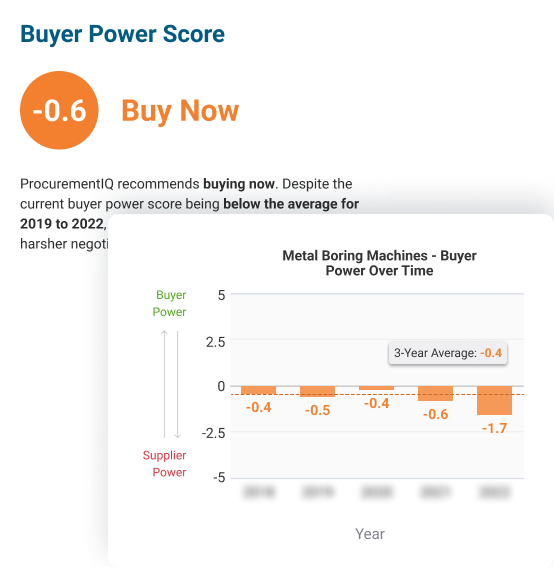
In 2026, buyer power amounts to -2.6 in the United States. Buyer power is most positively impacted by Recent Developments. It is most negatively impacted by Market Share Concentration. Subscribers can access details on eight other factors that impact buyer power. Learn more
United States

Buyer power forecasts: your glimpse into the future
Develop strategies for the upcoming year and identify unforeseen opportunities for buying now
- Actionable "Buy Now" and "Buy Later" insights
- Near-real-time updates to current and forecast Buyer Power Scores
- Methodology and weightings for Buyer Power Score Components
Supply Chain Risk
The average level of supply chain risk is assessed as Medium, which has a negative impact on buyer power. The level of supply chain risk is affected by industry volatility, barriers to entry, competition, import penetration, regulation and industry financial risk. Buyers in this market can mitigate procurement and supply chain management risks by monitoring risk levels for individual first and second tier suppliers:
1st
Tier Suppliers
- HVAC Equipment Manufacturers & Wholesalers
- Home Improvement Stores
- Vehicle Dealers
2nd
Tier Suppliers
- Aluminum Manufacturers
- Steel Manufacturers
- Copper Manufacturers
- Tool & Hardware Wholesalers
Biggest HVAC System Construction & Maintenance Suppliers in the US by Revenue
The largest HVAC System Construction & Maintenance vendors by revenue in the US are Nooter Construction, Inc., Emcor Group, Inc. and Api Group Corporation. Subscribers can sort and filter by market share concentration, profit level and other factors. Learn more
| Supplier | Operational Size | Headquarters | Number of Employees | Market Share (%) | Market Share Performance (3yr trend) | Total Revenue ($ million) | Profit Level (%) | Risk Level |
|---|---|---|---|---|---|---|---|---|
| Johnson Controls International Plc | Global | CORK | >10,000 | < 5 | ||||
| Emcor Group, Inc. | International | NORWALK, CT | >10,000 | < 5 | ||||
| Comfort Systems Usa, inc. | National | HOUSTON, TX | >10,000 | < 5 | ||||
| Api Group Corporation | Global | New Brighton, MN | 1,001-10,000 | < 5 | ||||
| Southland Industries | International | Garden Grove, CA | 1,001-10,000 | < 5 | ||||
| Nooter Construction, Inc. | Regional | Torrance, CA | 51-200 | < 5 | ||||
| Acco Engineered Systems, Inc. | National | Pasadena, CA | 1,001-10,000 | < 5 | ||||
| Brand Industrial Services, Inc. | Global | Kennesaw, GA | >10,000 | < 5 | ||||
| Harder Mechanical Contractors Inc. | Regional | Portland, OR | 1,001-10,000 | < 5 | ||||
Looking for a list of suppliers by country?
Subscribers can access vendor information on Canadian and European suppliers, too. We also offer custom research services to help with vendor sourcing anywhere in the world.
Profit Analysis
The average profit margin across vendors in the HVAC System Construction & Maintenance market is 5.4% and steady. Profit levels shift depending on suppliers' spend on wages, purchases and overhead. The highest cost component for vendors is Purchases. The cost trend for this component is rising, when considering movement between 2025 and 2026. To understand cost forecasts for 2027 and uncover the implications on profit, start your subscription. Learn more
Vendor & Supply Chain Analysis
Vendors in the HVAC mechanical services market benefit from stable demand, supported by the low availability of substitutes and increasing global temperatures. Vendors face intense competition from other HVAC mechanical service providers.
The HVAC mechanical services market is highly fragmented and competitive. Vendors typically focus on one region or state because maintaining licensing in multiple jurisdictions is expensive.
Typically, supply chain risk is moderate in the HVAC mechanical services market. However, buyers should be aware of potential volatility in service prices, lead times, and availability due to tariffs impacting the market, including steel and aluminum tariffs, which have been impacting the price and availability of replacement parts, hardware, and HVAC ducts.
State and federal governments heavily regulate HVAC mechanical services. Aside from formal rules, there is a well-established set of norms passed down via apprenticeships that dictate proper installation and maintenance techniques.
The United States is a net importer of air conditioning machines, meaning it imports more devices than it exports, indicating buyers have a wide range of options when it comes to foreign providers. This increases competition in the market and presents more opportunities for buyers to select based on cost or quality.
Supplier Information
Acco Engineered Systems, Inc.
Acco Engineered Systems, Inc. is a private company operating nationally in the construction sector. The company's offerings include boiler & furnace maintenance & repair, plumbing construction services, hvac system construction & maintenance and plumbing & sewer inspection services. Founded in 1934, the company... Subscribe to learn more
Api Group Corporation
APi Group Corp. is a global business services provider of safety, specialty, and industrial services to various industries. Its business comprises three reportable segments: Safety Services segment, which provides the design, installation, inspection, monitoring, and service of its end-to-end integrated occupancy... Subscribe to learn more
Brand Industrial Services, Inc.
Brand Industrial Services, Inc. is a private company operating globally in the construction and real estate & rental & leasing sectors. The company's offerings include scaffolding rental, building fireproofing services, scaffolding services, epoxy application services, boiler & furnace maintenance & repair.... Subscribe to learn more
Comfort Systems Usa, inc.
Comfort Systems USA, Inc. is a mechanical and electrical contracting services provider. It organizes its business into two segments: the mechanical segment, which includes heating, ventilation, and air conditioning (HVAC); plumbing, piping, and controls; and off-site construction, monitoring, and fire protection;... Subscribe to learn more
Emcor Group, Inc.
Emcor Group, Inc. is a public company operating internationally in the construction, manufacturing, professional, scientific and technical services, administration, business support and waste management services and other services (except public administration) sectors. The company's offerings include building... Subscribe to learn more
Harder Mechanical Contractors Inc.
Harder Mechanical Contractors Inc. is a private company operating regionally in the construction sector. The company's offerings include boiler & furnace maintenance & repair, plumbing construction services, hvac system construction & maintenance and plumbing & sewer inspection services. Founded in 1934, Subscribe to learn more
Johnson Controls International Plc
Johnson Controls International plc is a holding company that provides engineering, manufacturing, and commissioning of building products and systems. It designs, sells, installs, and services HVAC equipment and systems, control systems, security systems, fire detection, and fire suppression systems and equipment.... Subscribe to learn more
Nooter Construction, Inc.
Nooter Construction, Inc. is a private company operating regionally in the construction and other services (except public administration) sectors. The company's offerings include maintenance turnaround services, plumbing construction services, hvac system construction & maintenance and plumbing & sewer inspection... Subscribe to learn more
Southland Industries
Southland Industries is a private company operating internationally in the construction sector. The company's offerings include boiler & furnace maintenance & repair, plumbing construction services, hvac system construction & maintenance and plumbing & sewer inspection services. Founded in 1949, the company... Subscribe to learn more
Accelerate the vendor selection process
Get a clear picture of the competition in a market and discover which vendors are best-suited for your sourcing needs. Our supplier profiles include hard-to-find financial ranges for private companies, cover public company data and feature an interactive competitor matrix.
Procurement Management KPIs for the HVAC System Construction & Maintenance Market
Managing vendor performance throughout the contract period is easier when tracking specific key performance indicators (KPIs). For example, buyers should monitor Defect Density and Employee Training Rate. Buyers may experience better performance throughout their contracts if they establish service level agreements (SLAs) based on Qualifications and other factors.
| KPI | Level of Importance (1-5) | Measurements | Key Considerations |
|---|---|---|---|
| Defect Density |
|
Number of units sold Number of defective units |
The defect density represents the share of defective products a company produces. The defect density can be used to determine whether manufacturing, assembly or quality assurance processes require improvement. |
| Employee Training Rate |
|
Number of employees that undergo evaluation Number of employees that pass evaluation |
The employee training rate represents the share of employees a company is able to successfully train. The employee training rate can be used to determine a company’s ability to train quality employees. The employee training rate can be used to determine a company’s ability to familiarize and adapt its employee base to shifting market conditions. |

Questions to Ask During Procurement Negotiations
How can I gain leverage during negotiations?
Experience and Expertise
Have you served job sites like mine? Can you provide a portfolio of similar projects you have worked on?
Who are your current clients?
Implementation
What are your daily hours of operation? Do you work continuously until project completion?
How are you planning on organizing this project in terms of milestones?
Qualifications
Are your employees licensed?
What have you done to ensure that your employees are sufficiently trained and qualified?
The ultimate prep for procurement negotations
View all 28 negotiation questions for this category when you subscribe.
HVAC System Construction & Maintenance RFP Guidelines
What should my RFP include?
Organizational Overview
Buyers should describe the size of their organization and provide some information about their operations.
Buyers should specify their business type. For example, they should state whether they are an office building, housing complex, university or government building.
Statement Of Need
Buyers should include as much information as possible about the scope of the required services. Relevant information includes the number of units being serviced, the exact type of equipment, the type of maintenance required and the frequency of maintenance checks.
Buyers requiring full HVAC system construction should include information about the size of the system, relevant building information and the scope of the project. For example, if ductwork is required, then it should be noted here.
Project Budget
Buyers should include as much information about the total scope of the project as possible.
Buyers should include information about the payment schedule (e.g. if it is incremental or done at the completion of the project).
The RFP process made easy
Find out how you can access RFP templates for 800+ procurement categories to start writing better, more consistent RFPs.
We display average pricing information, trends and market data.
Our Reports include:
- Opportunity assessment
- Market dynamics
- Recent developments
- Positive and warning trends
- Buyer power levers
- Price environment and market pricing
- Geographic wage rates
- Global market updates
- Total cost of ownership
- Cost structure benchmarks and analysis
- Supply chain and vendors
- Global supplier breakdown
- Market share concentration
- Regulation and business requirements
- Vendor management and KPIs
- Sourcing strategy guidance