Procurement Market Intelligence Report
Third-Party Logistics Services
Sourcing Guide & Market Intelligence
Smarter cost management starts with comprehensive market intelligence
 United States
 Canada
 Europe
 Global
Quick Navigation
Third-Party Logistics Services Global Overview
Definition
Summary
Third-party logistics (3PL) suppliers act as intermediaries between buying companies (also called shippers) and logistics companies, such as transportation suppliers and warehouses, to allow buyers to outsource part of their supply chain's logistics processes. Suppliers offer various services, including managing freight shipments, warehousing, distribution, order fulfillment, and transportation software integration. Although third-party logistics can include freight forwarding, third-party logistics suppliers are often much more diversified and work more closely with the buying company to streamline multiple aspects of the supply chain in addition to transportation. Typical buyers include all types of businesses that ship physical products.
This Report Includes:
- Freight Shipment Management
- Warehousing
- Distribution
- Order Fulfillment
- Transportation Software Integration
Not in this Report:
- Transportation
- Consulting Services
Global Third-Party Logistics Services Market - Suppliers by Region
| Country/Region | Number of Suppliers |
|---|---|
| #1 Europe | 24,500 |
| #2 United States | 13,500 |
| #3 Oceania & Southeast Asia | 11,995 |
Explore supplier concentration across the globe
We've uncovered the 11 top regions for global procurement, based on feedback from our most strategic clients. Access vendor counts for each unique region when you subscribe.
2
Geography Drilldown - US, Canada & Europe
Average Cost of Third-Party Logistics Services
United States
2026 Market Pricing$5.00 to $XX.XX
per pallet per month
Average Price
Prices in the Third-Party Logistics Services market range from $5.00 to $XX.XX, depending on Volume of Goods, Types of Goods, Level of Service, Warehousing and Distance & Route. For example, lower prices are associated with Small parcel shipments ($5.00 to $13.00 per pallet per month) and Less than container load ($5.00 to $15.00 per pallet per month), whereas higher prices are associated with Full truckload shipments ($15.80 to $40.00 per pallet per month) and Multiple container shipments ($25.00 to $40.00 per pallet per month).
Need the scoop on international price trends?
Between our Europe and Canada collections, we provide price data for 350 markets so you can instantly compare prices across borders. Or, use our custom research services for intel on prices in any region across the globe.
Third-Party Logistics Services Category Price Trends
Pricing trends are indicated by the compound annual growth rate (CAGR) during a set period of time. For the Third-Party Logistics Services market, prices in the US have grown 2.4% from 2022 to 2025. and +1.4% in Europe.
United States (2022-2025)

Europe (2022-2025)
Compound Annual Growth Rate
Wondering where prices are heading?
Price trend forecasts are available to subscribers, along with price driver projections and forward-looking cost structure data.
Cost Analysis - Total Cost of Ownership for Third-Party Logistics Services
Total cost of ownership is High in the Third-Party Logistics Services market. The average cost of ownership differs depending on the contract but generally includes costs negotiated before the contract begins, costs billed during the contract period and unforeseen costs. For example, unforeseen costs in the form of Cancellations may raise the total cost of ownership unexpectedly.
Negotiated Before
Customization
Set Up Fees
Other Fees
Billed During
Upgrades
Handling
Insurance
Unforeseen
Cancellations
Hidden Fees
Buyer Power in Procurement Negotiations
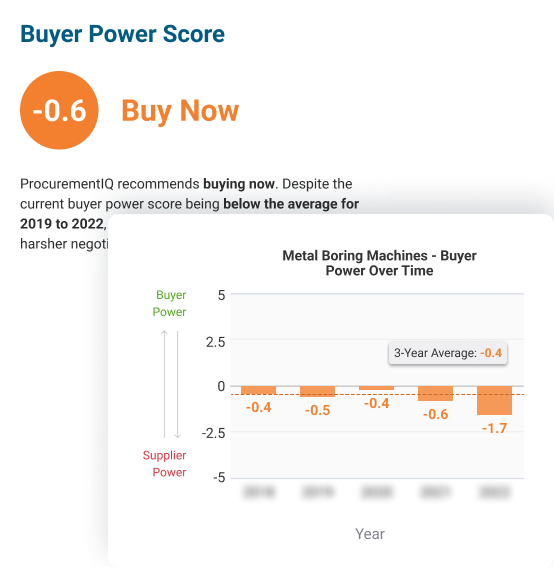
In 2026, buyer power amounts to -2.0 in the United States. Buyer power is most positively impacted by Recent Price Volatility. It is most negatively impacted by Average Vendor Risk. Subscribers can access details on eight other factors that impact buyer power. Learn more
United States

Buyer power forecasts: your glimpse into the future
Develop strategies for the upcoming year and identify unforeseen opportunities for buying now
- Actionable "Buy Now" and "Buy Later" insights
- Near-real-time updates to current and forecast Buyer Power Scores
- Methodology and weightings for Buyer Power Score Components
Supply Chain Risk
The average level of supply chain risk is assessed as Medium, which has a negative impact on buyer power. The level of supply chain risk is affected by industry volatility, barriers to entry, competition, import penetration, regulation and industry financial risk. Buyers in this market can mitigate procurement and supply chain management risks by monitoring risk levels for individual first and second tier suppliers:
1st
Tier Suppliers
- Long-Distance Freight Trucking Companies
- Transportation & Warehousing Providers
- Rail Transportation Companies
2nd
Tier Suppliers
- Fuel Dealers
- Temporary Staffing Companies
- Train, Subway & Transit Car Manufacturers
Biggest Third-Party Logistics Services Suppliers in the US by Revenue
The largest Third-Party Logistics Services vendors by revenue in the US are Expeditors International of Washington Inc., C.H. Robinson Worldwide, Inc. and Hub Group, Inc. Subscribers can sort and filter by market share concentration, profit level and other factors. Learn more
| Supplier | Operational Size | Headquarters | Number of Employees | Market Share (%) | Market Share Performance (3yr trend) | Total Revenue ($ million) | Profit Level (%) | Risk Level |
|---|---|---|---|---|---|---|---|---|
| United Parcel Service, Inc. | International | ATLANTA, GA | >10,000 | 5-10 | ||||
| C.H. Robinson Worldwide, Inc. | Global | EDEN PRAIRIE, MN | >10,000 | 5-10 | ||||
| FedEx Corporation | International | MEMPHIS, TN | >10,000 | < 5 | ||||
| Deutsche Post Ag | Global | Bonn, DE | >10,001 | < 5 | ||||
| Expeditors International of Washington Inc. | Global | BELLEVUE, WA | >10,000 | < 5 | ||||
| Deutsche Bahn AG | < 5 | |||||||
| Xpo Logistics, Inc. | Global | GREENWICH | >10,000 | < 5 | ||||
| Schneider National, Inc. | National | Green Bay, WI | >10,000 | < 5 | ||||
| Hub Group, Inc. | International | Oak Brook | 1,001-10,000 | < 5 | ||||
Looking for a list of suppliers by country?
Subscribers can access vendor information on Canadian and European suppliers, too. We also offer custom research services to help with vendor sourcing anywhere in the world.
Profit Analysis
The average profit margin across vendors in the Third-Party Logistics Services market is 9.3% and steady. Profit levels shift depending on suppliers' spend on wages, purchases and overhead. The highest cost component for vendors is Purchases. The cost trend for this component is falling, when considering movement between 2025 and 2026. To understand cost forecasts for 2027 and uncover the implications on profit, start your subscription. Learn more
Vendor & Supply Chain Analysis
The 3PL market has moderate market share concentration, as low startup costs and a highly competitive environment foster competition among vendors. However, as the third-party logistics market has seen growing demand and record levels of revenue, increasing M&A activity by large market players is increasing the overall market share concentration, lowering competition in the market.
Supplier financial risk is generally low, as stable profit margins and strong demand for services aid supplier solvency. For buyers, this means that most 3PL suppliers are unlikely to face bankruptcy during the coming years, which allows for low-risk contracts that span multiple years.
The supply chain for 3PL services is moderately risky, as the market’s reliance on the transportation sector creates uncertainty in upstream prices and demand. Much of this uncertainty derives from the fluctuating price of fuel and oil.
Given the unprecedented supply chain hurdles in the last few years, 3PL companies have increasingly adopted Internet of Things technology to provide customers with more accurate planning and information.
As the US is a net importer of computers, increased global demand and competition can drive up the costs of these machines, making it a significant expense for 3PL suppliers, who often leverage computer technology for processes like inventory management, tracking, and communication.
Supplier Information
C.H. Robinson Worldwide, Inc.
C.H. Robinson Worldwide, Inc. is a freight transport services and logistics company serving various industries worldwide. It leverages contracted transportation companies, including motor carriers, railroads, and ocean and air carriers. It also provides a wide range of value-added logistics services, such... Subscribe to learn more
United Parcel Service, Inc.
United Parcel Service, Inc. is a public company operating internationally in the manufacturing, information and professional, scientific and technical services sectors. The company's offerings include business card printing, mailing software, 3d printing & rapid prototyping services, letter & parcel delivery... Subscribe to learn more
Burris Logistics
Burris Logistics, Inc. is a private company operating nationally in the professional, scientific & technical services sector. The company's offerings include refrigerated storage services and third-party logistics services. Founded in 1925, the company is currently headquartered in Milford, Delaware, United... Subscribe to learn more
Deutsche Bahn AG
Deutsche Bahn AG is a private company operating in the wholesale trade and professional, scientific and technical services sectors. The company's offerings include customs brokerage services and third-party logistics services.. Subscribe to learn more
Deutsche Post Ag
Deutsche Post Ag is a public company operating globally in the professional, scientific & technical services sector. The company's offerings include letter & parcel delivery services, same-day last-mile delivery services, international air cargo transportation services, material handling services, general... Subscribe to learn more
Expeditors International of Washington Inc.
Expeditors International of Washington Inc. is a public company operating globally in the professional, scientific and technical services sector. The company's offerings include material handling services, general warehousing & storage, freight forwarding services, customs brokerage services and third-party... Subscribe to learn more
FedEx Corporation
FedEx Corporation is a public company operating internationally in the manufacturing, manufacturing, professional, scientific and technical services and administration, business support and waste management services sectors. The company's offerings include business card printing, banners, letter & parcel Subscribe to learn more
Hub Group, Inc.
Hub Group, Inc. is a supply chain solutions provider that offers comprehensive transportation and logistics management services. It organizes its business into two reportable segments: the Intermodal and Transportation Solutions segment, which includes intermodal and dedicated trucking operations, and the... Subscribe to learn more
Schneider National, Inc.
Schneider National, Inc. is a public company operating nationally in the professional, scientific and technical services sector. The company's offerings include rail cargo transportation services, local freight trucking services, national trucking services, petroleum & chemical trucking services, drayage Subscribe to learn more
Accelerate the vendor selection process
Get a clear picture of the competition in a market and discover which vendors are best-suited for your sourcing needs. Our supplier profiles include hard-to-find financial ranges for private companies, cover public company data and feature an interactive competitor matrix.
Procurement Management KPIs for the Third-Party Logistics Services Market
Managing vendor performance throughout the contract period is easier when tracking specific key performance indicators (KPIs). For example, buyers should monitor Average Resolution Time and Customer Retention Rate. Buyers may experience better performance throughout their contracts if they establish service level agreements (SLAs) based on Response time and other factors.
| KPI | Level of Importance (1-5) | Measurements | Key Considerations |
|---|---|---|---|
| Average Resolution Time |
|
Length of time from query to solution Number of times that resolutions are not met |
Vendors should be measured on their ability to quickly resolve issues. The resolution time will drastically affect a buyer's relationship with their customers. |
| Customer Retention Rate |
|
Number of customers at start of period Number of customers at end of period Number of customers added within period |
The customer retention rate represents the number of customers a company can retain over a set timeframe. This is an indication of how successful a company is at attracting and retaining customers. |

Questions to Ask During Procurement Negotiations
How can I gain leverage during negotiations?
Qualifications
What professional experience do the consultants assigned to this project have?
Which companies have you worked with in the past? Can I contact them?
Competition
How do you win and retain business?
What is your reputation among your peers?
Technology
Do you use any proprietary software or technology?
What are the advantages of using your software as opposed to internal systems?
The ultimate prep for procurement negotations
View all 27 negotiation questions for this category when you subscribe.
Third-Party Logistics Services RFP Guidelines
What should my RFP include?
Organizational Overview
Buyers should describe their organization and the industry in which they operate.
Buyers should indicate why they require third-party logistics services, including an overview of their supply chain requirements.
Statement Of Need
Buyers should detail the scope of work, including the specific transportation, logistics, and supply chain management services that they require.
Buyers should indicate the estimated volume and frequency of cargo shipments, including whether they expect these figures to change throughout the year due to the seasonality of their shipping needs.
Project Budget
Buyers should request a detailed breakdown of the rates applied to the buyer for different types of transportation services.
Buyers should indicate their expectations for payment schedules and methods.
The RFP process made easy
Find out how you can access RFP templates for 800+ procurement categories to start writing better, more consistent RFPs.
We display average pricing information, trends and market data.
Our Reports include:
- Opportunity assessment
- Market dynamics
- Recent developments
- Positive and warning trends
- Buyer power levers
- Price environment and market pricing
- Geographic wage rates
- Global market updates
- Total cost of ownership
- Cost structure benchmarks and analysis
- Supply chain and vendors
- Global supplier breakdown
- Market share concentration
- Regulation and business requirements
- Vendor management and KPIs
- Sourcing strategy guidance