Procurement Market Intelligence Report
Enterprise Content Management Systems
Sourcing Guide & Market Intelligence
Smarter cost management starts with comprehensive market intelligence
 United States
 Europe
 Global
Quick Navigation
Enterprise Content Management Systems Global Overview
Definition
Summary
ECM systems help businesses store, manage and access their unstructured content, which includes e-mails, documents, media and records. ECM systems help businesses lower costs and increase efficiency by consolidating and organizing their information and data. The common buyers of ECM systems are government and financial institutions, healthcare providers and large businesses.
This Report Includes:
- On-Premises Enterprise Content Management Systems
- Cloud Enterprise Content Management Systems
Not in this Report:
- Web Content Management Systems
- Database Software
Global Enterprise Content Management Systems Market - Suppliers by Region
| Country/Region | Number of Suppliers |
|---|---|
| #1 Europe | 340 |
| #2 United States | 260 |
| #3 China | 170 |
Explore supplier concentration across the globe
We've uncovered the 11 top regions for global procurement, based on feedback from our most strategic clients. Access vendor counts for each unique region when you subscribe.
2
Geography Drilldown - US & Europe
Average Cost of Enterprise Content Management Systems
United States
2026 Market Pricing$58,000.00 to $X,XXX,XXX.XX
per 1,000 users per year
Average Price
Prices in the Enterprise Content Management Systems market range from $58,000.00 to $X,XXX,XXX.XX, depending on Features, Number of Users, Type of Provider and Amount of Storage Space Per User. For example, lower prices are associated with Fewer features, whereas higher prices are associated with More features.
Need the scoop on international price trends?
Between our Europe and Canada collections, we provide price data for 350 markets so you can instantly compare prices across borders. Or, use our custom research services for intel on prices in any region across the globe.
Enterprise Content Management Systems Category Price Trends
Pricing trends are indicated by the compound annual growth rate (CAGR) during a set period of time. For the Enterprise Content Management Systems market, prices in the US have declined -0.1% from 2022 to 2025. Meanwhile, the recent three-year CAGR for Europe is +1.1%.
United States (2022-2025)

Europe (2022-2025)

Compound Annual Growth Rate
Wondering where prices are heading?
Price trend forecasts are available to subscribers, along with price driver projections and forward-looking cost structure data.
Cost Analysis - Total Cost of Ownership for Enterprise Content Management Systems
Total cost of ownership is High in the Enterprise Content Management Systems market. The average cost of ownership differs depending on the contract but generally includes costs negotiated before the contract begins, costs billed during the contract period and unforeseen costs. For example, unforeseen costs in the form of Cancellations may raise the total cost of ownership unexpectedly.
Negotiated Before
Implementation
Billed During
Maintenance
Training
Unforeseen
Cancellations
Buyer Power in Procurement Negotiations
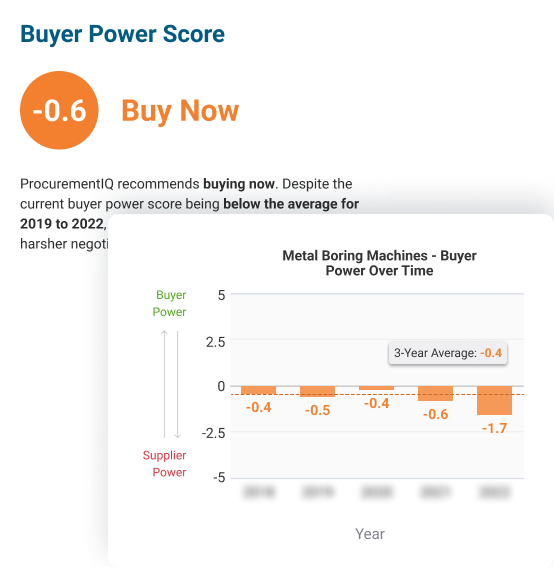
In 2026, buyer power amounts to 1.2 in the United States. Buyer power is most positively impacted by Availability of Substitutes. It is most negatively impacted by Recent Price Volatility. Subscribers can access details on eight other factors that impact buyer power. Learn more
United States

Buyer power forecasts: your glimpse into the future
Develop strategies for the upcoming year and identify unforeseen opportunities for buying now
- Actionable "Buy Now" and "Buy Later" insights
- Near-real-time updates to current and forecast Buyer Power Scores
- Methodology and weightings for Buyer Power Score Components
Supply Chain Risk
The average level of supply chain risk is assessed as Low, which has a positive impact on buyer power. The level of supply chain risk is affected by industry volatility, barriers to entry, competition, import penetration, regulation and industry financial risk. Buyers in this market can mitigate procurement and supply chain management risks by monitoring risk levels for individual first and second tier suppliers:
1st
Tier Suppliers
- Intellectual Property Lessors
- IT Consulting Services
- Computer Manufacturers
2nd
Tier Suppliers
- Software Publishers
- Computer & Packaged Software Wholesalers
- Semiconductor Manufacturers
Biggest Enterprise Content Management Systems Suppliers in the US by Revenue
The largest Enterprise Content Management Systems vendors by revenue in the US are Ascend Software Inc., Box, Inc. and Adobe Inc. Subscribers can sort and filter by market share concentration, profit level and other factors. Learn more
| Supplier | Operational Size | Headquarters | Number of Employees | Market Share (%) | Market Share Performance (3yr trend) | Total Revenue ($ million) | Profit Level (%) | Risk Level |
|---|---|---|---|---|---|---|---|---|
| Microsoft Corporation | Global | REDMOND, US | >10,000 | 15-20 | ||||
| OpenText Corporation | Global | ONTARIO CANADA | >10,000 | 15-20 | ||||
| International Business Machines Corporation | Global | ARMONK | >10,000 | 5-10 | ||||
| Adobe Inc. | Global | SAN JOSE | >10,000 | 5-10 | ||||
| Hyland Software Inc. | Global | Westlake, OH | 1,001-10,000 | 5-10 | ||||
| Oracle Corporation | Global | AUSTIN, CA | >10,000 | < 5 | ||||
| Xerox Corporation | Global | NORWALK, CT | >10,000 | < 5 | ||||
| Box, Inc. | Global | REDWOOD CITY, CA | 1,001-10,000 | < 5 | ||||
| Epicor Software Corporation | Global | Austin, TX | 1,001-10,000 | < 5 | ||||
Looking for a list of suppliers by country?
Subscribers can access vendor information on Canadian and European suppliers, too. We also offer custom research services to help with vendor sourcing anywhere in the world.
Profit Analysis
The average profit margin across vendors in the Enterprise Content Management Systems market is 17.4% and steady. Profit levels shift depending on suppliers' spend on wages, purchases and overhead. The highest cost component for vendors is Overhead. The cost trend for this component is rising, when considering movement between 2025 and 2026. To understand cost forecasts for 2027 and uncover the implications on profit, start your subscription. Learn more
Vendor & Supply Chain Analysis
Moderate barriers to entry ensure a moderate level of market share concentration among providers of enterprise content management systems. However, moderate market share concentration does not seriously impede buyer power.
Supply chain risk is low because enterprise content management systems are distributed digitally and do not require physical inputs. Low supply chain risk means a low risk of price increases or product shortages stemming from supply chain disruptions.
Moderate vendor financial risk is not a major concern for buyers. Nevertheless, buyers should vet vendor financials because a supplier's exit from this market due to bankruptcy could deprive buyers of support services and critical software updates.
The United States is a net importer of computers. However, this does not directly affect procurement strategies for ECM software because computers are used by upstream suppliers.
Supplier Information
Microsoft Corporation
Microsoft Corporation is a technology company offering digital technology and artificial intelligence (AI) to businesses and individuals worldwide. It develops cloud-based solutions that deliver customers with software, services, platforms, and content and provides solution support and consulting services.... Subscribe to learn more
OpenText Corporation
Open Text Corporation is an information management company that provides software and services for global enterprises, small and medium-sized businesses, governments, and consumers. It delivers software as a service (SaaS) offerings, application programming interface (API) services, data services, and private... Subscribe to learn more
Adobe Inc.
Adobe Inc. is a public company operating globally in the information sector. The company's offerings include website analytics software, sales & marketing software, graphics & photo imaging software, video editing software, web content management software. Founded in 1982, the company is currently headquartered... Subscribe to learn more
Hyland Software Inc.
Hyland Software Inc. is a private company operating globally in the information sector. The company's offerings include enterprise content management systems. Founded in 1991, the company is currently headquartered in Westlake, Ohio, United States of America with an estimated 5500 employees. Subscribe to learn more
International Business Machines Corporation
International Business Machines Corporation (IBM) is a global integrated computer technology, hardware, software, and services provider. It organizes its business into four segments: Software segment, which provides software solutions for a hybrid cloud platform, data and artificial intelligence, automation,... Subscribe to learn more
Ascend Software Inc.
Ascend Software Inc. is a private company operating internationally in the information and professional, scientific & technical services sectors. The company's offerings include enterprise content management systems and safety training services. Founded in 1997, the company is currently headquartered in Brea,... Subscribe to learn more
Box, Inc.
Box, Inc. is a public company operating globally in the information sector. The company's offerings include virtual data room software, enterprise content management systems, file sharing & synchronization services and online file storage services. Founded in 2005, the company is currently headquartered in... Subscribe to learn more
Compulink Management Center Inc.
Compulink Management Center Inc. is a private company operating globally in the information sector. The company's offerings include enterprise content management systems. Founded in 1984, the company is currently headquartered in Saint Petersburg, Florida, United States of America with an estimated 375 employees.... Subscribe to learn more
Epicor Software Corporation
Epicor Software Corporation is a private company operating globally in the information sector. The company's offerings include warehouse management systems, retail planning software, erp software, accounting software, digital transaction management software. Founded in 1972, the company is currently headquartered... Subscribe to learn more
Accelerate the vendor selection process
Get a clear picture of the competition in a market and discover which vendors are best-suited for your sourcing needs. Our supplier profiles include hard-to-find financial ranges for private companies, cover public company data and feature an interactive competitor matrix.
Procurement Management KPIs for the Enterprise Content Management Systems Market
Managing vendor performance throughout the contract period is easier when tracking specific key performance indicators (KPIs). For example, buyers should monitor Average Response Time and Average Time Between Failures. Buyers may experience better performance throughout their contracts if they establish service level agreements (SLAs) based on Uptime and other factors.
| KPI | Level of Importance (1-5) | Measurements | Key Considerations |
|---|---|---|---|
| Average Response Time |
|
Number of queries Cumulative response time |
A low average response time means that the vendor responds quickly to queries from clients. The average response time can serve as an indicator of the vendor's responsiveness. |
| Average Time Between Failures |
|
Average time between failures Failure rate |
The average time between failures is an indicator of the system's reliability. Buyers should look for enterprise content management systems with a high average time between failures. |

Questions to Ask During Procurement Negotiations
How can I gain leverage during negotiations?
Experience and Expertise
What other software programs or applications does your company develop?
How long have you been developing and providing ECM systems?
Interoperability
How long does it take to integrate your ECM systems with other enterprise-wide software programs?
What other software programs does your company have experience in?
Accessibility
Can your ECM systems be accessed using mobile devices?
Can your ECM systems be accessed overseas?
The ultimate prep for procurement negotations
View all 30 negotiation questions for this category when you subscribe.
Enterprise Content Management Systems RFP Guidelines
What should my RFP include?
Organizational Overview
Buyers should describe their organization and operations, as well as the purpose of ECM systems in their operations.
Buyers should provide details on the size of their organization and the number of expected ECM system users.
Statement Of Need
Buyers should include the number of ECM system licenses needed and the level of access for different users.
Buyers should detail the system features they require (e.g. security features, document archive, specific application support and document management) and whether the system must meet any compatibility requirements with existing infrastructure.
Project Budget
Buyers should specify the number of expected ECM system users and level(s) of software access required.
Buyers should detail the cost model and contract term for annual ongoing costs (e.g., system support, upgrade and maintenance charges and license fees).
The RFP process made easy
Find out how you can access RFP templates for 800+ procurement categories to start writing better, more consistent RFPs.
We display average pricing information, trends and market data.
Our Reports include:
- Opportunity assessment
- Market dynamics
- Recent developments
- Positive and warning trends
- Buyer power levers
- Price environment and market pricing
- Geographic wage rates
- Global market updates
- Total cost of ownership
- Cost structure benchmarks and analysis
- Supply chain and vendors
- Global supplier breakdown
- Market share concentration
- Regulation and business requirements
- Vendor management and KPIs
- Sourcing strategy guidance