Procurement Market Intelligence Report
Finished Broad-Woven Cotton Fabrics
Sourcing Guide & Market Intelligence
Smarter cost management starts with comprehensive market intelligence
 United States
 Global
Quick Navigation
Finished Broad-Woven Cotton Fabrics Global Overview
Definition
Summary
Suppliers provide a variety of cotton-derived fabrics, such as plain weave, twill weave, cotton oxford, knit cotton, cotton velvet and cotton chenille fabrics. Broad-woven fabrics have applications in clothing, furniture, automobiles and industrial and household goods.
This Report Includes:
- Plain Weave
- Twill Weave
- Cotton Oxford
- Knit Cotton
- Cotton Velvet
Not in this Report:
- Wool fabrics
- Leathers
- Synthetic fabrics
Take the ProcurementIQ products and data tour
Explore live samples of price trend forecasts, price driver projections, forward-looking cost structure data and more.
Global Finished Broad-Woven Cotton Fabrics Procurement Trends
Discover the top international trends affecting procurement in the global Finished Broad-Woven Cotton Fabrics market.
Warning Trends
Public sector demand slumps as the government enters shutdown
- On October 1, the US federal government entered a shutdown after negotiations for a new appropriations bill failed.
- During a government shutdown, essential federal government operations, such as law enforcement, air-traffic control, and social security, persist, while nonessential operations are paused and workers involved in these operations are furloughed. Thus, the current shutdown is expected to result in 750,000 federal workers being furloughed, representing a $400 million reduction in daily expenditure by the federal government.
- This significant reduction in federal spending and operations will affect the entire US economy, weakening aggregate demand and slowing economic growth. For example, the 35-day government shutdown in Q1, 2019, reduced aggregate demand in both the public and private sectors, resulting in a 0.2% reduction in GDP growth that quarter.
- The effects of the shutdown are likely to be most acute in markets where the public sector is a major buyer segment, weakening demand and increasing average vendor risk by destabilizing important revenue streams.
- As negotiations for a new appropriations bill to reopen the government remain ongoing, ProcurementIQ will continue to monitor the situation and update this story with the latest information.
Positive Trends
Cotton prices stabilize after multi-month decline
- In the first half of 2022, global cotton prices surged to their highest point since 2011 as a result of droughts in the United States and increased competition for farmland caused by shortages of other highly-demanded crops.
- However, demand for cotton has been falling as high inflation has detracted from consumer demand and increased central bank lending rates in much of the world have raised the risk of a global economic slowdown. As a result, global cotton spot prices have declined about 35.0% from their peak in May.
- After several months of rapid decline, global cotton prices have settled at a new equilibrium as September and October saw only slight changes in all major regional cotton markets.
Global Finished Broad-Woven Cotton Fabrics Market - Suppliers by Region
| Country/Region | Number of Suppliers |
|---|---|
| #1 India | 7,875 |
| #2 Oceania & Southeast Asia | 4,335 |
| #3 Africa & Middle East | 2,900 |
Explore supplier concentration across the globe
We've uncovered the 11 top regions for global procurement, based on feedback from our most strategic clients. Access vendor counts for each unique region when you subscribe.
Geography Drilldown - US
Average Cost of Finished Broad-Woven Cotton Fabrics
United States
2026 Market Pricing$3.09 to $XX.XX
per square meterAverage Price
Prices in the Finished Broad-Woven Cotton Fabrics market range from $3.09 to $XX.XX, depending on Dye type, Density, Thread count and Additional properties. For example, lower prices are associated with Synthetic dyes, whereas higher prices are associated with Natural dyes.
Need the scoop on international price trends?
Between our Europe and Canada collections, we provide price data for 350 markets so you can instantly compare prices across borders. Or, use our custom research services for intel on prices in any region across the globe.
Finished Broad-Woven Cotton Fabrics Category Price Trends
Pricing trends are indicated by the compound annual growth rate (CAGR) during a set period of time. For the Finished Broad-Woven Cotton Fabrics market, prices in the US have declined -8.3% from 2022 to 2025. Subscribers can access price trend forecasts, price driver projections and forward-looking cost structure data. Learn more
United States (2022-2025)


Wondering where prices are heading?
Price trend forecasts are available to subscribers, along with price driver projections and forward-looking cost structure data.
Cost Analysis - Total Cost of Ownership for Finished Broad-Woven Cotton Fabrics
Total cost of ownership is Low in the Finished Broad-Woven Cotton Fabrics market. The average cost of ownership differs depending on the contract but generally includes costs negotiated before the contract begins, costs billed during the contract period and unforeseen costs.
Negotiated Before
Pre-evaluation
Billed During
Maintenance
Buyer Power in Procurement Negotiations
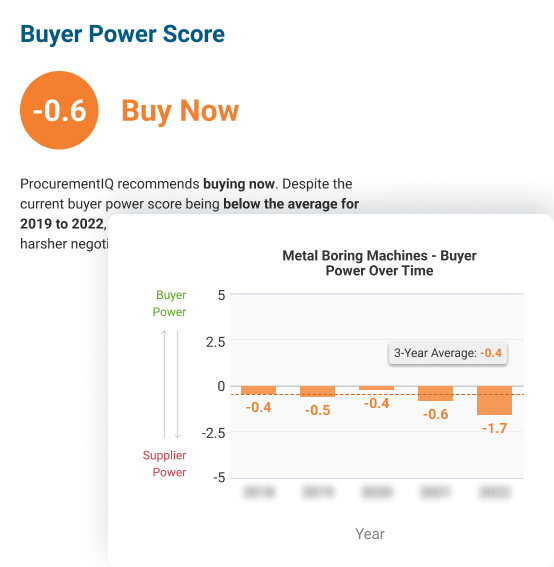
In 2026, buyer power amounts to 1.2 in the United States. Buyer power is most positively impacted by Price Driver Volatility. It is most negatively impacted by Forecast Price Trend. Subscribers can access details on eight other factors that impact buyer power. Learn more
United States
Buyer power forecasts: your glimpse into the future
Develop strategies for the upcoming year and identify unforeseen opportunities for buying now
- Actionable "Buy Now" and "Buy Later" insights
- Near-real-time updates to current and forecast Buyer Power Scores
- Methodology and weightings for Buyer Power Score Components
Supply Chain Risk
The average level of supply chain risk is assessed as High, which has a negative impact on buyer power. The level of supply chain risk is affected by industry volatility, barriers to entry, competition, import penetration, regulation and industry financial risk. Buyers in this market can mitigate procurement and supply chain management risks by monitoring risk levels for individual first and second tier suppliers:
1st
Tier Suppliers
- Textile Mills
- Organic Chemical Manufacturers
- Inorganic Chemical Manufacturers
2nd
Tier Suppliers
- Cotton Farmers
- Oxygen & Hydrogen Gas Manufacturers
- Fertilizer Manufacturers
Biggest Finished Broad-Woven Cotton Fabrics Suppliers in the US by Revenue
The largest Finished Broad-Woven Cotton Fabrics vendors by revenue in the US are Elevate Textiles, Inc., Milliken & Company Inc. and American Textile Company Inc. Subscribers can sort and filter by market share concentration, profit level and other factors. Learn more
| Supplier | Operational Size | Headquarters | Number of Employees | Market Share (%) | Market Share Performance (3yr trend) | Total Revenue ($ million) | Profit Level (%) | Risk Level |
|---|---|---|---|---|---|---|---|---|
| Milliken & Company Inc. | International | Spartanburg, SC | 1,001-10,000 | 5-10 | ||||
| Elevate Textiles, Inc. | Global | Charlotte, NC | >10,001 | < 5 | ||||
| American Textile Company Inc. | Global | Duquesne, PA | 251-1000 | < 5 | ||||
| Antex Knitting Mills | Local | Los Angeles, CA | 25-50 | < 5 | ||||
| Carolina Cotton Works Inc. | Local | Gaffney, SC | 101-250 | < 5 | ||||
| Contempora Fabrics | Local | Lumberton, NC | 101-250 | < 5 | ||||
| Cotswold Industries Inc. | Global | New York, NY | 251-500 | < 5 | ||||
| HomTex Inc. | National | Cullman, AL | 251-500 | < 5 | ||||
| Samil Spinning Co. Ltd. | International | Benbwon-ro, KR | 51-100 | < 5 | ||||
Looking for a list of suppliers by country?
Subscribers can access vendor information on Canadian and European suppliers, too. We also offer custom research services to help with vendor sourcing anywhere in the world.
Profit Analysis
The average profit margin across vendors in the Finished Broad-Woven Cotton Fabrics market is 4.4% and steady. Profit levels shift depending on suppliers' spend on wages, purchases and overhead. The highest cost component for vendors is Purchases. The cost trend for this component is rising, when considering movement between 2025 and 2026. To understand cost forecasts for 2027 and uncover the implications on profit, start your subscription. Learn more
Vendor & Supply Chain Analysis
High supply chain risk limits buyer power by contributing to price volatility, which makes it more difficult for buyers to accurately budget.
Low market share concentration promotes buyer power by encouraging price competition between vendors.
Moderate vendor risk does not impair buyer power. Nevertheless, buyers should vet vendor financials as supplier bankruptcy could lead to financial losses for buyers and supply disruptions.
The United States is a net importer of finished broad-woven cotton fabrics, importing more than it exports. Buyers should weigh the longer shipping costs and delivery times against any cost savings when sourcing internationally.
Supplier Information
Milliken & Company Inc.
Milliken & Company Inc. is a private company operating internationally in the manufacturing and manufacturing sectors. The company's offerings include synthetic fibers, finished broad-woven cotton fabrics and commercial carpet. Founded in 1865, the company is currently headquartered in Spartanburg, South Subscribe to learn more
American Textile Company Inc.
American Textile Company Inc. is a private company operating globally in the manufacturing sector. The company's offerings include finished broad-woven cotton fabrics. Founded in 1925, the company is currently headquartered in Duquesne, Pennsylvania, United States of America with an estimated 750 employees.... Subscribe to learn more
Antex Knitting Mills
Antex Knitting Mills is a private company operating regionally in the manufacturing sector. The company's offerings include finished broad-woven cotton fabrics. Founded in 1973, the company is currently headquartered in Los Angeles, California, United States of America with an estimated 375 employees. Subscribe to learn more
Carolina Cotton Works Inc.
Carolina Cotton Works Inc. is a private company operating locally in the manufacturing sector. The company's offerings include finished broad-woven cotton fabrics. Founded in 1995, the company is currently headquartered in Gaffney, South Carolina, United States of America with an estimated 162 employees. Subscribe to learn more
Contempora Fabrics
Contempora Fabrics is a private company operating locally in the manufacturing sector. The company's offerings include finished broad-woven cotton fabrics. Founded in 1972, the company is currently headquartered in Lumberton, North Carolina, United States of America with an estimated 175 employees. Subscribe to learn more
Cotswold Industries Inc.
Cotswold Industries Inc. is a private company operating globally in the manufacturing sector. The company's offerings include finished broad-woven cotton fabrics. Founded in 1954, the company is currently headquartered in New York, New York, United States of America with an estimated 375 employees. Subscribe to learn more
Elevate Textiles, Inc.
Elevate Textiles, Inc. is a private company operating globally in the manufacturing sector. The company's offerings include finished broad-woven cotton fabrics. Founded in 2004, the company is currently headquartered in Charlotte, North Carolina, United States of America with an estimated employee count of... Subscribe to learn more
HomTex Inc.
HomTex Inc. is a private company operating nationally in the manufacturing sector. The company's offerings include finished broad-woven cotton fabrics. Founded in 1987, the company is currently headquartered in Cullman, Alabama, United States of America with an estimated 375 employees. Subscribe to learn more
Samil Spinning Co. Ltd.
Samil Spinning Co. Ltd. is a private company operating internationally in the manufacturing sector. The company's offerings include finished broad-woven cotton fabrics. Founded in 1979, the company is currently headquartered in Benbwon-ro, Songpa-gu, South Korea with an estimated 100 employees. Subscribe to learn more
Accelerate the vendor selection process
Get a clear picture of the competition in a market and discover which vendors are best-suited for your sourcing needs. Our supplier profiles include hard-to-find financial ranges for private companies, cover public company data and feature an interactive competitor matrix.
Procurement Management KPIs for the Finished Broad-Woven Cotton Fabrics Market
Managing vendor performance throughout the contract period is easier when tracking specific key performance indicators (KPIs). For example, buyers should monitor Defect Density and On-Time Delivery (OTD). Buyers may experience better performance throughout their contracts if they establish service level agreements (SLAs) based on Warranty and other factors.
| KPI | Level of Importance (1-5) | Measurements | Key Considerations |
|---|---|---|---|
| Defect Density |
|
Defect density Percentage of damaged goods |
The defect density represents the proportion of products that are defective or damaged. Delivery of defective and damaged products may delay buyers’ operations as such products may not be usable. Vendors should be required to replace defective or damaged goods at no cost to the buyer. |
| On-Time Delivery (OTD) |
|
On-time delivery rate Delivery in-full on-time rate |
On-time delivery matters because the buyer’s operations may be delayed if the required fabrics are not available. Buyers can add a clause stipulating that they shall be compensated if the on-time delivery rate falls below 95.0% during a quarter. |

Questions to Ask During Procurement Negotiations
How can I gain leverage during negotiations?
Location
Could you provide a list of all your distribution facilities domestically and internationally?
What are your shipping rates?
Experience and Expertise
What industry do you most commonly supply cotton fabrics for?
Could you provide a list of client references, along with contact information?
Supply Chain Risk
How many cotton farmers and manufacturers do you source raw materials from?
Could you provide a list of your domestic and international cotton suppliers?
The ultimate prep for procurement negotations
View all 27 negotiation questions for this category when you subscribe.
Finished Broad-Woven Cotton Fabrics RFP Guidelines
What should my RFP include?
Organizational Overview
Buyers should describe the size of their organization and the industry they operate in.
Buyers should list their intended uses for finished broad-woven cotton fabrics.
Statement Of Need
Buyers should specify the types of fabric required.
Buyers should request samples of desired fabrics.
Project Budget
Buyers should state their total budget for the purchase.
Buyers should indicate their preferred payment method.
The RFP process made easy
Find out how you can access RFP templates for 800+ procurement categories to start writing better, more consistent RFPs.
We display average pricing information, trends and market data.
Our Reports include:
- Opportunity assessment
- Market dynamics
- Recent developments
- Positive and warning trends
- Buyer power levers
- Price environment and market pricing
- Geographic wage rates
- Global market updates
- Total cost of ownership
- Cost structure benchmarks and analysis
- Supply chain and vendors
- Global supplier breakdown
- Market share concentration
- Regulation and business requirements
- Vendor management and KPIs
- Sourcing strategy guidance