Procurement Market Intelligence Report
Synthetic Fibers
Sourcing Guide & Market Intelligence
Smarter cost management starts with comprehensive market intelligence
 United States
 Global
Quick Navigation
Synthetic Fibers Global Overview
Definition
Summary
Synthetic fibers are man-made filaments created from organic or inorganic raw materials. Common synthetic fibers include nylon, polyester, olefin, acrylic, modacrylic and spandex, but many other types of synthetic fibers are also sold in the United States. High-volume buyers of synthetic fibers include apparel, carpet, furniture and automobile manufacturers.
This Report Includes:
- Organic-Made Synthetic Fibers
- Inorganic-Made Synthetic Fibers
Not in this Report:
- Natural Fibers
- Synthetic-Natural Blend Fibers
Global Synthetic Fibers Procurement Trends
Discover the top international trends affecting procurement in the global Synthetic Fibers market.
Warning Trends
Tariffs to negatively impact building and construction components and supplies sector
- The Trump Administration’s reciprocal tariffs, which impose higher tariffs on all products imported from most foreign nations, are set to take effect on August 7, after the rates were finalized on August 1. As a result, most construction material import sources face higher tariffs, including Mexico (25.0%), Canada (35.0%), Turkiye (15.0%), and China (54.0%).
- According to Realtor.com, about 70.0% of the softwood lumber and drywall gypsum (used for drywall) used in residential construction is imported from Canada and Mexico, respectively. According to the New York Times, drywall prices could rise by 22.0%. Other products like wood utility poles, medium-density fiberboard, particleboard, plywood, wood veneers, and wood pulp will also see higher prices as a result.
- The Yale Budget Lab estimates that construction inputs like cement could see a 3.5% increase in price with higher tariffs on imports. Turkiye, Canada, and Mexico, which account for over 65.0% of US imports, face tariff rates of 10.0%, 25.0%, and 25.0%, respectively.
- Specific steel and aluminum tariffs of 50.0% on all US imports are also negatively affecting buyers of building and construction components and supplies like sheet metal, automatic sliding doors, garage doors, ladders, posts and bollards, and more. In 2024, 23.0% of all steel used in the United States was imported from foreign countries such as Canada and Mexico.
- US manufacturers reliant on imported plastic resins from countries like China will not be impacted by tariffs as key resins, like polyethylene, polypropylene, and PET, will be exempt from the reciprocal tariffs. Other construction components and supplies that are compliant with the United States-Canada-Mexico Agreement will be exempt from tariffs.
Global Synthetic Fibers Market - Suppliers by Region
| Country/Region | Number of Suppliers |
|---|---|
| #1 India | 17,500 |
| #2 Oceania & Southeast Asia | 9,630 |
| #3 Africa & Middle East | 6,445 |
Explore supplier concentration across the globe
We've uncovered the 11 top regions for global procurement, based on feedback from our most strategic clients. Access vendor counts for each unique region when you subscribe.
2
Geography Drilldown - US
Average Cost of Synthetic Fibers
United States
2026 Market Pricing$500.00 to $X,XXX.XX
per tonAverage Price
Prices in the Synthetic Fibers market range from $500.00 to $X,XXX.XX, depending on Type of Fiber, Level of Finish, Color and Grade. For example, lower prices are associated with Polyester fiber ($1,220 to $2,230 per ton), whereas higher prices are associated with Nylon fiber ($1,420 to $4,000 per ton).
Need the scoop on international price trends?
Between our Europe and Canada collections, we provide price data for 350 markets so you can instantly compare prices across borders. Or, use our custom research services for intel on prices in any region across the globe.
Synthetic Fibers Category Price Trends
Pricing trends are indicated by the compound annual growth rate (CAGR) during a set period of time. For the Synthetic Fibers market, prices in the US have declined -2.2% from 2022 to 2025. Subscribers can access price trend forecasts, price driver projections and forward-looking cost structure data. Learn more
United States (2022-2025)


Wondering where prices are heading?
Price trend forecasts are available to subscribers, along with price driver projections and forward-looking cost structure data.
Cost Analysis - Total Cost of Ownership for Synthetic Fibers
Total cost of ownership is Low in the Synthetic Fibers market. The average cost of ownership differs depending on the contract but generally includes costs negotiated before the contract begins, costs billed during the contract period and unforeseen costs. For example, unforeseen costs in the form of Lost Orders may raise the total cost of ownership unexpectedly.
Negotiated Before
Customization
Billed During
Additional Fees
Unforeseen
Lost Orders
Buyer Power in Procurement Negotiations
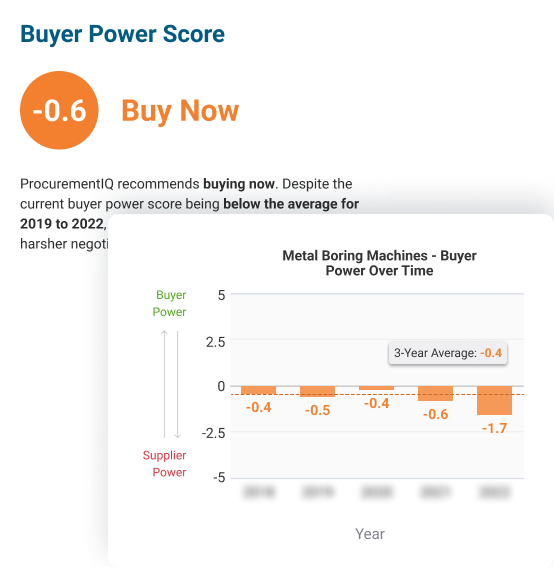
In 2026, buyer power amounts to -0.5 in the United States. Buyer power is most positively impacted by Recent Developments. It is most negatively impacted by Recent Price Trend. Subscribers can access details on eight other factors that impact buyer power. Learn more
United States
Buyer power forecasts: your glimpse into the future
Develop strategies for the upcoming year and identify unforeseen opportunities for buying now
- Actionable "Buy Now" and "Buy Later" insights
- Near-real-time updates to current and forecast Buyer Power Scores
- Methodology and weightings for Buyer Power Score Components
Supply Chain Risk
The average level of supply chain risk is assessed as High, which has a negative impact on buyer power. The level of supply chain risk is affected by industry volatility, barriers to entry, competition, import penetration, regulation and industry financial risk. Buyers in this market can mitigate procurement and supply chain management risks by monitoring risk levels for individual first and second tier suppliers:
1st
Tier Suppliers
- Petrochemical Manufacturers
- Industrial Machinery & Equipment Wholesalers
- Inorganic Chemical Manufacturers
2nd
Tier Suppliers
- Oil Drillers & Gas Extractors
- Semiconductor & Electronic Component Manufacturers
- Iron & Steel Manufacturers
Biggest Synthetic Fibers Suppliers in the US by Revenue
The largest Synthetic Fibers vendors by revenue in the US are Dupont De Nemours, Inc., Rayonier Advanced Materials Inc. and Koch Industries Inc. Subscribers can sort and filter by market share concentration, profit level and other factors. Learn more
| Supplier | Operational Size | Headquarters | Number of Employees | Market Share (%) | Market Share Performance (3yr trend) | Total Revenue ($ million) | Profit Level (%) | Risk Level |
|---|---|---|---|---|---|---|---|---|
| Reliance Industries Limited | Global | Mumbai, IN | >10,001 | 10-15 | ||||
| Hyosung Corporation | Global | Seoul, KR | >10,001 | 10-15 | ||||
| Koch Industries Inc. | US | 10-15 | ||||||
| ALFA S.A.B. de C.V. | Global | San Pedro Garza Garcia, MX | >10,001 | 25+ | ||||
| Toray Group | Global | Tokyo, JP | >10,001 | 5-10 | ||||
| Indorama Ventures Public Company Limited | Global | Bangkok, TH | >10,001 | 5-10 | ||||
| Dupont De Nemours, Inc. | Global | WILMINGTON | >10,000 | < 5 | ||||
| Eastman Chemical Co | Global | KINGSPORT, TN | >10,000 | < 5 | ||||
| InterTech Group Inc. | Global | North Charleston, SC | >10,000 | < 5 | ||||
Looking for a list of suppliers by country?
Subscribers can access vendor information on Canadian and European suppliers, too. We also offer custom research services to help with vendor sourcing anywhere in the world.
Profit Analysis
The average profit margin across vendors in the Synthetic Fibers market is 6.1% and steady. Profit levels shift depending on suppliers' spend on wages, purchases and overhead. The highest cost component for vendors is Purchases. The cost trend for this component is rising, when considering movement between 2025 and 2026. To understand cost forecasts for 2027 and uncover the implications on profit, start your subscription. Learn more
Vendor & Supply Chain Analysis
Average vendor risk in this market is moderate because multiline vendors have a wide range of revenue streams that protect them from drastic changes in demand from individual buyer segments, and there is still a heavy market reliance on oil and natural gas products. Because of the inherent risk within the oil and gas industries, many vendors take on significant risk due to the potential shocks in production costs
Market share concentration is high in this market due to the top suppliers occupying more than 60.0% of the current market share for synthetic fibers. This level of market share concentration harms buyers because there is less competition to leverage and gauge in price negotiation.
Suppliers in the synthetic fibers market experience an overall high level of supply chain risk, as much of the supply chain risk in this market stems from risk in the oil and natural gas industries. This hurts buyer power due to the uncertainty and volatility of prices from different manufacturers and suppliers within this market.
As a net importer in the synthetic fibers market, US buyers' procurement strategies may be influenced by factors such as cost considerations and international competition and will need to carefully evaluate pricing options and potentially seek out more cost-effective solutions. Being a net importer can restrict buyer power and reduce their ability to dictate terms and conditions in procurement transactions, and will have less control over pricing, quality, and availability of the goods or services they need.
Supplier Information
Hyosung Corporation
Hyosung Corporation is a public company operating globally in the manufacturing and manufacturing sectors. The company's offerings include synthetic fibers and switchgear systems. Founded in 1957, the company is currently headquartered in Seoul, South Korea with an estimated employee count of over 10,000.... Subscribe to learn more
Koch Industries Inc.
Koch Industries Inc. is a private company operating in the manufacturing, manufacturing and information sectors. The company's offerings include synthetic fibers. Founded in 2013, the company is currently headquartered in United States of America. Subscribe to learn more
Reliance Industries Limited
Reliance Industries Limited is a public company operating globally in the manufacturing sector. The company's offerings include synthetic fibers. Founded in 1973, the company is currently headquartered in Mumbai, India with an estimated employee count of over 10,000. Subscribe to learn more
ALFA S.A.B. de C.V.
ALFA S.A.B. de C.V. is a public company operating globally in the manufacturing sector. The company's offerings include synthetic fibers. Founded in 1967, the company is currently headquartered in San Pedro Garza Garcia, Mexico with an estimated employee count of over 10,000. Subscribe to learn more
Indorama Ventures Public Company Limited
Indorama Ventures Public Company Limited is a public company operating globally in the manufacturing sector. The company's offerings include synthetic fibers. Founded in 2009, the company is currently headquartered in Bangkok, Thailand with an estimated employee count of over 10,000. Subscribe to learn more
Toray Group
Toray Group is a public company operating globally in the manufacturing sector. The company's offerings include synthetic fibers and plastic film. Founded in 1926, the company is currently headquartered in Tokyo, Japan with an estimated employee count of over 10,000. Subscribe to learn more
Dupont De Nemours, Inc.
DuPont de Nemours, Inc. is a global company that develops technology-based materials, ingredients, and solutions for electronics, transportation, building and construction, health and wellness, food, and worker safety markets. It organizes its business into two reportable segments: the Electronics & Industrial... Subscribe to learn more
Eastman Chemical Co
Eastman Chemical Co is a public company operating globally in the manufacturing sector. The company's offerings include synthetic fibers, plasticizers, preservatives, methanol, synthetic resins. Founded in 1918, the company is currently headquartered in KINGSPORT, Tennessee, United States of America with Subscribe to learn more
InterTech Group Inc.
InterTech Group Inc. is a private company operating globally in the manufacturing sector. The company's offerings include synthetic fibers. Founded in 1978, the company is currently headquartered in North Charleston, South Carolina, United States of America with an estimated 10000 employees. Subscribe to learn more
Accelerate the vendor selection process
Get a clear picture of the competition in a market and discover which vendors are best-suited for your sourcing needs. Our supplier profiles include hard-to-find financial ranges for private companies, cover public company data and feature an interactive competitor matrix.
Procurement Management KPIs for the Synthetic Fibers Market
Managing vendor performance throughout the contract period is easier when tracking specific key performance indicators (KPIs). For example, buyers should monitor Average Order Value and Cost of Goods Sold. Buyers may experience better performance throughout their contracts if they establish service level agreements (SLAs) based on Accuracy and other factors.
| KPI | Level of Importance (1-5) | Measurements | Key Considerations |
|---|---|---|---|
| Average Order Value |
|
Total revenue Number of orders |
The average order value can be used to evaluate buyers' willingness to pay for a company’s synthetic fibers. Knowing how much a buyer is willing to pay for standard synthetic fibers compared to customized synthetic fibers will help vendors gauge the appropriate pricing and needed incentive for buyers to choose customized synthetic fibers. Buyers can utilize this tactic to their advantage to gain the best pricing options. |
| Cost of Goods Sold |
|
Total revenue Total labor cost Total material cost Total service cost Total delivery cost |
Knowing the cost of goods sold is used to determine market profitability, which is helpful to gauge the performance of synthetic fibers. Knowing the cost of goods sold is beneficial to the vendor for price determination of their synthetic fibers. |

Questions to Ask During Procurement Negotiations
How can I gain leverage during negotiations?
Experience and Expertise
How many years have you been in the synthetic fiber business?
How many clients do you have? Please provide profiles of clients that fall within the same field as me.
Supply Chain Risk
Where are your main upstream suppliers located?
How many raw material suppliers do you source from?
Product Lines
What is your breakdown of revenue by product?
Have you expanded your product offerings within the past three years? If not, do you plan to within the next three years?
The ultimate prep for procurement negotations
View all 29 negotiation questions for this category when you subscribe.
Synthetic Fibers RFP Guidelines
What should my RFP include?
Organizational Overview
Buyers should provide a description of their organization and the industries they operate in.
Buyers should provide background information on why they are seeking synthetic fibers.
Statement Of Need
Buyers should itemize the kinds of synthetic fiber they are seeking, including specific characteristics such as color and denier.
Buyers should explain the purposes for which the synthetic fiber will be used.
Project Budget
Where appropriate, buyers should detail the budget range.
Buyers should state the contract payment terms (e.g., whether payment will be made upon finalizing the bid, in increments throughout the supply period, or upon delivery of the synthetic fiber order).
The RFP process made easy
Find out how you can access RFP templates for 800+ procurement categories to start writing better, more consistent RFPs.
We display average pricing information, trends and market data.
Our Reports include:
- Opportunity assessment
- Market dynamics
- Recent developments
- Positive and warning trends
- Buyer power levers
- Price environment and market pricing
- Geographic wage rates
- Global market updates
- Total cost of ownership
- Cost structure benchmarks and analysis
- Supply chain and vendors
- Global supplier breakdown
- Market share concentration
- Regulation and business requirements
- Vendor management and KPIs
- Sourcing strategy guidance