Procurement Market Intelligence Report
Methanol
Sourcing Guide & Market Intelligence
Smarter cost management starts with comprehensive market intelligence
 United States
 Global
Quick Navigation
Methanol Global Overview
Definition
Summary
Methyl alcohol (methanol), wood alcohol, or wood spirits can be used as a denaturant or fuel additive. Methanol is also the primary feedstock for several chemicals, such as formaldehyde, dimethyl-ether (DME), methyl tertiary-butyl ether (MTBE), and olefins. The principal buyers of methanol consist largely of chemical manufacturers, who purchase the product directly from methanol suppliers, which can be manufacturers, wholesalers, or distributors.
This Report Includes:
- Grade A Methanol
- Grade AA Methanol
Not in this Report:
- Ethanol
- Propane
- Biodiesel
Global Methanol Procurement Trends
Discover the top international trends affecting procurement in the global Methanol market.
Warning Trends
Tariffs to negatively impact chemicals industry
- The Trump Administration’s reciprocal tariffs, which apply general tariff rate increases to most leading US trade partners in August, and raised tariffs on specific chemicals like branded and patented pharmaceutical products to 100.0% in October. These changes will significantly increase the tariff rate on leading chemical exporting countries, including the European Union (15.0%), Canada (35.0%), China (54.0%), Singapore (10.0%), and India (25.0%).
- Certain chemicals, including polyethylene, polypropylene, polyethylene terephthalate, phenols, ethylene, and titanium dioxide, are exempt from tariffs. However, according to Chemical Processing Magazine, tariffs, in general, are expected to add 2.0% to 5.0% to overall expenses for US chemical producers due to higher steel and equipment costs, as well as rising supply chain risk.
- China is a major supplier of chemicals to the United States, estimated to account for around 11.0% of total imports, according to the US Chamber of Commerce. Most of these imports are intermediate products used as inputs in domestic chemical production, meaning the tariffs will still impact chemical suppliers with US manufacturing operations.
- According to the Society of Chemical Manufacturers and Affiliates (SOCMA), the higher US tariff rate on imports of chemicals will disrupt supply chains and raise operating costs for domestic chemical manufacturers. Increased input costs are typically passed on to buyers in the form of higher prices.
- The United States is the most important export market for Germany’s chemical industry, and major suppliers like BASF are expected to be negatively impacted by the 15.0% tariff on the European Union member countries. However, chemicals covered under the United States-Mexico-Canada (USMCA) agreement, meaning those produced wholly in Mexico or Canada, will be exempt from tariffs on Canadian and Mexican imports, providing some relief for the highly integrated North American chemicals trade.
Global Methanol Market - Suppliers by Region
| Country/Region | Number of Suppliers |
|---|---|
| #1 China | 230 |
| #2 Europe | 140 |
| #3 India | 115 |
Explore supplier concentration across the globe
We've uncovered the 11 top regions for global procurement, based on feedback from our most strategic clients. Access vendor counts for each unique region when you subscribe.
2
Geography Drilldown - US
Average Cost of Methanol
United States
2026 Market Pricing$325.00 to $XXX.XX
per metric tonAverage Price
Prices in the Methanol market range from $325.00 to $XXX.XX, depending on Feedstock, Purity (Concentration), Region, Contract Duration and Transportation & Logistics. For example, lower prices are associated with Natural gas and Shale, whereas higher prices are associated with Coal and Biomass.
Need the scoop on international price trends?
Between our Europe and Canada collections, we provide price data for 350 markets so you can instantly compare prices across borders. Or, use our custom research services for intel on prices in any region across the globe.
Methanol Category Price Trends
Pricing trends are indicated by the compound annual growth rate (CAGR) during a set period of time. For the Methanol market, prices in the US have declined -4.6% from 2022 to 2025. Subscribers can access price trend forecasts, price driver projections and forward-looking cost structure data. Learn more
United States (2022-2025)


Wondering where prices are heading?
Price trend forecasts are available to subscribers, along with price driver projections and forward-looking cost structure data.
Cost Analysis - Total Cost of Ownership for Methanol
Total cost of ownership is Low in the Methanol market. The average cost of ownership differs depending on the contract but generally includes costs negotiated before the contract begins, costs billed during the contract period and unforeseen costs. For example, unforeseen costs in the form of Delays may raise the total cost of ownership unexpectedly.
Negotiated Before
Transportation
Set Up Fees
Rentals
Billed During
Storage
Handling
Inspections
Unforeseen
Delays
Duties & Taxes
Buyer Power in Procurement Negotiations
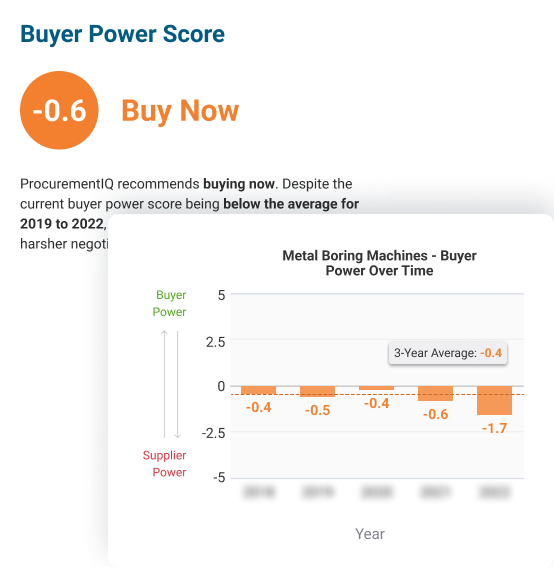
In 2026, buyer power amounts to -0.9 in the United States. Buyer power is most positively impacted by Recent Developments. It is most negatively impacted by Recent Price Trend. Subscribers can access details on eight other factors that impact buyer power. Learn more
United States
Buyer power forecasts: your glimpse into the future
Develop strategies for the upcoming year and identify unforeseen opportunities for buying now
- Actionable "Buy Now" and "Buy Later" insights
- Near-real-time updates to current and forecast Buyer Power Scores
- Methodology and weightings for Buyer Power Score Components
Supply Chain Risk
The average level of supply chain risk is assessed as Very High, which has a negative impact on buyer power. The level of supply chain risk is affected by industry volatility, barriers to entry, competition, import penetration, regulation and industry financial risk. Buyers in this market can mitigate procurement and supply chain management risks by monitoring risk levels for individual first and second tier suppliers:
1st
Tier Suppliers
- Oil Drilling & Gas Extraction Firms
- Natural Gas Distribution Firms
- Mining, Oil & Gas Machinery Manufacturers
2nd
Tier Suppliers
- Oil & Gas Pipeline Construction Firms
- Gas Pipeline Transportation Firms
- Iron & Steel Manufacturers
Biggest Methanol Suppliers in the US by Revenue
The largest Methanol vendors by revenue in the US are G2X Energy, Southern Chemical Corporation and Celanese Corporation. Subscribers can sort and filter by market share concentration, profit level and other factors. Learn more
| Supplier | Operational Size | Headquarters | Number of Employees | Market Share (%) | Market Share Performance (3yr trend) | Total Revenue ($ million) | Profit Level (%) | Risk Level |
|---|---|---|---|---|---|---|---|---|
| Lyondellbasell Industries N.V. | Global | HOUSTON | >10,000 | 10-15 | ||||
| Westlake Corporation | Global | HOUSTON, TX | >10,000 | 10-15 | ||||
| Celanese Corporation | Global | IRVING, TX | >10,000 | 10-15 | ||||
| Mitsubishi Gas Chemical Company Inc. | Global | Tokyo, JP | 1,001-10,000 | 5-10 | ||||
| Basf Se | Global | Ludwigshafen, DE | >10,001 | 5-10 | ||||
| Dow Inc. | Global | MIDLAND, MI | >10,000 | 5-10 | ||||
| Methanex Corporation | Global | Vancouver | 1,001-10,000 | 5-10 | ||||
| OCI NV | Global | NEDERLAND, TX | 1,001-10,000 | < 5 | ||||
| Eastman Chemical Co | Global | KINGSPORT, TN | >10,000 | < 5 | ||||
Looking for a list of suppliers by country?
Subscribers can access vendor information on Canadian and European suppliers, too. We also offer custom research services to help with vendor sourcing anywhere in the world.
Profit Analysis
The average profit margin across vendors in the Methanol market is 4.0% and falling. Profit levels shift depending on suppliers' spend on wages, purchases and overhead. The highest cost component for vendors is Purchases. The cost trend for this component is falling, when considering movement between 2025 and 2026. To understand cost forecasts for 2027 and uncover the implications on profit, start your subscription. Learn more
Vendor & Supply Chain Analysis
Market share concentration is moderate due to the high capital intensity for methanol manufacturing; this discourages potential new suppliers from entering the market, and benefits established suppliers because they are better able to grow their market shares. However, barriers to entry are relatively low for wholesalers and distributors, allowing a larger number of these vendors to enter the market and keeping overall market share concentration at a moderate level.
Despite unstable methanol demand in recent years, the average financial risk among US methanol suppliers remains moderate, as many large suppliers operate across multiple markets and income streams, reducing their risk of default during price volatility. Smaller, specialized suppliers also tend to have financial backing from parent companies or affiliated plants, further mitigating default risk.
The primary input in the production of methanol, natural gas, is highly volatile in both price and supply. Natural gas processors face significant supply chain risk because operations can take years to establish; in addition to the cost of starting a project, processors must source drilling and extraction services, both of which are costly and can easily become too expensive to maintain if the price of natural gas spikes significantly.
The United States is a net exporter of methanol, providing US buyers access to various methanol grades at competitive prices.
Supplier Information
Celanese Corporation
Celanese Corporation is a public company operating globally in the manufacturing sector. The company's offerings include plasticizers, preservatives, sweeteners and methanol. Founded in 1918, the company is currently headquartered in IRVING, Texas, United States of America with an estimated 13263 employees.... Subscribe to learn more
Lyondellbasell Industries N.V.
LyondellBasell Industries N.V. is a global chemical company in the petrochemical value chain. It produces olefins and co-products, polyethylene and polypropylene; propylene oxide and its derivatives; oxyfuels and related products; and intermediate chemicals, such as styrene monomer, acetyls, ethylene oxide,... Subscribe to learn more
Westlake Corporation
Westlake Corporation is a public company operating globally in the manufacturing sector. The company's offerings include methanol, industrial pvc pipes and caustic soda. Founded in 1986, the company is currently headquartered in HOUSTON, Texas, United States of America with an estimated 15920 employees. Subscribe to learn more
Basf Se
Basf Se is a public company operating globally in the manufacturing, manufacturing and professional, scientific & technical services sectors. The company's offerings include pesticides, refining catalysts, plasticizers, preservatives, waterproofing coatings. Founded in 1865, the company is currently headquartered... Subscribe to learn more
Dow Inc.
Dow Inc. is a public company operating globally in the manufacturing, information and professional, scientific and technical services sectors. The company's offerings include detergent, plasticizers, preservatives, waterproofing coatings, methanol. Founded in 1897, the company is currently headquartered in... Subscribe to learn more
Methanex Corporation
Methanex Corporation is a clear liquid commodity chemical company. It produces and supplies methanol from natural gas and coal through its plants in the United States, New Zealand, Trinidad and Tobago, Chile, Egypt, and Canada. It sells methanol to global or regional petrochemical manufacturers or distributors... Subscribe to learn more
Mitsubishi Gas Chemical Company Inc.
Mitsubishi Gas Chemical Company Inc. is a public company operating globally in the manufacturing sector. The company's offerings include methanol. Founded in 1951, the company is currently headquartered in Tokyo, Japan with an estimated 5500 employees. Subscribe to learn more
Atlantic Methanol Production Company LLC
Atlantic Methanol Production Company LLC is a private company operating nationally in the manufacturing sector. The company's offerings include methanol. Founded in 1998, the company is currently headquartered in Houston, Texas, United States of America with an estimated 750 employees. Subscribe to learn more
Eastman Chemical Co
Eastman Chemical Co is a public company operating globally in the manufacturing sector. The company's offerings include synthetic fibers, plasticizers, preservatives, methanol, synthetic resins. Founded in 1918, the company is currently headquartered in KINGSPORT, Tennessee, United States of America with Subscribe to learn more
Accelerate the vendor selection process
Get a clear picture of the competition in a market and discover which vendors are best-suited for your sourcing needs. Our supplier profiles include hard-to-find financial ranges for private companies, cover public company data and feature an interactive competitor matrix.
Procurement Management KPIs for the Methanol Market
Managing vendor performance throughout the contract period is easier when tracking specific key performance indicators (KPIs). For example, buyers should monitor Average Order Value and Cost of Goods Sold. Buyers may experience better performance throughout their contracts if they establish service level agreements (SLAs) based on Accuracy and other factors.
| KPI | Level of Importance (1-5) | Measurements | Key Considerations |
|---|---|---|---|
| Average Order Value |
|
Total revenue Total number of orders |
The average order value represents the amount of revenue generated from each order. Buyers should use the average order value to assess the supplier's current and expected ability to provide the requested quantity of product. |
| Cost of Goods Sold |
|
Total revenue Total labor cost Total material cost Total delivery cost |
The cost of goods sold (COGS) captures the supplier's costs of labor, materials, and deliveries associated with product sales. Buyers should evaluate the COGS to gauge a supplier's profitability and to determine the extent to which a supplier is able to control costs. |

Questions to Ask During Procurement Negotiations
How can I gain leverage during negotiations?
Distribution
Can you provide a list of your distribution facility locations, both domestically and internationally?
What are your shipping rates to my facilities? Do shipping rates vary if I need methanol shipped to more than one location?
Supply Chain Risk
How have fluctuations in input prices, such as the price of natural gas, affected the prices of your product in the past three years? How do you mitigate feedstock price increases?
When input prices rise, how much of the cost is absorbed by you and how much is passed onto customers?
Quality Control
How do you ensure product quality? What purity testing systems are in place at your organization?
What is the typical inspection process that your methanol stock undergoes? What internal testing procedures do you use to ensure quality?
The ultimate prep for procurement negotations
View all 29 negotiation questions for this category when you subscribe.
Methanol RFP Guidelines
What should my RFP include?
Organizational Overview
Buyers should describe their organizational structure.
Buyers should state the purpose for which they require methanol.
Statement Of Need
Buyers should specify the purity level and any other product specializations that they require.
Buyers should indicate their preferred container type (e.g. gallons, barrels) and the estimated quantity required for each shipment.
Project Budget
Buyers should state the maximum budget for the contract.
Buyers should dictate how and when price increases must be communicated.
The RFP process made easy
Find out how you can access RFP templates for 800+ procurement categories to start writing better, more consistent RFPs.
We display average pricing information, trends and market data.
Our Reports include:
- Opportunity assessment
- Market dynamics
- Recent developments
- Positive and warning trends
- Buyer power levers
- Price environment and market pricing
- Geographic wage rates
- Global market updates
- Total cost of ownership
- Cost structure benchmarks and analysis
- Supply chain and vendors
- Global supplier breakdown
- Market share concentration
- Regulation and business requirements
- Vendor management and KPIs
- Sourcing strategy guidance