Procurement Market Intelligence Report
Office Furniture Systems
Sourcing Guide & Market Intelligence
Smarter cost management starts with comprehensive market intelligence
 United States
 Canada
 Europe
 Global
Quick Navigation
Office Furniture Systems Global Overview
Definition
Summary
This report is intended to assist buyers of office furniture systems for a business or commercial office setting. Office furniture systems, of which cubicles are the most well-known, are bundles of work surfaces, shelves, panels, and other items sold in a package for furnishing offices.
This Report Includes:
- Cubicles & Cubicle
- Shelves
- Desks
- Desk Extensions
Not in this Report:
- Office Seating
- Stand-Alone Storage Units
- Filing Cabinets
- Home Office Desk Systems
Global Office Furniture Systems Procurement Trends
Discover the top international trends affecting procurement in the global Office Furniture Systems market.
Warning Trends
Tariffs to negatively impact the furniture and furnishings sector
- The Trump Administration’s reciprocal tariffs, which apply general tariff rate increases to most leading US trade partners, took effect on August 7, after the administration finalized the rates on August 1. These changes will significantly increase the tariff rate on leading furniture import sources, including Canada (35.0%), China (54.0%), Mexico (25.0%), and Vietnam (20.0%).
- Additionally, the United States nearly tripled the tariff rate on Canadian lumber from 7.66% to 20.56% in late July. While lumber is typically exempt from the general tariffs on Canada and Mexico because it is wholly produced in Canada or Mexico, making it eligible for the United States-Mexico-Canada Agreement (USMCA) tariff exemption, this lumber-specific tariff will significantly increase the cost for American furniture producers to source lumber.
- Common metals in furniture production, including aluminum, copper, and steel, face 50.0% tariffs at the start of August, further increasing the input costs of domestic furniture production. In October, the Trump Administration raised tariffs on softwood timber and lumber to 10.0%, upholstered wood furniture to 25.0%, and kitchen cabinets, vanities, and associated parts to 25.0%; and the tariff on upholstered furniture will be raised to 30.0%, and the rate for kitchen cabinets, vanities, and associated parts will be raised to 50.0% at the start of the new year.
- According to a FurnitureToday survey of 420 retailers, tariffs are expected to have a significant impact on 70.0% of furniture and furnishings businesses, and few believe they will avoid the impact of tariffs. Around 27.0% of furniture and furnishings retailers are expected to raise prices immediately in the face of new tariffs.
- Higher tariffs on US imports of furniture and furnishings are also likely to contribute to supply chain issues, reduced inventory selection, and longer lead times. The increase in the average tariff rate will also increase costs for raw materials used to manufacture furniture and furnishings, pressuring prices upward.
Increased tariffs on copper imports take effect
- On August 1, the Trump administration implemented 50.0% tariffs on imported copper. Chile and Canada will be most impacted by these tariffs, as they account for a combined 87.0% of all copper imports in the United States.
- However, these tariffs are less sweeping than initially expected, only applying to semi-finished copper products, while excluding high-purity refined copper and copper input materials, such as ore and concentrate. As leading importers, such as Chile and Canada, have both high copper mining and refining capacities, they will likely avoid most of these tariffs by either exporting the copper in its unrefined form or refining the copper before exporting it to the United States
- These copper tariff exemptions limit the impact on the electronics and electrical equipment sectors because these applications require refined copper due to its optimal conductive properties.
- Thus, the prices of metal alloys that include copper, consumer products made from copper, tools, plumbing, corrosion-resistant alloys, and construction materials made from copper are forecast to rise by an average of 39.2%, according to the Yale Budget Lab.
United States announces new tariffs on all imported steel
- In February 2025, the United States announced 25.0% tariffs on all imported steel with no exemptions or exceptions. The tariffs took effect on March 12, 2025. On June 4th, these tariffs were increased further to 50%. These tariffs were not impacted by a recent court decision that temporarily suspended duties on certain goods as they were implemented under Section 232 of the Trade Expansion Act.
- Previously, countries such as Canada, Mexico, and Brazil, the top exporters of steel to the United States, had exemptions from tariffs. These have now been removed and all imported steel, regardless of origin, will be subject to the 50.0% tariff. However, on May 8th, the US announced an agreement with the United Kingdom to remove all levies on steel exported from the UK.
- When tariffs on steel imports were introduced in March 2018, they contributed to an increase in the price of steel and steel products. According to the Bureau of Labor Statistics, the price of steel-milled products increased by 10.2% in the year after the tariffs were implemented. This market heavily relies on steel as an input and may be impacted by this policy.
Global Office Furniture Systems Market - Suppliers by Region
| Country/Region | Number of Suppliers |
|---|---|
| #1 India | 11,490 |
| #2 Oceania & Southeast Asia | 9,055 |
| #3 Europe | 8,610 |
Explore supplier concentration across the globe
We've uncovered the 11 top regions for global procurement, based on feedback from our most strategic clients. Access vendor counts for each unique region when you subscribe.
2
Geography Drilldown - US, Canada & Europe
Average Cost of Office Furniture Systems
United States
2026 Market Pricing$650.00 to $XX,XXX.XX
per system
Average Price
Prices in the Office Furniture Systems market range from $650.00 to $XX,XXX.XX, depending on Size, Customization, Materials and Quantity Purchased. For example, lower prices are associated with Smaller desk width 36-60 inches ($650 to $10,000 per system), whereas higher prices are associated with Larger desk width 60-96 inches ($1,500 to $20,000 per system) and Collaborative and shared spaces ($1,500 to $20,000 per system).
Need the scoop on international price trends?
Between our Europe and Canada collections, we provide price data for 350 markets so you can instantly compare prices across borders. Or, use our custom research services for intel on prices in any region across the globe.
Office Furniture Systems Category Price Trends
Pricing trends are indicated by the compound annual growth rate (CAGR) during a set period of time. For the Office Furniture Systems market, prices in the US have declined -0.9% from 2022 to 2025. and +2.7% in Europe.
United States (2022-2025)

Europe (2022-2025)

Compound Annual Growth Rate
Wondering where prices are heading?
Price trend forecasts are available to subscribers, along with price driver projections and forward-looking cost structure data.
Cost Analysis - Total Cost of Ownership for Office Furniture Systems
Total cost of ownership is Medium in the Office Furniture Systems market. The average cost of ownership differs depending on the contract but generally includes costs negotiated before the contract begins, costs billed during the contract period and unforeseen costs. For example, unforeseen costs in the form of Obsolescence may raise the total cost of ownership unexpectedly.
Negotiated Before
Transportation
Set Up Fees
Billed During
Depreciation
Warranties
Disposal
Unforeseen
Obsolescence
Buyer Power in Procurement Negotiations
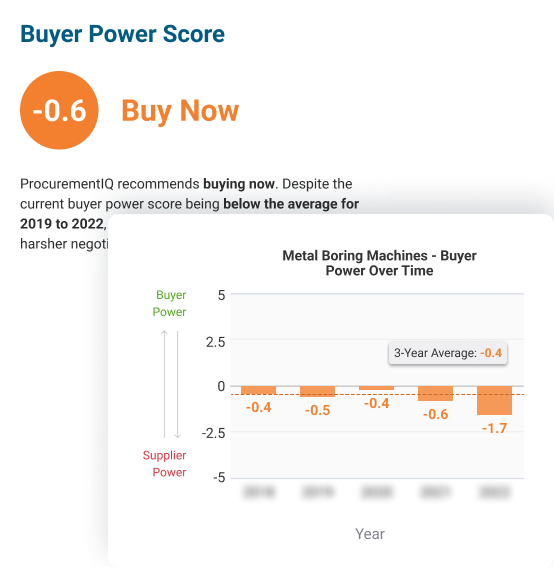
In 2026, buyer power amounts to -1.8 in the United States. Buyer power is most positively impacted by Recent Developments. It is most negatively impacted by Market Share Concentration. Subscribers can access details on eight other factors that impact buyer power. Learn more
United States

Buyer power forecasts: your glimpse into the future
Develop strategies for the upcoming year and identify unforeseen opportunities for buying now
- Actionable "Buy Now" and "Buy Later" insights
- Near-real-time updates to current and forecast Buyer Power Scores
- Methodology and weightings for Buyer Power Score Components
Supply Chain Risk
The average level of supply chain risk is assessed as Medium, which has a negative impact on buyer power. The level of supply chain risk is affected by industry volatility, barriers to entry, competition, import penetration, regulation and industry financial risk. Buyers in this market can mitigate procurement and supply chain management risks by monitoring risk levels for individual first and second tier suppliers:
1st
Tier Suppliers
- Wood Paneling Manufacturers
- Plastic & Resin Manufacturers
- Iron & Steel Manufacturers
2nd
Tier Suppliers
- Sawmills & Wood Producers
- Petrochemical Manufacturers
- Iron Ore Miners
Biggest Office Furniture Systems Suppliers in the US by Revenue
The largest Office Furniture Systems vendors by revenue in the US are Global Furniture Group, Ashley Furniture Brands Inc. and Krueger International, Inc. Subscribers can sort and filter by market share concentration, profit level and other factors. Learn more
| Supplier | Operational Size | Headquarters | Number of Employees | Market Share (%) | Market Share Performance (3yr trend) | Total Revenue ($ million) | Profit Level (%) | Risk Level |
|---|---|---|---|---|---|---|---|---|
| Millerknoll, Inc. | Global | ZEELAND | >10,000 | 5-10 | ||||
| Steelcase Inc. | Global | GRAND RAPIDS, MI | >10,000 | 5-10 | ||||
| Hni Corporation | International | MUSCATINE | 1,001-10,000 | 5-10 | ||||
| Knoll, Inc. | Global | East Greenville | 1,001-10,000 | 5-10 | ||||
| Global Furniture Group | International | Marlton, NJ | 1,001-10,000 | < 5 | ||||
| Kimball International Inc. | International | JASPER | 1,001-10,000 | < 5 | ||||
| Teknion Corporation | Global | Toronto, CA | 1,001-10,000 | < 5 | ||||
| Kinnarps AB | Global | Kinnarp, SE | 1,001-10,000 | < 5 | ||||
| OFS Brands Holdings Inc. | Global | Huntingburg, IN | 501-1,000 | < 5 | ||||
Looking for a list of suppliers by country?
Subscribers can access vendor information on Canadian and European suppliers, too. We also offer custom research services to help with vendor sourcing anywhere in the world.
Profit Analysis
The average profit margin across vendors in the Office Furniture Systems market is 3.1% and steady. Profit levels shift depending on suppliers' spend on wages, purchases and overhead. The highest cost component for vendors is Purchases. The cost trend for this component is stagnating, when considering movement between 2025 and 2026. To understand cost forecasts for 2027 and uncover the implications on profit, start your subscription. Learn more
Vendor & Supply Chain Analysis
Vendors face a moderate level of financial risk in the office furniture systems market. Vendors face very little competition from substitutes, but face heavy competition from other vendors.
Market share concentration is low in the office furniture systems market, which increases buyer power. Low concentration is the result of many suppliers that sell comparable products in this fragmented market.
Supply chain risk is moderate in the office furniture systems market, stemming largely from raw material input risk. Price volatility for steel, wood, and plastic has been high in recent years, which has encouraged suppliers to keep furniture system prices elevated to account for fluctuating steel costs.
The United States is a net importer of office furniture, meaning it imports more than it exports, so buyers are exposed to negative tariff risk as a result. While US buyers benefit from a wider availability of products and more price competition, buyers seeking to import office furniture may need to assess the quality standards and production capacities of international manufacturers, with considerations like the expected lead times for delivery, quality and safety certifications, and the compatibility of the manufactured goods with US standards.
Supplier Information
Hni Corporation
HNI Corporation is a global designer and marketer of workplace furnishings and residential building products. Its workplace furnishings include furniture systems, seating, storage, tables, architectural products, ancillary products, and hospitality products. Its residential building products comprise gas,... Subscribe to learn more
Knoll, Inc.
Knoll, Inc. is a global manufacturer of commercial and residential furniture, accessories, lighting, and coverings under various brands. It organizes its business into two reportable segments: the Office segment, which supplies office systems furniture, seating, storage, tables, desks, and accessories, under... Subscribe to learn more
Millerknoll, Inc.
MillerKnoll Inc. is a designer, manufacturer, and distributor of interior furnishings for residential, office, healthcare, and educational settings. It offers furniture systems, seating, freestanding furniture, storage, case goods, textile products, leather, felt, acoustic products, and related services. Subscribe to learn more
Steelcase Inc.
Steelcase Inc. is a public company operating globally in the manufacturing sector. The company's offerings include dry erase boards, bookcases, filing cabinets, office desks, conference tables. Founded in 1912, the company is currently headquartered in GRAND RAPIDS, Michigan, United States of America with... Subscribe to learn more
Ashley Furniture Brands Inc.
Ashley Furniture Brands Inc. is a private company operating in the manufacturing sector. The company's offerings include office furniture systems. Founded in 2012, the company is currently headquartered in United States of America. Subscribe to learn more
Global Furniture Group
Global Furniture Group is a private company operating internationally in the manufacturing sector. The company's offerings include conference tables, office seating and office furniture systems. Founded in 1966, the company is currently headquartered in Marlton, New Jersey, United States of America with an... Subscribe to learn more
Kimball International Inc.
Kimball Electronics, Inc. is a global contract manufacturing services provider to the automotive, medical, and industrial end market verticals. It offers engineering and supply chain support for producing electronic assemblies and other products, including medical devices, medical disposables, precision molded... Subscribe to learn more
Kinnarps AB
Kinnarps AB is a private company operating globally in the manufacturing sector. The company's offerings include office desks, conference tables, office seating and office furniture systems. Founded in 1942, the company is currently headquartered in Kinnarp, Sweden with an estimated 5500 employees. Subscribe to learn more
Krueger International, Inc.
Krueger International, Inc. is a private company operating globally in the manufacturing sector. The company's offerings include office desks, conference tables, auditorium & stadium seating, office seating, combination desk chairs. Founded in 1941, the company is currently headquartered in Green Bay, Wisconsin,... Subscribe to learn more
Accelerate the vendor selection process
Get a clear picture of the competition in a market and discover which vendors are best-suited for your sourcing needs. Our supplier profiles include hard-to-find financial ranges for private companies, cover public company data and feature an interactive competitor matrix.
Procurement Management KPIs for the Office Furniture Systems Market
Managing vendor performance throughout the contract period is easier when tracking specific key performance indicators (KPIs). For example, buyers should monitor Customer Retention Rate and Defect Density. Buyers may experience better performance throughout their contracts if they establish service level agreements (SLAs) based on Quality & Compliance and other factors.
| KPI | Level of Importance (1-5) | Measurements | Key Considerations |
|---|---|---|---|
| Customer Retention Rate |
|
Number of customers at start of period Number of customers at end of period |
The customer retention rate represents the number of customers a company is able to retain over a set timeframe. The customer retention rate can be used to determine the extent to which a company’s customer base fluctuates over time. |
| Defect Density |
|
Number of units sold Number of defective units |
The defect density represents the share of defective products a company produces. The defect density can be used to determine whether manufacturing, assembly or quality assurance processes require improvement. |

Questions to Ask During Procurement Negotiations
How can I gain leverage during negotiations?
Quality Control
What is the life expectancy and performance rating of the furniture that I am buying?
Do you have a total quality management and assurance system in place? Does it encompass the total supply chain, from suppliers down to your dealer network?
Experience and Expertise
Is office furniture your main focus? If not, what other products and services do you offer?
Are your operations vertically integrated?
Distribution
Can you provide a list of your domestic and international distribution facilities?
What steps do you take to ensure that my furniture will be delivered on time and on budget?
The ultimate prep for procurement negotations
View all 29 negotiation questions for this category when you subscribe.
Office Furniture Systems RFP Guidelines
What should my RFP include?
Organizational Overview
Buyers should give an overview of their organization, including what they produce and where they operate.
Buyers should state the type(s) of office furniture system(s) they desire.
Statement Of Need
Buyers should specify the exact number of office furniture systems they require.
Buyers should specify the required size of the office furniture system.
Project Budget
Buyers should specify the total budget for their project or objective.
Buyers should include details about per-unit spending expectations and limitations.
The RFP process made easy
Find out how you can access RFP templates for 800+ procurement categories to start writing better, more consistent RFPs.
We display average pricing information, trends and market data.
Our Reports include:
- Opportunity assessment
- Market dynamics
- Recent developments
- Positive and warning trends
- Buyer power levers
- Price environment and market pricing
- Geographic wage rates
- Global market updates
- Total cost of ownership
- Cost structure benchmarks and analysis
- Supply chain and vendors
- Global supplier breakdown
- Market share concentration
- Regulation and business requirements
- Vendor management and KPIs
- Sourcing strategy guidance