Procurement Market Intelligence Report
Deep Sea Cargo Transportation Services
Sourcing Guide & Market Intelligence
Smarter cost management starts with comprehensive market intelligence
 United States
 Europe
 Global
Quick Navigation
Deep Sea Cargo Transportation Services Global Overview
Definition
Summary
Deep sea cargo transportation involves the shipment of cargo by vessels. Most shipping routes in this market are international. Buyers purchase shipping capacity on a spot basis (i.e., at current market rates) or through contracts. In this report, buyers are also called shippers, and deep sea cargo transport providers are also called carriers.
This Report Includes:
- Loading & Unloading Products
- Handling
- Transportation
Not in this Report:
- Passenger Transportation
- Other Types of Cargo Transportation
Global Deep Sea Cargo Transportation Services Procurement Trends
Discover the top international trends affecting procurement in the global Deep Sea Cargo Transportation Services market.
Neutral
Crude oil prices dip, but natural gas and fuel prices remain volatile in 2025
- Oil prices have been falling with the introduction of higher tariffs and the predicted decline in global demand. The OPEC+ group of countries also announced they would be unwinding production cuts and increasing their collective output target for May by 411,000 barrels per day.
- Trade wars, ongoing conflict between Hamas and Israel, and general unrest in the Middle East are causing uncertainty surrounding oil prices, which has led to volatility in prices. In the third week of May 2025, crude oil prices hit $63.67 per barrel, but volatility remains as geopolitical concerns remain.
- Natural gas prices rallied early in 2025 with colder-than-usual temperatures in the United States and high demand, topping out at $4.68/MMBtu in March. Prices have since fallen with the onset of trade wars and weakening demand projections to $3.64/MMBtu in the third week of May 2025.
- The national average of gasoline prices has been rising slightly due to refinery maintenance/outages and blending issues, hitting a national average of $3.15 per gallon in the third week of May 2025. However, gasoline futures have been volatile, falling due to fears of oversupply and deepening concerns about weakening demand with tariffs, but rising after trade deals.
Global Deep Sea Cargo Transportation Services Market - Suppliers by Region
| Country/Region | Number of Suppliers |
|---|---|
| #1 Europe | 805 |
| #2 Oceania & Southeast Asia | 665 |
| #3 Africa & Middle East | 365 |
Explore supplier concentration across the globe
We've uncovered the 11 top regions for global procurement, based on feedback from our most strategic clients. Access vendor counts for each unique region when you subscribe.
2
Geography Drilldown - US & Europe
Average Cost of Deep Sea Cargo Transportation Services
United States
2026 Market Pricing$400.00 to $X,XXX.XX
per 40-foot container
Average Price
Prices in the Deep Sea Cargo Transportation Services market range from $400.00 to $X,XXX.XX, depending on Origin & Destination, Standard International Trade Classification Code and Bunker Adjustment Factor. For example, lower prices are associated with Shipping to the United States ($1,800 to $2,400 per 40-foot container), Large ports with easy ship access for unloading ($1,700 to $2,500 per 40-foot container) and Short distance between origin and destination ($1,500 to $2,600 per 40-foot container), whereas higher prices are associated with Shipping from the United States ($3,000 to $3,600 per 40-foot container) and Large distance between origin and destination ($3,200 to $4,000 per 40-foot container).
Need the scoop on international price trends?
Between our Europe and Canada collections, we provide price data for 350 markets so you can instantly compare prices across borders. Or, use our custom research services for intel on prices in any region across the globe.
Deep Sea Cargo Transportation Services Category Price Trends
Pricing trends are indicated by the compound annual growth rate (CAGR) during a set period of time. For the Deep Sea Cargo Transportation Services market, prices in the US have declined -0.4% from 2022 to 2025. Meanwhile, the recent three-year CAGR for Europe is --11.8%.
United States (2022-2025)

Europe (2022-2025)
Compound Annual Growth Rate
Wondering where prices are heading?
Price trend forecasts are available to subscribers, along with price driver projections and forward-looking cost structure data.
Cost Analysis - Total Cost of Ownership for Deep Sea Cargo Transportation Services
Total cost of ownership is Medium in the Deep Sea Cargo Transportation Services market. The average cost of ownership differs depending on the contract but generally includes costs negotiated before the contract begins, costs billed during the contract period and unforeseen costs. For example, unforeseen costs in the form of Cancellations may raise the total cost of ownership unexpectedly.
Negotiated Before
Transportation
Other Fees
Billed During
Handling
Storage
Fuel
Unforeseen
Cancellations
Buyer Power in Procurement Negotiations
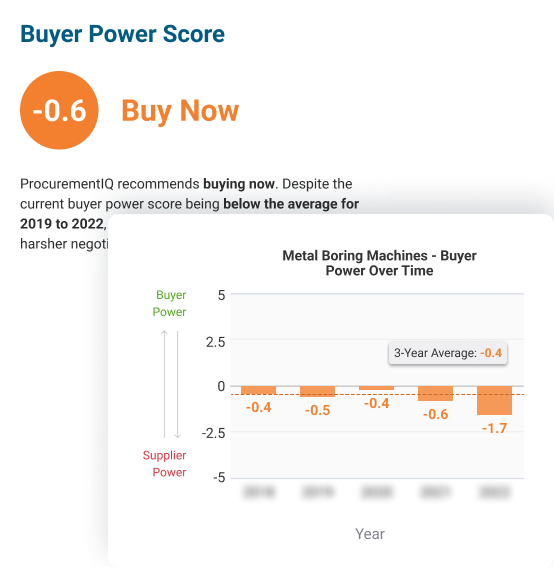
In 2026, buyer power amounts to -0.3 in the United States. Buyer power is most positively impacted by Recent Price Volatility. It is most negatively impacted by Product Specialization. Subscribers can access details on eight other factors that impact buyer power. Learn more
United States

Buyer power forecasts: your glimpse into the future
Develop strategies for the upcoming year and identify unforeseen opportunities for buying now
- Actionable "Buy Now" and "Buy Later" insights
- Near-real-time updates to current and forecast Buyer Power Scores
- Methodology and weightings for Buyer Power Score Components
Supply Chain Risk
The average level of supply chain risk is assessed as Medium, which has a negative impact on buyer power. The level of supply chain risk is affected by industry volatility, barriers to entry, competition, import penetration, regulation and industry financial risk. Buyers in this market can mitigate procurement and supply chain management risks by monitoring risk levels for individual first and second tier suppliers:
1st
Tier Suppliers
- Ship Builders
- Gasoline & Petroleum Wholesalers
- Port & Harbor Operators
2nd
Tier Suppliers
- Iron & Steel Manufacturers
- Aluminum Manufacturers
- Gasoline & Petroleum Bulk Stations
- Stevedoring & Marine Cargo Handling Firms
Biggest Deep Sea Cargo Transportation Services Suppliers in the US by Revenue
The largest Deep Sea Cargo Transportation Services vendors by revenue in the US are China Cosco Shipping Corporation Limited, Hapag-Lloyd AG and Mediterranean Shipping Company SA. Subscribers can sort and filter by market share concentration, profit level and other factors. Learn more
| Supplier | Operational Size | Headquarters | Number of Employees | Market Share (%) | Market Share Performance (3yr trend) | Total Revenue ($ million) | Profit Level (%) | Risk Level |
|---|---|---|---|---|---|---|---|---|
| Mitsubishi Heavy Industries Ltd. | Global | Tokyo, JP | >10,001 | 10-15 | ||||
| AP Moller - Maersk Group | Global | Svendborg, DK | >10,001 | 10-15 | ||||
| China Cosco Shipping Corporation Limited | Global | Shanghai, CN | >10,001 | 5-10 | ||||
| Hapag-Lloyd AG | Global | Hamburg, DE | >10,001 | 5-10 | ||||
| CMA CGM Group | Global | Marseille, FR | >10,000 | 5-10 | ||||
| Nippon Yusen Kabushiki Kaisha | Global | Tokyo, JP | >10,001 | < 5 | ||||
| Orient Overseas (International) Ltd. | Global | Wan Chai, HK | >10,001 | < 5 | ||||
| Mediterranean Shipping Company SA | Global | CH | >10,000 | < 5 | ||||
| Matson Inc. | International | HONOLULU | 1,001-10,000 | < 5 | ||||
Looking for a list of suppliers by country?
Subscribers can access vendor information on Canadian and European suppliers, too. We also offer custom research services to help with vendor sourcing anywhere in the world.
Profit Analysis
The average profit margin across vendors in the Deep Sea Cargo Transportation Services market is 8.5% and steady. Profit levels shift depending on suppliers' spend on wages, purchases and overhead. The highest cost component for vendors is Overhead. The cost trend for this component is falling, when considering movement between 2025 and 2026. To understand cost forecasts for 2027 and uncover the implications on profit, start your subscription. Learn more
Vendor & Supply Chain Analysis
The moderate level of concentration in this market detracts from buyer power because it indicates that the competition between providers is less intense. Nonetheless, shippers benefit from a large number of shipping lane options and the high frequency of departures that vessel-sharing and larger companies allow.
Average vendor risk in this market is moderate, due to the moderate level of competition in the deep sea cargo transportation services market.
While upstream supply chain risk is currently high in the deep sea cargo transportation services market, overall supply chain risk is moderate due to strong downstream demand. Moderate supply chain risk still hinders buyer power to an extent, however, by increasing the risk of buyers facing service disruptions and price spikes for market services.
The United States is a net importer of intermodal containers. A greater supply of intermodal containers helps keep overhead lower for suppliers in this market; however, an oversupply of containers may lead to lower revenue and profit, increasing vendor risk.
Supplier Information
AP Moller - Maersk Group
AP Moller - Maersk Group is a public company operating globally in the manufacturing sector. The company's offerings include industrial refrigerators and deep sea cargo transportation services. Founded in 1928, the company is currently headquartered in Copenhagen, Denmark with an estimated employee count Subscribe to learn more
Mitsubishi Heavy Industries Ltd.
Mitsubishi Heavy Industries Ltd. is a public company operating globally in the manufacturing and other services (except public administration) sectors. The company's offerings include motor graders, injection molding machines, forklifts, tow tractors, hydraulic turbines. Founded in 1950, the company is currently... Subscribe to learn more
China Cosco Shipping Corporation Limited
China Cosco Shipping Corporation Limited is a public company operating globally in the real estate & rental & leasing sector. The company's offerings include deep sea cargo transportation services, water cargo transportation services and intermodal container rental. Founded in 1997, the company is currently... Subscribe to learn more
CMA CGM Group
CMA CGM Group is a private company operating globally. The company's offerings include deep sea cargo transportation services, general warehousing & storage and customs brokerage services. Founded in 1978, the company is currently headquartered in Marseille, France with an estimated 110000 employees. Subscribe to learn more
Hapag-Lloyd AG
Hapag-Lloyd AG is a public company operating globally. The company's offerings include deep sea cargo transportation services and water cargo transportation services. Founded in 1970, the company is currently headquartered in Hamburg, Germany with an estimated employee count of over 10,000. Subscribe to learn more
Evergreen Marine Corp. Ltd.
Evergreen Marine Corp. Ltd. is a private company operating globally. The company's offerings include deep sea cargo transportation services. Founded in 1968, the company is currently headquartered in Taipei City, Taiwan with an estimated employee count of over 10,000. Subscribe to learn more
Matson Inc.
Matson, Inc. is a global ocean transportation and logistics services provider. It organizes its business into two segments: the Ocean Transportation segment, which provides ocean freight transportation services to the domestic non-contiguous economies of Hawaii, Alaska, and Guam, and Micronesia, expedited... Subscribe to learn more
Mediterranean Shipping Company SA
Mediterranean Shipping Company SA is a private company operating globally. The company's offerings include deep sea cargo transportation services. Founded in 1970, the company is currently headquartered in Genève, Switzerland with an estimated 10000 employees. Subscribe to learn more
Nippon Yusen Kabushiki Kaisha
Nippon Yusen Kabushiki Kaisha is a public company operating globally. The company's offerings include deep sea cargo transportation services. Founded in 2018, the company is currently headquartered in Tokyo, Japan with an estimated employee count of over 10,000. Subscribe to learn more
Accelerate the vendor selection process
Get a clear picture of the competition in a market and discover which vendors are best-suited for your sourcing needs. Our supplier profiles include hard-to-find financial ranges for private companies, cover public company data and feature an interactive competitor matrix.
Procurement Management KPIs for the Deep Sea Cargo Transportation Services Market
Managing vendor performance throughout the contract period is easier when tracking specific key performance indicators (KPIs). For example, buyers should monitor Customer Retention Rate and Employee Training Rate. Buyers may experience better performance throughout their contracts if they establish service level agreements (SLAs) based on Planning and other factors.
| KPI | Level of Importance (1-5) | Measurements | Key Considerations |
|---|---|---|---|
| Customer Retention Rate |
|
Number of customers at start of period Number of customers at end of period Number of customers added within period |
The customer retention rate represents the number of customers a company is able to retain over a set time frame. Buyers with recurring needs should place higher importance on the customer retention rate. A high customer retention rate in a market with low specialization and switching costs indicates customers are satisfied with the price and level of service provided. |
| Employee Training Rate |
|
Number of employees that undergo evaluation Number of employees that pass evaluation |
The employee training rate represents the share of employees a company is able to successfully train. A low employee training rate should be compared with the number of damaged shipments to determine if employees are handling products and goods properly. |

Questions to Ask During Procurement Negotiations
How can I gain leverage during negotiations?
Timeliness
What is your on-time delivery rate? Has this changed since the coronavirus outbreak due to international trade limitations or labor shortages at ports?
What percentage of your ships arrive more than 24 hours late?
Supply Chain Risk
What is the ratio of the amount your company paid in damage claims to its total freight revenue?
How does the value of losses that your company pays for compare with the value of losses borne directly by customers or claimed from insurers?
Customer Service
What is the position and degree of authority of the person managing my shipments?
Is your company flexible with regard to accepting cargo at short notice, shipping cargo to unusual destinations and changing destinations en route?
The ultimate prep for procurement negotations
View all 27 negotiation questions for this category when you subscribe.
Deep Sea Cargo Transportation Services RFP Guidelines
What should my RFP include?
Organizational Overview
Buyers should give an overview of their organization, including their location and the industry in which they operate.
Buyers should describe the reason they are seeking deep sea cargo transportation services, including the type or types of cargo that they intend to ship.
Statement Of Need
Buyers should specify the type of ship that they prefer, including the vessel’s size, age, maximum deadweight tonnage (DWT), and the number of crew.
Buyers should list the specifications of the cargo that they will be shipping, including the cargo’s SITC code, gross tonnage, and the type of packaging (e.g., 20- or 40-foot containers).
Project Budget
Buyers should provide a maximum budget for the contract, if applicable.
Buyers should request the vendor’s current base rate and BAF, and should inquire into how often rates are adjusted.
The RFP process made easy
Find out how you can access RFP templates for 800+ procurement categories to start writing better, more consistent RFPs.
We display average pricing information, trends and market data.
Our Reports include:
- Opportunity assessment
- Market dynamics
- Recent developments
- Positive and warning trends
- Buyer power levers
- Price environment and market pricing
- Geographic wage rates
- Global market updates
- Total cost of ownership
- Cost structure benchmarks and analysis
- Supply chain and vendors
- Global supplier breakdown
- Market share concentration
- Regulation and business requirements
- Vendor management and KPIs
- Sourcing strategy guidance