Procurement Market Intelligence Report
Passenger Vehicles
Sourcing Guide & Market Intelligence
Smarter cost management starts with comprehensive market intelligence
 United States
 Global
Quick Navigation
Passenger Vehicles Global Overview
Definition
Summary
Passenger vehicles are automobiles that are used to transport small groups of passengers. Key buyers include consumers, government agencies, and rental and security service providers.
This Report Includes:
- Sedans
- Light Trucks
- Sport-Utility Vehicles (SUVs)
- Passenger Trucks and Automobiles
- Electric Vehicles
Not in this Report:
- Motorcycles
- Freight Vehicles
- Ambulances and Other Specialized Vehicles
- Shuttle Buses
- Commercial Passenger Vehicles
Take the ProcurementIQ products and data tour
Explore live samples of price trend forecasts, price driver projections, forward-looking cost structure data and more.
Global Passenger Vehicles Procurement Trends
Discover the top international trends affecting procurement in the global Passenger Vehicles market.
Warning Trends
Tariffs to negatively impact the commercial vehicles and components sector
- In June, the Trump Administration implemented 25.0% tariffs on all automobile and automobile parts imported into the United States, except for those imported from the United Kingdom, which face a reduced 10.0% tariff rate. Additionally, the administration raised tariffs on the import of aluminum, copper, and steel to 50.0%, all vital inputs for automotive manufacturing, and raised the tariffs on heavy trucks made outside the United States to 25.0%.
- In 2024, the value of automotive imports totaled $388.9 billion, which accounted for over a quarter of the total US automotive market revenue that year. Thus, these tariffs are likely to significantly increase the cost of motor vehicles, parts, and maintenance services, as both foreign manufacturers and domestic manufacturers with foreign sub-suppliers face higher import costs.
- According to the US International Trade Commission, Mexico and Canada account for 47.4% of motor vehicle imports to the United States, and 54.1% of motor vehicles bodies and parts. According to Anderson Economic Group (AEG), a Michigan-based economic consultancy, the broad-based 25.0% tariff could raise new car prices by $1,000 to $4,000, and up to $10,000 if manufacturers are unable to mitigate the tariff’s impact.
- Germany is a major exporter of crane trucks, vehicles, vehicle seating and interior trim, and other components in the sector. The higher automotive and metals tariffs will mean that many German companies, even those operating in the United States, will face higher costs to import subcomponents to their facilities in the United States.
- According to Telemetry Insights, many auto parts suppliers will be unable to absorb the tariffs or adjust to mitigate the tariff impact (e.g., relocating their facilities or splitting efforts across three countries). The introduction of 50.0% metals tariffs could drive up production costs further.
Fed lowers rates for the first time in 2025
- On September 17, the Federal Reserve’s Federal Open Market Committee (FOMC) voted to lower interest rates to a target range of 4.0% to 4.25%, down 0.25% from the rate it had been holding since November of last year.
- Despite indications at the start of the year that steady reductions to the relatively high 4.25% to 4.5% rate were on the horizon, the Fed held off on rate cuts for much of the year due to concerns that the combination of higher tariffs and a reduction in borrowing costs could cause rebounding inflation.
- The September cut to Fed interest rates signals a shift in this strategy, indicating that the Fed now considers weakening employment figures a greater threat than inflation. As a result, FOMC officials have also signaled that two additional rate cuts are likely before the end of the year in an effort to fight unemployment and stimulate the economy.
- Declining Fed funds rates will provide relief to borrowers by lowering the market interest rates for consumer and business loans. This reduction in the cost of borrowing will reduce the cost of many banking and financial services, and may spur increases in demand across the economy.
Russian invasion of Ukraine is putting additional strain on US chip supply
- Until recently, the United States sourced nearly all of its neon gas (an essential material in the laser imprinting process to produce semiconductors) from Ukrainian and Russian producers. Previous conflicts between the two nations, specifically related to the Crimea conflict in 2014, resulted in a nearly 600.0% increase in the price of neon.
- The Russian Ministry of Industry and Trade announced in early June that it would be limiting neon gas exports as part of its sanctions against countries it views as unfriendly. This move will add to lead times and prices for neon.
- Downstream semiconductor manufacturers keep stockpiles of neon gas that have allowed them to continue manufacturing chips, though it is unknown how long these stockpiles will last. Semiconductor manufacturers will likely pay higher prices for neon gas outside Ukraine as global supplies dwindle.
Global Passenger Vehicles Market - Suppliers by Region
| Country/Region | Number of Suppliers |
|---|---|
| #1 Europe | 566,990 |
| #2 China | 400,735 |
| #3 Oceania & Southeast Asia | 281,435 |
Explore supplier concentration across the globe
We've uncovered the 11 top regions for global procurement, based on feedback from our most strategic clients. Access vendor counts for each unique region when you subscribe.
Geography Drilldown - US
Average Cost of Passenger Vehicles
United States
2026 Market Pricing$5,000.00 to $XXX,XXX.XX
per vehicleAverage Price
Prices in the Passenger Vehicles market range from $5,000.00 to $XXX,XXX.XX, depending on Brand, Size, Features, Engine type and Condition. For example, lower prices are associated with Obscure brands, whereas higher prices are associated with Well-known brands.
Need the scoop on international price trends?
Between our Europe and Canada collections, we provide price data for 350 markets so you can instantly compare prices across borders. Or, use our custom research services for intel on prices in any region across the globe.
Passenger Vehicles Category Price Trends
Pricing trends are indicated by the compound annual growth rate (CAGR) during a set period of time. For the Passenger Vehicles market, prices in the US have grown 2.3% from 2022 to 2025. Subscribers can access price trend forecasts, price driver projections and forward-looking cost structure data. Learn more
United States (2022-2025)


Wondering where prices are heading?
Price trend forecasts are available to subscribers, along with price driver projections and forward-looking cost structure data.
Cost Analysis - Total Cost of Ownership for Passenger Vehicles
Total cost of ownership is High in the Passenger Vehicles market. The average cost of ownership differs depending on the contract but generally includes costs negotiated before the contract begins, costs billed during the contract period and unforeseen costs. For example, unforeseen costs in the form of Obsolescence may raise the total cost of ownership unexpectedly.
Negotiated Before
Financing
Billed During
License fees
Insurance
Fuel
Unforeseen
Obsolescence
Buyer Power in Procurement Negotiations
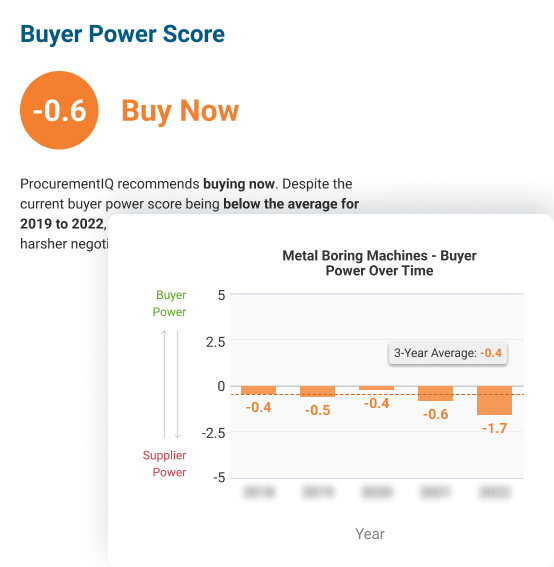
In 2026, buyer power amounts to -3.2 in the United States. Buyer power is most positively impacted by Recent Developments. It is most negatively impacted by Availability of Substitutes. Subscribers can access details on eight other factors that impact buyer power. Learn more
United States
Buyer power forecasts: your glimpse into the future
Develop strategies for the upcoming year and identify unforeseen opportunities for buying now
- Actionable "Buy Now" and "Buy Later" insights
- Near-real-time updates to current and forecast Buyer Power Scores
- Methodology and weightings for Buyer Power Score Components
Supply Chain Risk
The average level of supply chain risk is assessed as Medium, which has a negative impact on buyer power. The level of supply chain risk is affected by industry volatility, barriers to entry, competition, import penetration, regulation and industry financial risk. Buyers in this market can mitigate procurement and supply chain management risks by monitoring risk levels for individual first and second tier suppliers:
1st
Tier Suppliers
- Metal Stamping & Forging Manufacturers
- Automobile Engine & Parts Manufacturers
- Battery Manufacturers
- Electrical Apparatus & Equipment Wholesalers
2nd
Tier Suppliers
- Aluminum Manufacturers
- Iron & Steel Manufacturers
- Chemical Manufacturers
- Electrical Equipment & Component Manufacturers
- Semiconductor Manufacturers
Biggest Passenger Vehicles Suppliers in the US by Revenue
The largest Passenger Vehicles vendors by revenue in the US are Daimler Ag, BMW Group and Hyundai Motor Group. Subscribers can sort and filter by market share concentration, profit level and other factors. Learn more
| Supplier | Operational Size | Headquarters | Number of Employees | Market Share (%) | Market Share Performance (3yr trend) | Total Revenue ($ million) | Profit Level (%) | Risk Level |
|---|---|---|---|---|---|---|---|---|
| Toyota Motor Corp | Global | Toyota, JP | >10,001 | 10-15 | ||||
| Stellantis N.V. | Global | Hoofddorp, NL | >10,001 | 10-15 | ||||
| Ford Motor Co | Global | DEARBORN, MI | >10,000 | 10-15 | ||||
| General Motors Company | International | DETROIT | >10,000 | 15-20 | ||||
| Hyundai Motor Group | Global | Seoul, KR | >10,001 | 5-10 | ||||
| Honda Motor Co Ltd | Global | Tokyo, JP | >10,001 | 5-10 | ||||
| Nissan Motor Co. Ltd. | Global | Yokohama, JP | 1,001-10,000 | 5-10 | ||||
| Subaru Corporation | Global | Tokyo, JP | >10,001 | < 5 | ||||
| Mazda Motor Corp | Global | Hiroshima, JP | >10,001 | < 5 | ||||
Looking for a list of suppliers by country?
Subscribers can access vendor information on Canadian and European suppliers, too. We also offer custom research services to help with vendor sourcing anywhere in the world.
Profit Analysis
The average profit margin across vendors in the Passenger Vehicles market is 6.1% and steady. Profit levels shift depending on suppliers' spend on wages, purchases and overhead. The highest cost component for vendors is Purchases. The cost trend for this component is stagnating, when considering movement between 2025 and 2026. To understand cost forecasts for 2027 and uncover the implications on profit, start your subscription. Learn more
Vendor & Supply Chain Analysis
This market’s high market share concentration gives top players greater pricing power; however, manufacturers in this market still compete heavily to differentiate their vehicles by offering innovative and fuel-efficient vehicles at fair prices.
Risk in the supply chain is driven to a moderate level by volatile prices from second-tier suppliers that provide raw material inputs, such as steel and aluminum. Due to the current microprocessor chip shortage, the risk posed by electrical apparatus and equipment wholesalers is also elevated.
Vendor risk in this market is high, on average, due to the budgetary constraints brought on by high inflation, elevated interest rates, and the cyclical nature of the industry.
Most of this market’s ESG metrics are moderate. Although passenger vehicle manufacturing is among the more resource-intensive industries, manufacturers have made substantial inroads toward improving their environmental, social and governmental stances.
The United States is a net importer of passenger vehicles, meaning it imports more passenger vehicles than it exports. As a result, US buyers rely heavily on foreign-made vehicles and parts; thus, they must handle fluctuations in exchange rates, international product regulations, and changes in global supply chain dynamics.
Supplier Information
Ford Motor Co
Ford Motor Co is a public company operating globally in the manufacturing sector. The company's offerings include minibuses & shuttles, passenger vehicles, cargo trucks and product warranty insurance. Founded in 1903, the company is currently headquartered in DEARBORN, Michigan, United States of America with... Subscribe to learn more
Stellantis N.V.
Stellantis N.V. is a public company operating globally in the manufacturing sector. The company's offerings include industrial robots and passenger vehicles. Founded in 2014, the company is currently headquartered in Hoofddorp, Netherlands with an estimated employee count of over 10,000. Subscribe to learn more
Toyota Motor Corp
Toyota Motor Corp is a public company operating globally in the manufacturing sector. The company's offerings include vehicle seating & interior trim, passenger vehicles and semi trucks. Founded in 1900, the company is currently headquartered in Toyota, Japan with an estimated employee count of over 10,000.... Subscribe to learn more
General Motors Company
General Motors Company is a global automotive company that designs, builds, and sells trucks, crossovers, cars, and automobile parts worldwide. It organizes its business into four reportable segments: GM North America, which develops, manufactures, and markets vehicles in North America under the Buick, Cadillac,... Subscribe to learn more
Honda Motor Co Ltd
Honda Motor Co Ltd is a public company operating globally in the manufacturing sector. The company's offerings include passenger vehicles, all-terrain vehicles and portable generators. Founded in 1946, the company is currently headquartered in Tokyo, Japan with an estimated employee count of over 10,000. Subscribe to learn more
Hyundai Motor Group
Hyundai Motor Group is a public company operating globally in the manufacturing and administration, business support and waste management services sectors. The company's offerings include oil & gas casing & tubing, cnc lathes & turning centers, refrigerated trailers, truck trailers, passenger vehicles. Founded... Subscribe to learn more
Nissan Motor Co. Ltd.
Nissan Motor Co. Ltd. is a public company operating globally in the manufacturing sector. The company's offerings include passenger vehicles and cargo trucks. Founded in 2002, the company is currently headquartered in Yokohama, Japan with an estimated 5500 employees. Subscribe to learn more
BMW Group
BMW Group is a public company operating globally in the manufacturing and professional, scientific & technical services sectors. The company's offerings include passenger vehicles and industrial design services. Founded in 1916, the company is currently headquartered in Munich, Bavaria, Germany with an estimated... Subscribe to learn more
Daimler Ag
Daimler Ag is a public company operating globally in the manufacturing sector. The company's offerings include minibuses & shuttles, passenger vehicles, transit buses, water trucks, cargo trucks. Founded in 1926, the company is currently headquartered in Suttgart, Germany, Germany with an estimated employee... Subscribe to learn more
Accelerate the vendor selection process
Get a clear picture of the competition in a market and discover which vendors are best-suited for your sourcing needs. Our supplier profiles include hard-to-find financial ranges for private companies, cover public company data and feature an interactive competitor matrix.
Procurement Management KPIs for the Passenger Vehicles Market
Managing vendor performance throughout the contract period is easier when tracking specific key performance indicators (KPIs). For example, buyers should monitor Average Time Between Failures and Customer Complaints. Buyers may experience better performance throughout their contracts if they establish service level agreements (SLAs) based on Service Packages and other factors.
| KPI | Level of Importance (1-5) | Measurements | Key Considerations |
|---|---|---|---|
| Average Time Between Failures |
|
Mechanic service trips Press reports |
Vendors that provide products with high defect rates will increase operating costs for the buyer. Vendors with products that have a high defect rate will also increase downtime in buyer operations. |
| Customer Complaints |
|
Return rate Number of complaints |
If vendors cannot consistently provide the correct order, buyers may face delays or difficulties in their own operations. Vendors with an increased rate of customer complaints indicate a low level of service and should be avoided. |

Questions to Ask During Procurement Negotiations
How can I gain leverage during negotiations?
Reliability
How many years do your vehicles typically last?
How many miles can your vehicles be driven before major components must be repaired or replaced?
Cost Containment
How many miles per gallon can I expect my vehicle to get?
How does fuel economy in city settings compare with fuel economy on highways?
Safety
How do your vehicles’ safety ratings compare to those of other vehicles?
What features or technologies, such as blind-spot detection, do your vehicles include that help prevent accidents?
The ultimate prep for procurement negotations
View all 26 negotiation questions for this category when you subscribe.
Passenger Vehicles RFP Guidelines
What should my RFP include?
Organizational Overview
Buyers should describe their operations and where they are located.
Buyers should explain how the vehicles will be used within their operations.
Statement Of Need
Buyers should specify whether they are seeking conventional vehicles, electric vehicles or hybrid vehicles.
Buyers should state whether they are seeking a new or used vehicle and specify acceptable mileage and wear and tear for used vehicles.
Project Budget
Buyers should specify the total budget for the vehicle, if relevant.
Buyers should state their desired schedule for payments if they plan on financing the purchase.
The RFP process made easy
Find out how you can access RFP templates for 800+ procurement categories to start writing better, more consistent RFPs.
We display average pricing information, trends and market data.
Our Reports include:
- Opportunity assessment
- Market dynamics
- Recent developments
- Positive and warning trends
- Buyer power levers
- Price environment and market pricing
- Geographic wage rates
- Global market updates
- Total cost of ownership
- Cost structure benchmarks and analysis
- Supply chain and vendors
- Global supplier breakdown
- Market share concentration
- Regulation and business requirements
- Vendor management and KPIs
- Sourcing strategy guidance