Procurement Market Intelligence Report
Optical Character Recognition Systems
Sourcing Guide & Market Intelligence
Smarter cost management starts with comprehensive market intelligence
 United States
 Global
Quick Navigation
Optical Character Recognition Systems Global Overview
Definition
Summary
Optical Character Recognition (OCR) systems electronically translate scanned images of handwritten, typewritten, or printed text into machine-encoded text. OCR systems are used to convert books and documents into electronic files, computerize record-keeping systems in offices, publish text onto websites and read text aloud to the visually impaired. OCR software is the primary component of OCR systems and is, thus, the focus of this report.
This Report Includes:
- Optical Character Recognition Software
- Document Scanning
Not in this Report:
- Document Storage Services
- Printing Services
Take the ProcurementIQ products and data tour
Explore live samples of price trend forecasts, price driver projections, forward-looking cost structure data and more.
Global Optical Character Recognition Systems Procurement Trends
Discover the top international trends affecting procurement in the global Optical Character Recognition Systems market.
Positive Trends
The DOJ proposes Google breakup in latest tech antitrust action
- In August, Google was found guilty of operating as a monopoly and engaging in anti-competitive practices through the operation of its search engine business.
- In response to this ruling the Department of Justice (DOJ) has stated it will seek a breakup of Google’s business segments, among other similarly harsh penalties. While the actual penalty Google receives must be approved by the judge, the DOJ’s proposed penalties signal a zero-tolerance policy toward tech monopolies.
- During the last few years, the Federal government has significantly increased its enforcement actions against major technology companies in an effort to contest the high level of market share concentration in this sector.
- These actions include high-profile anti-trust lawsuits against Amazon, Apple, and Meta, in addition to the case against Google. Consequently, the results of these lawsuits could significantly affect the structure of a wide range of tech markets.
Global Optical Character Recognition Systems Market - Suppliers by Region
| Country/Region | Number of Suppliers |
|---|---|
| #1 Europe | 17,580 |
| #2 United States | 13,500 |
| #3 China | 8,750 |
Explore supplier concentration across the globe
We've uncovered the 11 top regions for global procurement, based on feedback from our most strategic clients. Access vendor counts for each unique region when you subscribe.
Geography Drilldown - US
Average Cost of Optical Character Recognition Systems
United States
2026 Market Pricing$40.00 to $XXX.XX
per licenseAverage Price
Prices in the Optical Character Recognition Systems market range from $40.00 to $XXX.XX, depending on Technical Specifications, Number of Users and Additional Features. For example, lower prices are associated with Standard processing speed ($40.00 to $250 per user), whereas higher prices are associated with Increased speed and accuracy of processing ($75.00 to $200 per user).
Need the scoop on international price trends?
Between our Europe and Canada collections, we provide price data for 350 markets so you can instantly compare prices across borders. Or, use our custom research services for intel on prices in any region across the globe.
Optical Character Recognition Systems Category Price Trends
Pricing trends are indicated by the compound annual growth rate (CAGR) during a set period of time. For the Optical Character Recognition Systems market, prices in the US have grown 2.0% from 2022 to 2025. Subscribers can access price trend forecasts, price driver projections and forward-looking cost structure data. Learn more
United States (2022-2025)


Wondering where prices are heading?
Price trend forecasts are available to subscribers, along with price driver projections and forward-looking cost structure data.
Cost Analysis - Total Cost of Ownership for Optical Character Recognition Systems
Total cost of ownership is Medium in the Optical Character Recognition Systems market. The average cost of ownership differs depending on the contract but generally includes costs negotiated before the contract begins, costs billed during the contract period and unforeseen costs. For example, unforeseen costs in the form of Downtime may raise the total cost of ownership unexpectedly.
Negotiated Before
Implementation
Billed During
Upgrades
Storage
Unforeseen
Downtime
Buyer Power in Procurement Negotiations
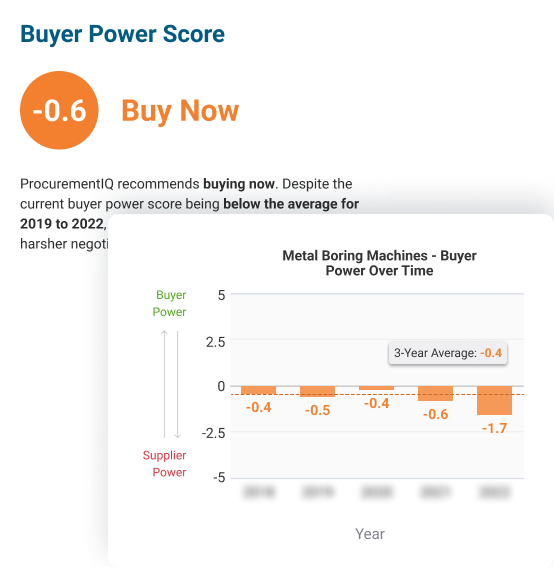
In 2026, buyer power amounts to -1.0 in the United States. Buyer power is most positively impacted by Switching Costs. It is most negatively impacted by Recent Developments. Subscribers can access details on eight other factors that impact buyer power. Learn more
United States
Buyer power forecasts: your glimpse into the future
Develop strategies for the upcoming year and identify unforeseen opportunities for buying now
- Actionable "Buy Now" and "Buy Later" insights
- Near-real-time updates to current and forecast Buyer Power Scores
- Methodology and weightings for Buyer Power Score Components
Supply Chain Risk
The average level of supply chain risk is assessed as Medium, which has a negative impact on buyer power. The level of supply chain risk is affected by industry volatility, barriers to entry, competition, import penetration, regulation and industry financial risk. Buyers in this market can mitigate procurement and supply chain management risks by monitoring risk levels for individual first and second tier suppliers:
1st
Tier Suppliers
- Intellectual Property Licensors
- Computer Manufacturers
- Computer Peripheral Manufacturers
2nd
Tier Suppliers
- Law Firms
- Semiconductor & Circuit Manufacturers
- Circuit Board & Electronic Component Manufacturers
Biggest Optical Character Recognition Systems Suppliers in the US by Revenue
The largest Optical Character Recognition Systems vendors by revenue in the US are I.R.I.S., NewSoft Technology Corporation and Staples Inc. Subscribers can sort and filter by market share concentration, profit level and other factors. Learn more
| Supplier | Operational Size | Headquarters | Number of Employees | Market Share (%) | Market Share Performance (3yr trend) | Total Revenue ($ million) | Profit Level (%) | Risk Level |
|---|---|---|---|---|---|---|---|---|
| I.R.I.S. | US | 10-15 | ||||||
| Microsoft Corporation | Global | Redmond | >10,000 | 20-25 | ||||
| Alphabet Inc. | Global | MOUNTAIN VIEW | >10,000 | 5-10 | ||||
| Amazon.Com, Inc. | Global | Seattle | >10,000 | < 5 | ||||
| Td Synnex Corporation | Global | FREMONT, CA | >10,000 | < 5 | ||||
| Best Buy Co., inc. | International | RICHFIELD, MN | >10,000 | < 5 | ||||
| Hewlett Packard Enterprise Co | Global | SPRING | >10,000 | < 5 | ||||
| HNA Group Co. Ltd. | Global | Haikou, CN | >10,000 | < 5 | ||||
| Staples Inc. | Global | Framingham, MA | >10,000 | < 5 | ||||
Looking for a list of suppliers by country?
Subscribers can access vendor information on Canadian and European suppliers, too. We also offer custom research services to help with vendor sourcing anywhere in the world.
Profit Analysis
The average profit margin across vendors in the Optical Character Recognition Systems market is 15.2% and steady. Profit levels shift depending on suppliers' spend on wages, purchases and overhead. The highest cost component for vendors is Wages. The cost trend for this component is falling, when considering movement between 2025 and 2026. To understand cost forecasts for 2027 and uncover the implications on profit, start your subscription. Learn more
Vendor & Supply Chain Analysis
Market share concentration is high, indicating that the top four suppliers generate more than 50.0% of market revenue. High barriers to entry prevent new suppliers from entering the market, limiting the number of viable suppliers that buyers may choose from, which decreases overall buyer power.
Average vendor risk in the market is low, primarily due to rising demand and healthy profit margins. This low risk reduces the likelihood of any service disruptions caused by bankruptcy or financial instability.
Supply chain risk in the market is moderate, as suppliers have been facing delays and price spikes for critical inputs, including semiconductors and electronic components.
The United States is a net importer of computers, meaning it imports more computers than it exports. While lower manufacturing costs abroad drive down prices for imported computers, relying on imports can lead to potential shortages or price increases if there are supply chain disruptions due to geopolitical tensions, trade disputes, or global crises
Supplier Information
I.R.I.S.
I.R.I.S. is a operator providing Optical Character Recognition Systems from their headquarters in US. This operator has a staff size of about employees. According to ProcurementIQ estimates, I.R.I.S. holds 10-15% of market share... Subscribe to learn more
Microsoft Corporation
Microsoft Corporation is a technology company offering digital technology and artificial intelligence (AI) to businesses and individuals worldwide. It develops cloud-based solutions that deliver customers with software, services, platforms, and content and provides solution support and consulting services.... Subscribe to learn more
Alphabet Inc.
Alphabet Inc. is an Internet technology company offering various products, services, and solutions spanning computing, search, cloud, and online advertising technologies. It organizes its business into three segments: the Google Services Segment, which includes ads, Android, Chrome, hardware (including Fitbit,... Subscribe to learn more
ABBYY Software Ltd.
ABBYY Software Ltd. is a private company operating globally in the information and administration, business support and waste management services sectors. The company's offerings include optical character recognition systems and document scanning services. Founded in 1989, the company is currently headquartered... Subscribe to learn more
Amazon.Com, Inc.
Amazon.com, Inc. is a global e-commerce company that offers a range of consumer products and services through online and physical stores. It resells merchandise and content and offers products from third-party sellers. It also manufactures and sells electronic devices and develops and distributes media content.... Subscribe to learn more
Best Buy Co., inc.
Best Buy Co., inc. is a public company operating internationally in the manufacturing, information and real estate and rental and leasing sectors. The company's offerings include gps navigation devices, phone headsets, hard disk drives, usb flash drives, laptop computers. Founded in 1966, the company is currently... Subscribe to learn more
Foxit Software Incorporated
Foxit Software Incorporated is a private company operating internationally in the information sector. The company's offerings include optical character recognition systems. Founded in 2001, the company is currently headquartered in Fremont, California, United States of America with an estimated 550 employees.... Subscribe to learn more
Hewlett Packard Enterprise Co
Hewlett Packard Enterprise Co. is a global technology company developing intelligent solutions for business and public sector enterprises. It organizes its business into six reportable business segments: the Compute segment, which consists of general purpose servers for multi-workload computing and workload-optimized... Subscribe to learn more
HNA Group Co. Ltd.
HNA Group Co. Ltd. is a private company operating globally in the information and real estate & rental & leasing sectors. The company's offerings include graphics & video accelerator cards, optical character recognition systems and intermodal container rental. Founded in 1993, the company is currently headquartered... Subscribe to learn more
Accelerate the vendor selection process
Get a clear picture of the competition in a market and discover which vendors are best-suited for your sourcing needs. Our supplier profiles include hard-to-find financial ranges for private companies, cover public company data and feature an interactive competitor matrix.
Procurement Management KPIs for the Optical Character Recognition Systems Market
Managing vendor performance throughout the contract period is easier when tracking specific key performance indicators (KPIs). For example, buyers should monitor Average Response Time and Critical Bugs. Buyers may experience better performance throughout their contracts if they establish service level agreements (SLAs) based on Uptime and other factors.
| KPI | Level of Importance (1-5) | Measurements | Key Considerations |
|---|---|---|---|
| Average Response Time |
|
Total number of tickets or inquiries submitted to customer support. Total time to response from customer support |
The average response time measures the typical period of time that it takes for a supplier's customer response or technical support team to respond to an inquiry sent by the buyer. The average response time can be used as an indicator to assess the overall responsiveness of a supplier and to assess the suppliers' ability to solve problems with service quickly and efficiently. |
| Critical Bugs |
|
Total number of bugs identified in software Total time to resolve bugs in software |
Critical bugs in a software can be used to assess several aspects of the supplier's performance, including how quickly they are able to correct these bugs as well as how prepared the product was to go to market. A high number of critical bugs can require significant time coordinating with the supplier's technical support team to identify the issue, explain how it is impacting service, and await correction to the issue within the software. |

Questions to Ask During Procurement Negotiations
How can I gain leverage during negotiations?
Technology
What is the accuracy rate of your OCR software?
How many languages is your software able to recognize?
Price
Are buyers in contracts protected from price increases as a result of new software versions or upgrades?
What is your typical contract length for enterprise solutions?
Implementation
Are there specific hardware requirements for your software?
Is my existing hardware compatible with OCR software?
The ultimate prep for procurement negotations
View all 28 negotiation questions for this category when you subscribe.
Optical Character Recognition Systems RFP Guidelines
What should my RFP include?
Organizational Overview
Buyers should provide a brief description of their organization, including information about size and location.
Buyers should include which sector they operate in and describe their target markets.
Statement Of Need
Buyers should specify the products and services that they will regularly need to purchase.
Buyers should indicate the number and type of suppliers they expect to purchase from.
Project Budget
Buyers should specify their budget for purchasing OCR software.
Buyers should specify their preferred terms for invoicing and payment.
The RFP process made easy
Find out how you can access RFP templates for 800+ procurement categories to start writing better, more consistent RFPs.
We display average pricing information, trends and market data.
Our Reports include:
- Opportunity assessment
- Market dynamics
- Recent developments
- Positive and warning trends
- Buyer power levers
- Price environment and market pricing
- Geographic wage rates
- Global market updates
- Total cost of ownership
- Cost structure benchmarks and analysis
- Supply chain and vendors
- Global supplier breakdown
- Market share concentration
- Regulation and business requirements
- Vendor management and KPIs
- Sourcing strategy guidance