Procurement Market Intelligence Report
Uninterruptible Power Supply Systems
Sourcing Guide & Market Intelligence
Smarter cost management starts with comprehensive market intelligence
 United States
 Global
Quick Navigation
Uninterruptible Power Supply Systems Global Overview
Definition
Summary
This report is intended to assist buyers of uninterruptible power supply (UPS) systems, which provide reserve power to electronic systems when utility power fails. UPS systems differ from emergency power systems in that they provide instantaneous power to prevent disruptions that might otherwise damage equipment and result in data loss or operational downtime. UPS systems draw utility power from an outlet, which then charges an internal battery that provides power to electronic equipment. As such, UPS systems not only guard against power outages, but also provide a steady stream of power that protects electronic equipment from sudden surges in voltage.
This Report Includes:
- Double Conversion Online UPS
- Delta Conversion Online UPS
- Line-Interactive UPS
- Standby UPS
- Standby-Ferro UPS
Not in this Report:
- Emergency power systems
- Standby generators
Global Uninterruptible Power Supply Systems Procurement Trends
Discover the top international trends affecting procurement in the global Uninterruptible Power Supply Systems market.
Warning Trends
Tariffs to negatively impact the electrical systems and lighting components sector
- The Trump Administration’s reciprocal tariffs, which apply general tariff rate increases to most leading US trade partners, are set to take effect on August 7, after the administration finalized the rates on August 1. These changes will significantly increase the tariff rate on leading electrical system and lighting component exporting countries, including China (54.0%), Mexico (25.0%), Vietnam (20.0%), and Taiwan (20.0%).
- The United States also raised tariffs on aluminum and steel, common inputs in electrical systems and components, to 50.0% in July, adding to rising costs in this sector.
- Lighting companies, such as Signify, commonly operate factories in Mexico and import components from China, indicating that higher tariffs will increase operating costs for suppliers with domestic manufacturing operations, in addition to increasing the cost of imported finished products.
- As many electrical systems and components, such as electrical transformers and switchgear systems, are already facing shortages and price increases, higher tariffs are likely to drive up prices further. For example, electrical transformer prices have already risen 70.0% to 100.0% since 2020, and higher tariffs are expected to push up prices further as Mexico, Canada, and China supply 80.0% of the transformers used in the United States.
- Likewise, the United States is reliant on imports for many major lighting components. For example, according to the Department of Energy, 94.0% of all LED imports to the United States were manufactured in China.
China bans exports of rare minerals to the United States
- On December 4, China announced a ban on all exports of gallium, germanium, graphite, and antimony to the United States, escalating existing trade restrictions on these materials.
- China is the leading global producer of each of these metals, producing 98.3%, 67.9%, 62.0%, and 48.2%, respectively, of the world’s gallium, germanium, graphite, and antimony supplies, respectively.
- The United States can still access these resources from other trade partners who make up most of the remaining global supply of the impacted commodities, such as Canada, Japan, and Brazil.
- However, the loss of supply from China, the leading producer of these materials, will increase prices and supply chain risk in a range of markets that rely on the affected metals, such as the semiconductor, batteries, and solar cell markets.
- China’s export ban on these materials is in retaliation to expanded US export bans on advanced semiconductor manufacturing equipment and technologies to China announced two days prior. This ongoing trade dispute adds further uncertainty to technology markets, which are often reliant on components and materials exported from China.
Neutral
GSA memo asks agencies to review consulting contracts
- The General Services Administration (GSA) recently issued a memorandum asking government agencies to review their consulting contracts with the ten highest-paid firms. The ten firms are Accenture PLC (Accenture Federal Services), Booz Allen Hamilton Inc., CGI Group Inc. (CGI Federal), Deloitte Touche Tohmatsu (Deloitte Consulting), General Dynamics Corporation (General Dynamics IT), Guidehouse Inc., Huntington Ingalls Industries Inc. (HII Mission Technologies), International Business Machines Corporation (IBM), Leidos Holdings, Inc., and Science Applications International Corporation, Inc. (SAIC).
- The memo states that agencies are strongly encouraged to cut non-essential consulting contracts, providing a list of those intended to be terminated by March 7, 2025. By April 19, 2025, agencies must submit their reviews of non-GSA consulting service contracts.
- According to the GSA, the ten consulting firms identified are set to receive $65.0 billion in fees in 2025. The Department of Defense (DoD) has stated its intention to terminate or descope contracts non-essential to the DoD’s purposes; some of the largest market players with high-value DoD contracts include Booz Allen Hamilton, Deloitte, and Accenture.
- According to the Government Accountability Office, in the fiscal year 2023, government agencies spent $478.0 billion on services, with the DoD accounting for $230.0 billion and non-defense agencies accounting for the rest. The DoD spent $21.3 billion on support, professional, and engineering and technical services, while non-defense agencies spent $21.4 billion on professional services, which includes consulting, training, and support services.
- The Department of Veterans Affairs (VA) initially cancelled 875 contracts (amounting to around $2.0 billion) but has currently paused efforts. However, contract terminations across most agencies are expected to continue.
Global Uninterruptible Power Supply Systems Market - Suppliers by Region
| Country/Region | Number of Suppliers |
|---|---|
| #1 China | 2,075 |
| #2 Europe | 1,705 |
| #3 India | 960 |
Explore supplier concentration across the globe
We've uncovered the 11 top regions for global procurement, based on feedback from our most strategic clients. Access vendor counts for each unique region when you subscribe.
2
Geography Drilldown - US
Average Cost of Uninterruptible Power Supply Systems
United States
2026 Market Pricing$120.00 to $XXX,XXX.XX
per systemAverage Price
Prices in the Uninterruptible Power Supply Systems market range from $120.00 to $XXX,XXX.XX, depending on Power Capacity, Type, Features and Reputation. For example, lower prices are associated with Capacity of less than 60 watt-hours ($50.00 to $150), whereas higher prices are associated with Capacity of 60 to 125 watt-hours ($150 to $500) and Capacity of more 125 watt-hours ($500 to $5,000).
Need the scoop on international price trends?
Between our Europe and Canada collections, we provide price data for 350 markets so you can instantly compare prices across borders. Or, use our custom research services for intel on prices in any region across the globe.
Uninterruptible Power Supply Systems Category Price Trends
Pricing trends are indicated by the compound annual growth rate (CAGR) during a set period of time. For the Uninterruptible Power Supply Systems market, prices in the US have grown 0.3% from 2022 to 2025. Subscribers can access price trend forecasts, price driver projections and forward-looking cost structure data. Learn more
United States (2022-2025)


Wondering where prices are heading?
Price trend forecasts are available to subscribers, along with price driver projections and forward-looking cost structure data.
Cost Analysis - Total Cost of Ownership for Uninterruptible Power Supply Systems
Total cost of ownership is Medium in the Uninterruptible Power Supply Systems market. The average cost of ownership differs depending on the contract but generally includes costs negotiated before the contract begins, costs billed during the contract period and unforeseen costs.
Billed During
Utilities
Maintenance
Maintenance
Buyer Power in Procurement Negotiations
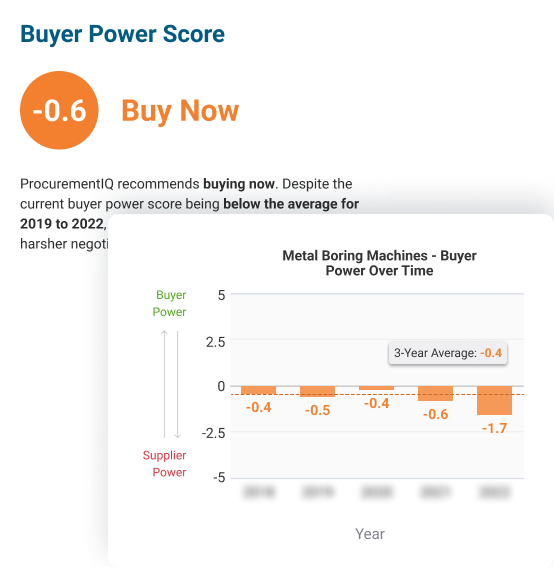
In 2026, buyer power amounts to -1.1 in the United States. Buyer power is most positively impacted by Recent Developments. It is most negatively impacted by Average Vendor Risk. Subscribers can access details on eight other factors that impact buyer power. Learn more
United States
Buyer power forecasts: your glimpse into the future
Develop strategies for the upcoming year and identify unforeseen opportunities for buying now
- Actionable "Buy Now" and "Buy Later" insights
- Near-real-time updates to current and forecast Buyer Power Scores
- Methodology and weightings for Buyer Power Score Components
Supply Chain Risk
The average level of supply chain risk is assessed as High, which has a negative impact on buyer power. The level of supply chain risk is affected by industry volatility, barriers to entry, competition, import penetration, regulation and industry financial risk. Buyers in this market can mitigate procurement and supply chain management risks by monitoring risk levels for individual first and second tier suppliers:
1st
Tier Suppliers
- Industrial Machinery & Equipment Wholesalers
- Iron & Steel Manufacturers
- Semiconductor & Circuit Manufacturers
- Battery Manufacturers
2nd
Tier Suppliers
- Industrial Supplies Wholesaling
- Iron Ore Mining Firms
- Circuit Board & Electronic Component Manufacturers
- Copper, Nickel, Lead & Zinc Miners
- Inorganic Chemical Manufacturers
Biggest Uninterruptible Power Supply Systems Suppliers in the US by Revenue
The largest Uninterruptible Power Supply Systems vendors by revenue in the US are CyberPower Systems Inc., Hangzhou Liaison Interactive Information Technology Co. Ltd. and Emerson Electric Co. Subscribers can sort and filter by market share concentration, profit level and other factors. Learn more
| Supplier | Operational Size | Headquarters | Number of Employees | Market Share (%) | Market Share Performance (3yr trend) | Total Revenue ($ million) | Profit Level (%) | Risk Level |
|---|---|---|---|---|---|---|---|---|
| Schneider Electric Se | Global | Paris, FR | >10,001 | 5-10 | ||||
| Abb Ltd | Global | Zurich | >10,000 | 5-10 | ||||
| Eaton Corporation Plc | Global | DUBLIN | >10,000 | 5-10 | ||||
| Emerson Electric Co. | Global | ST LOUIS, MO | >10,000 | 5-10 | ||||
| International Business Machines Corporation | Global | ARMONK | >10,000 | < 5 | ||||
| CDW Corporation | Global | VERNON HILLS, IL | >10,000 | < 5 | ||||
| Hangzhou Liaison Interactive Information Technology Co. Ltd. | Global | Beijing, CN | >10,001 | < 5 | ||||
| CyberPower Systems Inc. | Global | Taipei City, TW | 1,001-10,000 | < 5 | ||||
| Insight Enterprises, Inc. | Global | CHANDLER, AZ | >10,000 | < 5 | ||||
Looking for a list of suppliers by country?
Subscribers can access vendor information on Canadian and European suppliers, too. We also offer custom research services to help with vendor sourcing anywhere in the world.
Profit Analysis
The average profit margin across vendors in the Uninterruptible Power Supply Systems market is 6.5% and steady. Profit levels shift depending on suppliers' spend on wages, purchases and overhead. The highest cost component for vendors is Purchases. The cost trend for this component is stagnating, when considering movement between 2025 and 2026. To understand cost forecasts for 2027 and uncover the implications on profit, start your subscription. Learn more
Vendor & Supply Chain Analysis
Vendors in the uninterruptible power supply systems market face low risk on average. Vendors face moderate supply chain risk but have a diverse set of buyers that depend on uninterruptible power supply systems to operate, so demand is mostly stable.
Market share concentration is moderate in the uninterruptible power supply systems market. New market entrants face significant barriers to entry and require technical and financial resources to compete.
The supply chain for UPS systems exhibits a high level of risk. Inputs such as semiconductors, iron and steel experience frequent price fluctuations, which have been compounded by recent tariff policy shifts
The United States is a net importer of UPS systems, meaning it imports more UPS systems than it exports. While lower manufacturing costs abroad drive down prices for imported UPS systems, relying on imports can lead to potential shortages or price increases if there are supply chain disruptions due to geopolitical tensions, trade disputes, or global crises
Supplier Information
Abb Ltd
ABB Ltd. is a global technology company that offers comprehensive electrification, robotics, automation, and motion solutions, primarily serving the distribution utilities, renewables, and transport & infrastructure markets. It organizes its business into four segments: the Electrification segment, which Subscribe to learn more
Eaton Corporation Plc
Eaton Corporation Plc is a public company operating globally in the manufacturing sector. The company's offerings include electric vehicle charging station construction & maintenance, electric vehicle charging stations, electric ac motors, electric dc motors, hydraulic motors. Founded in 2018, the company... Subscribe to learn more
Emerson Electric Co.
Emerson Electric Co. is a public company operating globally in the manufacturing, professional, scientific and technical services and other services (except public administration) sectors. The company's offerings include downhole instrumentation, welding machines, industrial refrigerators, auxiliary generators,... Subscribe to learn more
Schneider Electric Se
Schneider Electric Se is a public company operating globally in the manufacturing, information, finance & insurance and professional, scientific & technical services sectors. The company's offerings include dampers, power supply units, power adapters & inverters, uninterruptible power supply systems, panelboards.... Subscribe to learn more
Ametek, inc.
Ametek, inc. is a public company operating globally in the manufacturing and professional, scientific and technical services sectors. The company's offerings include hydraulic motors, industrial battery chargers, uninterruptible power supply systems, torque measuring equipment, temperature measurement instrumentation.... Subscribe to learn more
CDW Corporation
CDW Corporation is a public company operating globally in the manufacturing, information and professional, scientific and technical services sectors. The company's offerings include fiber optic cable, uninterruptible power supply systems, phone headsets, print servers, tablet computers. Founded in 1984, the... Subscribe to learn more
CyberPower Systems Inc.
CyberPower Systems Inc. is a public company operating globally in the manufacturing sector. The company's offerings include uninterruptible power supply systems. Founded in 1997, the company is currently headquartered in Taipei City, Taiwan with an estimated 5500 employees. Subscribe to learn more
Hangzhou Liaison Interactive Information Technology Co. Ltd.
Hangzhou Liaison Interactive Information Technology Co. Ltd. is a public company operating globally in the manufacturing sector. The company's offerings include gps navigation devices, fiber optic cable, central processing units, uninterruptible power supply systems, surge suppressors. Founded in 2002, the... Subscribe to learn more
Insight Enterprises, Inc.
Insight Enterprises, Inc. is a technology company and solutions integrator. It specializes in hybrid multicloud, cybersecurity, data & artificial intelligence, digital workplace, and intelligent applications. Its solutions generally include hardware, software, and services, including cloud solutions. It serves... Subscribe to learn more
Accelerate the vendor selection process
Get a clear picture of the competition in a market and discover which vendors are best-suited for your sourcing needs. Our supplier profiles include hard-to-find financial ranges for private companies, cover public company data and feature an interactive competitor matrix.
Procurement Management KPIs for the Uninterruptible Power Supply Systems Market
Managing vendor performance throughout the contract period is easier when tracking specific key performance indicators (KPIs). For example, buyers should monitor Customer Retention Rate and Defect Density. Buyers may experience better performance throughout their contracts if they establish service level agreements (SLAs) based on Scope of Services and other factors.
| KPI | Level of Importance (1-5) | Measurements | Key Considerations |
|---|---|---|---|
| Customer Retention Rate |
|
Press reports Client testimonials |
Suppliers with low customer retention rates indicate lower customer satisfaction. Suppliers with high customer retention rates indicate higher customer satisfaction. |
| Defect Density |
|
Number of Units Sold Number of Defective Units |
The defect density represents the share of defective products a company produces. The defect density can be used to determine whether manufacturing, assembly or quality assurance processes require improvement. |
Questions to Ask During Procurement Negotiations
How can I gain leverage during negotiations?
Service Performance
How frequently do you get reports or complaints about UPS systems you sold failing to meet expectations?
Have you had to pay the connected-equipment guarantee due to product failure in the past three years? What was the amount?
Customer Service
How would you describe the availability of your customer support as well as its response time in case of an urgent need?
Do you send people to a client's premises or assist remotely? Amidst widespread health concerns, what contingency plans are in place to mitigate risk to your clients and employees? Do you offer clients any flexible exceptions, such as contract suspensions?
Value-Added Services
What features, aside from power regulation, do you offer?
Are any of the additional features the main feature of another related piece of equipment?
The ultimate prep for procurement negotations
View all 29 negotiation questions for this category when you subscribe.
Uninterruptible Power Supply Systems RFP Guidelines
What should my RFP include?
Organizational Overview
Buyers should describe their organization, including size, location(s) and type of business.
Buyers should detail the electrical equipment that the UPS system will protect and include the number of units required.
Statement Of Need
Buyers should detail the acceptable brand(s), type and number of UPS system needed.
Buyers should state the specifications of the UPS system they require (e.g. VA rating, dimensions, number of outlets, battery run time).
Project Budget
Buyers should state their budget for the UPS system and any desired related services and goods.
Buyers should indicate when payments will occur, such as upon award of the contract or over a period of time.
The RFP process made easy
Find out how you can access RFP templates for 800+ procurement categories to start writing better, more consistent RFPs.
We display average pricing information, trends and market data.
Our Reports include:
- Opportunity assessment
- Market dynamics
- Recent developments
- Positive and warning trends
- Buyer power levers
- Price environment and market pricing
- Geographic wage rates
- Global market updates
- Total cost of ownership
- Cost structure benchmarks and analysis
- Supply chain and vendors
- Global supplier breakdown
- Market share concentration
- Regulation and business requirements
- Vendor management and KPIs
- Sourcing strategy guidance