Procurement Market Intelligence Report
Safety Eyewear
Sourcing Guide & Market Intelligence
Smarter cost management starts with comprehensive market intelligence
 United States
 Global
Quick Navigation
Safety Eyewear Global Overview
Definition
Summary
Protective eyewear includes an array of products, such as impact-resistant goggles, welding goggles, ballistic glasses and waterproof eyewear. Suppliers of safety eyewear include manufacturers, wholesalers and retailers, and common buyers include construction firms, science research labs and manufacturers.
This Report Includes:
- Impact-resistant goggles
- Welding goggles
- Ballistic glasses
- Waterproof eyewear
Not in this Report:
- Recreational sunglasses
- Standard corrective prescription glasses
- Standard reading glasses
- Full-face headgear
Take the ProcurementIQ products and data tour
Explore live samples of price trend forecasts, price driver projections, forward-looking cost structure data and more.
Global Safety Eyewear Procurement Trends
Discover the top international trends affecting procurement in the global Safety Eyewear market.
Warning Trends
Elevated Tariffs are increasing prices for law enforcement, security, and safety equipment
- The Trump administration’s reciprocal tariffs, which place broad tariffs on all imports from most US trade partners, are set to take effect on August 7 after the tariff rates were finalized on August 1.
- As a result, all foreign suppliers in law enforcement, security, and safety equipment will face significantly increased costs when selling products to US buyers, and domestic manufacturers of these goods will face higher costs when sourcing key inputs for these products.
- Countries such as China, Germany, Mexico, Thailand, and Vietnam are leading sources of imports in this sector, providing high quantities of goods such as safes, locks, security cameras, security systems, and personal protective equipment. Starting August 7, imports from China, Germany, Mexico, Thailand, and Vietnam will be subject to tariff rates of 54.0%, 15.0%, 25.0%, 20.0%, and 19.0% respectively.
- Elevated tariffs are likely to impact pricing and supply chains in this industry due to the United States’ reliance on imported manufactured goods, which gives foreign suppliers the leverage to pass through the costs of tariffs to buyers and domestic suppliers the leverage to raise prices.
- Consequently, the Yale Budget Lab projects a 39.2% average increase in metal product prices, impacting products such as security gates and safes. Electronic security devices, such as cameras or metal detectors, are projected to rise by 18.7% in price. In the personal protective equipment market, prices are forecast to rise by between 11.0% and 37.5%, depending on the type of equipment and materials used to make it.
Global Safety Eyewear Market - Suppliers by Region
| Country/Region | Number of Suppliers |
|---|---|
| #1 Oceania & Southeast Asia | 2,840 |
| #2 China | 2,080 |
| #3 Europe | 1,865 |
Explore supplier concentration across the globe
We've uncovered the 11 top regions for global procurement, based on feedback from our most strategic clients. Access vendor counts for each unique region when you subscribe.
Geography Drilldown - US
Average Cost of Safety Eyewear
United States
2026 Market Pricing$1.22 to $XX.XX
per unitAverage Price
Prices in the Safety Eyewear market range from $1.22 to $XX.XX, depending on Lens Features, Comfort Features, Customization and Brand. For example, lower prices are associated with , whereas higher prices are associated with UV Protection ($4.19 to $74.79 per unit), Scratch Resistant ($2.79 to $29.79 per unit) and Anti-Fog ($6.39 to $32.79 per unit).
Need the scoop on international price trends?
Between our Europe and Canada collections, we provide price data for 350 markets so you can instantly compare prices across borders. Or, use our custom research services for intel on prices in any region across the globe.
Safety Eyewear Category Price Trends
Pricing trends are indicated by the compound annual growth rate (CAGR) during a set period of time. For the Safety Eyewear market, prices in the US have grown 4.0% from 2022 to 2025. Subscribers can access price trend forecasts, price driver projections and forward-looking cost structure data. Learn more
United States (2022-2025)


Wondering where prices are heading?
Price trend forecasts are available to subscribers, along with price driver projections and forward-looking cost structure data.
Cost Analysis - Total Cost of Ownership for Safety Eyewear
Total cost of ownership is Low in the Safety Eyewear market. The average cost of ownership differs depending on the contract but generally includes costs negotiated before the contract begins, costs billed during the contract period and unforeseen costs.
Negotiated Before
Transportation
Billed During
Storage
Buyer Power in Procurement Negotiations
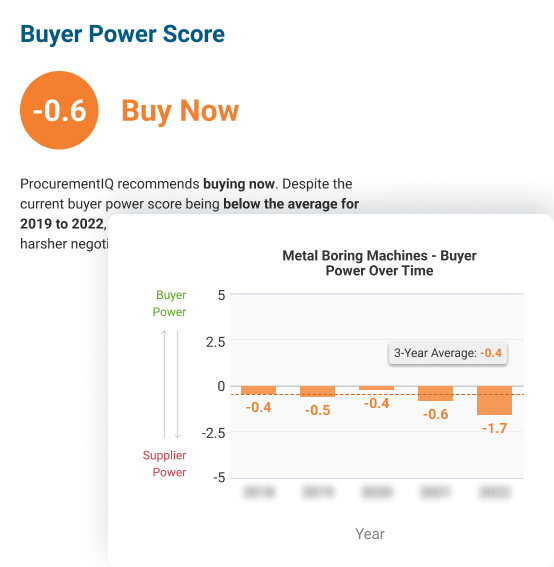
In 2026, buyer power amounts to -1.8 in the United States. Buyer power is most positively impacted by Recent Developments. It is most negatively impacted by Switching Costs. Subscribers can access details on eight other factors that impact buyer power. Learn more
United States
Buyer power forecasts: your glimpse into the future
Develop strategies for the upcoming year and identify unforeseen opportunities for buying now
- Actionable "Buy Now" and "Buy Later" insights
- Near-real-time updates to current and forecast Buyer Power Scores
- Methodology and weightings for Buyer Power Score Components
Supply Chain Risk
The average level of supply chain risk is assessed as Medium, which has a negative impact on buyer power. The level of supply chain risk is affected by industry volatility, barriers to entry, competition, import penetration, regulation and industry financial risk. Buyers in this market can mitigate procurement and supply chain management risks by monitoring risk levels for individual first and second tier suppliers:
1st
Tier Suppliers
- Plastic & Resin Manufacturers
- Plastics & Rubber Machinery Manufacturers
- Chemical Wholesalers
2nd
Tier Suppliers
- Chemical Product Manufacturers
- Iron & Steel Manufacturers
- Chemical Product Manufacturers
Biggest Safety Eyewear Suppliers in the US by Revenue
The largest Safety Eyewear vendors by revenue in the US are Gateway Safety Inc., Bunzl Plc and Techtronic Industries Co Ltd. Subscribers can sort and filter by market share concentration, profit level and other factors. Learn more
| Supplier | Operational Size | Headquarters | Number of Employees | Market Share (%) | Market Share Performance (3yr trend) | Total Revenue ($ million) | Profit Level (%) | Risk Level |
|---|---|---|---|---|---|---|---|---|
| Honeywell International Inc. | Global | CHARLOTTE | >10,000 | 10-15 | ||||
| Essilorluxottica | Global | Paris, FR | >10,001 | 10-15 | ||||
| 3m Company | Global | ST PAUL | >10,000 | 15-20 | ||||
| Stanley Black & Decker, Inc. | Global | NEW BRITAIN, CT | >10,000 | 5-10 | ||||
| Home Depot, inc. | International | ATLANTA | >10,000 | < 5 | ||||
| Lowes Companies Inc. | International | MOORESVILLE | >10,000 | < 5 | ||||
| Kimberly-Clark Corporation | Global | IRVING | >10,000 | < 5 | ||||
| W.W. Grainger, Inc. | Global | LAKE FOREST | >10,000 | < 5 | ||||
| Techtronic Industries Co Ltd | Global | Hong Kong, CN | >10,001 | < 5 | ||||
Looking for a list of suppliers by country?
Subscribers can access vendor information on Canadian and European suppliers, too. We also offer custom research services to help with vendor sourcing anywhere in the world.
Profit Analysis
The average profit margin across vendors in the Safety Eyewear market is 8.5% and steady. Profit levels shift depending on suppliers' spend on wages, purchases and overhead. The highest cost component for vendors is Purchases. The cost trend for this component is falling, when considering movement between 2025 and 2026. To understand cost forecasts for 2027 and uncover the implications on profit, start your subscription. Learn more
Vendor & Supply Chain Analysis
Low vendor risk benefits buyer power because buyers can operate with a reasonable expectation that suppliers will stay in business.
The moderate level of supply chain risk does not weigh heavily on buyer power.
The moderate level of market share concentration does not affect buyer power as competition in this market remains high.
The United States is a net importer of safety eyewear, importing more safety glasses than it imports. Buyers that are importing safety eyewear should note that delivery times and shipping costs may be higher when sourcing from overseas.
Supplier Information
Essilorluxottica
Essilorluxottica is a public company operating globally in the manufacturing and finance & insurance sectors. The company's offerings include safety eyewear and vision insurance. Founded in 2018, the company is currently headquartered in Paris, France with an estimated employee count of over 10,000. Subscribe to learn more
Honeywell International Inc.
Honeywell International Inc. is a global technology and manufacturing company that designs, develops, produces, and markets consumer and industrial products. It organizes its business into four reportable business segments: the Aerospace segment, which supplies products, software, and services for aircraft;... Subscribe to learn more
3m Company
3M Co. is a diversified technology company offering a range of products for safety and industrial, transportation, electronics, and consumer markets. It develops, manufactures, and markets, among others, industrial abrasives and finishing for metalworks, autobody repair solutions, industrial specialty products,... Subscribe to learn more
Stanley Black & Decker, Inc.
Stanley Black & Decker, Inc. is a public company operating globally in the manufacturing, manufacturing and administration, business support and waste management services sectors. The company's offerings include circular saws, metal cutting tools, sealing tools, power blowers, precision hand tools. Founded... Subscribe to learn more
Bunzl Plc
Bunzl Plc is a public company operating globally in the construction, manufacturing and manufacturing sectors. The company's offerings include paper bags, plastic bags, slip sheets, molded fiber packaging, safety apparel. Founded in 1854, the company is currently headquartered in London, United Kingdom with... Subscribe to learn more
Delta Plus Group
Delta Plus Group is a public company operating globally in the manufacturing sector. The company's offerings include face & head protection and safety eyewear. Founded in 2017, the company is currently headquartered in La Peyrolière, France with an estimated 5500 employees. Subscribe to learn more
Gateway Safety Inc.
Gateway Safety Inc. is a private company operating nationally in the manufacturing sector. The company's offerings include safety eyewear and respiratory protection equipment. Founded in 1944, the company is currently headquartered in Cleveland, Ohio, United States of America with an estimated 122 employees.... Subscribe to learn more
Home Depot, inc.
Home Depot, Inc. is a home improvement retailer offering building materials, home improvement products, lawn and garden products, décor products, and related services under national and proprietary brands. Its proprietary brands include, among others, HDX®, Husky®, Hampton Bay®, Home Decorators Collection®,... Subscribe to learn more
Kimberly-Clark Corporation
Kimberly-Clark Corp. is a global consumer goods company that primarily manufactures and markets a wide range of products made from natural or synthetic fibers and materials using advanced technologies in fibers, nonwovens, and absorbency. It organizes its business into three reportable segments: the Personal... Subscribe to learn more
Accelerate the vendor selection process
Get a clear picture of the competition in a market and discover which vendors are best-suited for your sourcing needs. Our supplier profiles include hard-to-find financial ranges for private companies, cover public company data and feature an interactive competitor matrix.
Procurement Management KPIs for the Safety Eyewear Market
Managing vendor performance throughout the contract period is easier when tracking specific key performance indicators (KPIs). For example, buyers should monitor Average Response Time and Defect Density. Buyers may experience better performance throughout their contracts if they establish service level agreements (SLAs) based on Delivery and other factors.
| KPI | Level of Importance (1-5) | Measurements | Key Considerations |
|---|---|---|---|
| Average Response Time |
|
Average response time Average resolution time |
The average response time indicates the responsiveness of the supplier’s customer service. Suppliers should respond to all queries within 24 hours. |
| Defect Density |
|
Defect density Percentage of damaged goods |
The defect density is the share of products that are defective or damaged. Defective products will need to be returned so the buyer’s supply may be limited if the defect density is high. Vendors should be required to replace defective or damaged products at no cost to the buyer. |

Questions to Ask During Procurement Negotiations
How can I gain leverage during negotiations?
Supply Chain Risk
How does an increase in raw material prices affect your business and me as a buyer?
Some of your inputs have shown volatility in the past. Do you have a plan for mitigating supply chain risk due to price fluctuations?
Safety
What types of industries are your products rated and approved for?
What steps do you take to assure that your products consistently satisfy OSHA requirements?
Value-Added Services
Which other goods and services do you supply that pertain to my business?
What advantages are afforded if I choose to bundle safety eyewear with other related products you sell?
The ultimate prep for procurement negotations
View all 28 negotiation questions for this category when you subscribe.
Safety Eyewear RFP Guidelines
What should my RFP include?
Organizational Overview
Buyers should describe the size of their organization and provide some information about their operations.
Buyers should specify their location(s) and the type of environment that their employees work in. This should include enough information (for example, information about machinery used) to give vendors an idea of what eyewear to offer.
Statement Of Need
Buyers should state the type of safety eyewear required as well as the quantity needed. If prescription or molded eyewear is required, buyers should include that as well.
Buyers should include information about the work that employees will be doing. Relevant information (for example, information about machinery and chemicals used) may inform suppliers about tinting and comfort requirements.
Project Budget
Buyers should specify their budget, if one exists, and specify the number of units required.
Buyers should provide information about when payment will occur. For example, buyers should specify whether payment is awarded upon finalization of the contract or over a period of time.
The RFP process made easy
Find out how you can access RFP templates for 800+ procurement categories to start writing better, more consistent RFPs.
We display average pricing information, trends and market data.
Our Reports include:
- Opportunity assessment
- Market dynamics
- Recent developments
- Positive and warning trends
- Buyer power levers
- Price environment and market pricing
- Geographic wage rates
- Global market updates
- Total cost of ownership
- Cost structure benchmarks and analysis
- Supply chain and vendors
- Global supplier breakdown
- Market share concentration
- Regulation and business requirements
- Vendor management and KPIs
- Sourcing strategy guidance